Vinegret Beet Salad Recipe with Potatoes and Beans
Vinegret beet salad combines sweet, tender beetroot and carrots with waxy potatoes, dill pickles, sauerkraut and creamy cooked beans. Sunflower oil and a little apple cider vinegar give it a light, tangy dressing without mayonnaise. This Eastern European-style salad makes six side servings and works well alongside rye bread, dumplings or baked fish. Allow about 2 hours 10 minutes, including cooling and chilling. Dress the beetroot separately if you prefer distinct colours, or fold everything together for a deep pink salad.
Vinegret is a chilled Eastern European beet salad with tender diced potatoes and carrots, tangy dill pickles and sauerkraut, creamy beans and sunflower oil. It is substantial without mayonnaise, and the beetroot gives it a vivid pink or burgundy colour. This version makes six side servings in about 2 hours 10 minutes, including cooling and chilling. Cook the roots separately as needed, cut them into even cubes, drain the preserved vegetables well and season only after tasting.
What is vinegret?
Also spelled vinehret or vinaigrette, this salad is familiar in Ukrainian and other Eastern European kitchens. Its name refers to the dressed vegetable dish here, not simply a French oil-and-vinegar dressing. The balance varies from household to household: some versions use peas, some beans, and some rely on pickle brine instead of added vinegar. This recipe uses both pickles and sauerkraut, with beans for a more substantial bite. It is not the same as a mayonnaise-bound potato salad.
Choose vegetables that hold their shape
Use the listed 400 g each of beetroot and waxy potatoes and 200 g carrots. These are raw weights. Waxy potatoes hold their edges when boiled and diced; floury potatoes tend to crumble into the dressing. Look for firm beetroot of similar size so the roots finish at roughly the same time. Keep the skins intact while boiling to reduce pigment loss. Scrub away soil first.
Dill pickles provide a crisp sour contrast. Avoid very sweet sandwich pickles unless you want a noticeably different balance. Drain and weigh the sauerkraut after removing excess brine. The beans are already cooked: a 400 g (14 oz) can generally yields much less after draining, so use the contents of one can rather than 400 g drained beans. Cannellini or kidney beans both work. Rinse gently and let the water drain away before mixing.
Unrefined sunflower oil has a distinctive nutty aroma, while refined sunflower oil makes a milder dressing. Use the three tablespoons in the recipe, splitting off one for the beetroot if desired. Apple cider vinegar adds a fresh edge, but both pickles and sauerkraut are acidic already. Taste the finished mixture before adding any extra vinegar or salt.
Cook and cool the roots properly
Simmer beetroot in its own saucepan. This keeps the cooking water from colouring the potatoes and carrots. Medium beets commonly need 40–60 minutes; larger ones can take longer. A thin knife should slide through the centre with little resistance. The root should be tender without collapsing. Cook potatoes and carrots in another pan, removing each when ready rather than waiting for the slowest vegetable. Begin testing around 20 minutes. Keep the water at a gentle simmer so the potatoes do not split.
Drain as soon as the vegetables are ready. Spread them on a shallow tray or divide them between shallow containers; refrigerate promptly rather than leaving a deep bowl of hot roots to cool on the counter. Once cool enough to handle, slip off the skins and cut into approximately 1 cm (3/8 inch) cubes. Smaller dice distribute the dressing better but are easier to crush. A sharp knife helps keep the potato pieces intact.
How to mix vinegret beet salad
For a multicoloured salad, coat the beet cubes in one tablespoon of the measured sunflower oil before adding them to the other ingredients. This slows staining but will not prevent it entirely. If you like the familiar uniform pink colour, skip the separate bowl and use all three tablespoons of oil in the dressing instead.
Combine the potatoes, carrots, drained beans, diced pickles, sauerkraut and sliced spring onions first. Add the beetroot, then fold in the dressing using a broad spoon rather than vigorous stirring. Taste a forkful containing several ingredients. It should be pleasantly tangy, lightly coated and neither oily nor watery. Refrigerate for 30 minutes before serving; the chilled rest lets the dressing settle into the vegetables.
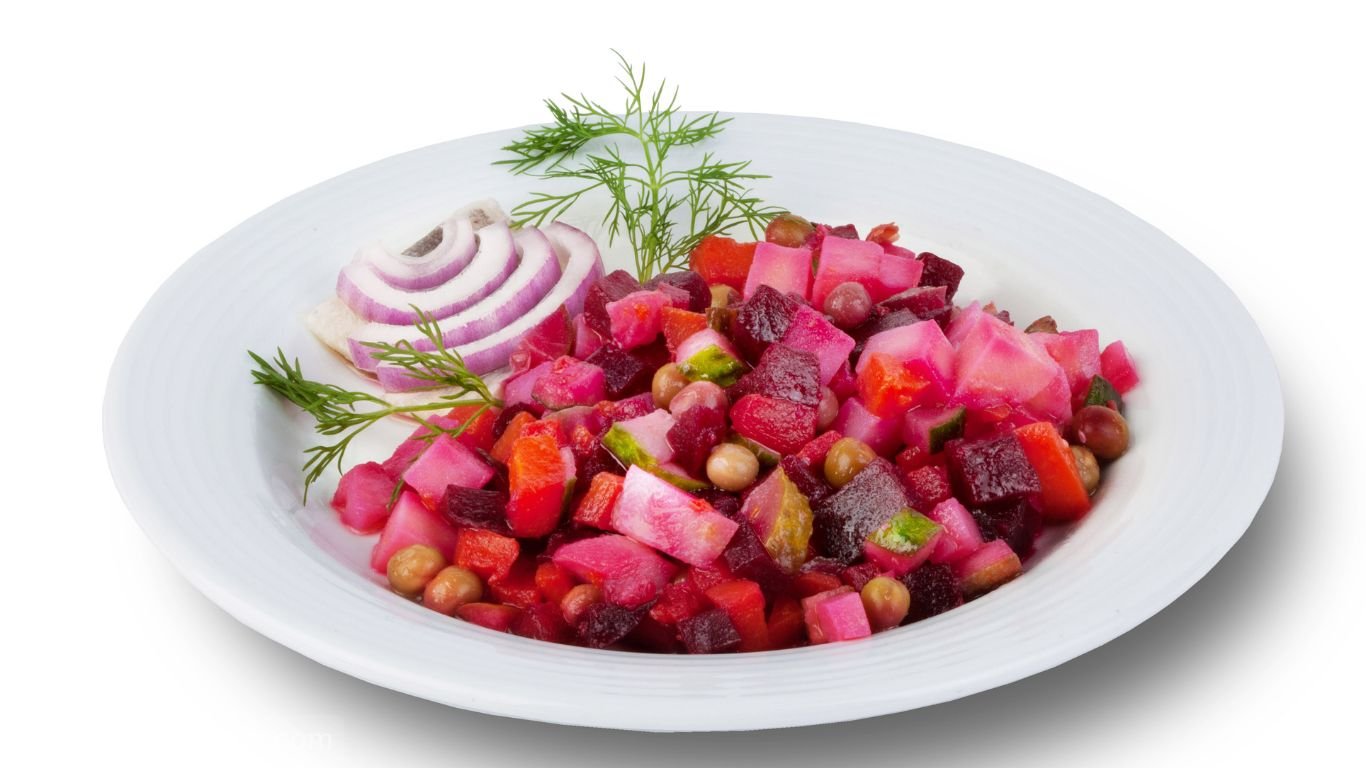
Recipe card
Vinegret Beet Salad Recipe with Potatoes and Beans
About 20 minutes hands-on, 40–60 minutes cooking (50 minutes typical), approximately 30 minutes initial cooling and 30 minutes chilling. Cool promptly under refrigeration; allow extra time for larger roots.
Equipment: Two saucepans, colander, shallow cooling containers, knife, cutting board, large mixing bowl, small bowl and whisk.
Ingredients
Root vegetables
Pickled vegetables and beans
Dressing and seasoning
Salad
Dressing and seasoning
Instructions
Simmer the root vegetables
Scrub the roots. Simmer whole beetroot separately for 40–60 minutes, or until a knife reaches the centre easily. Simmer potatoes and carrots in another pan for about 20–30 minutes, removing each when tender but firm. Drain and spread in shallow containers; refrigerate promptly to cool.
Cool, peel and dice
When cool enough to handle, peel the beetroot, potatoes and carrots. Dice into even 1 cm (3/8 inch) cubes. Drain pickles and sauerkraut well, and rinse and drain the cooked canned beans.
Coat the beetroot if desired
For distinct colours, gently coat the beetroot with 1 tablespoon of the measured oil. For a uniformly pink salad, omit this step and reserve all the oil for dressing.
Combine the salad ingredients
Place potatoes, carrots, pickles, sauerkraut, beans and sliced spring onions in a large bowl. Add the beetroot and fold gently.
Dress and taste
Whisk the remaining 2 tablespoons oil (or all 3 if step 3 was omitted) with apple cider vinegar and black pepper. Fold into the salad. Taste before adding salt.
Chill and serve
Cover and refrigerate at 4°C (40°F) or colder for 30 minutes. Serve cool. Keep chilled between servings.
Troubleshooting the texture and flavour
Watery salad: excess brine or cooking water is usually responsible. Drain the pickles, beans and sauerkraut thoroughly; avoid dressing warm, wet potatoes. If liquid has collected at the bottom, spoon it off before serving.
Crumbly potatoes: they may be overcooked or a floury variety. Use waxy potatoes next time and fold gently when cold. Too sharp: mix in a small splash of oil or a little extra cooked potato if available; avoid adding sugar automatically. Too bland: taste for acidity first, then add pepper or a small pinch of salt only as needed. The preserved vegetables can vary considerably in saltiness.
Serving, substitutions and variations
Serve this salad cool with rye bread, baked fish or potato and farmer cheese varenyky. It also suits a cold buffet when kept properly chilled. For a simpler root vegetable side, try the Ukrainian beet and carrot salad; the layered Mimosa salad offers a richer alternative with tuna and eggs.
Substitute drained peas for the cooked beans, or fold in a little diced crisp apple shortly before serving. A mild olive oil can replace sunflower oil, although the aroma changes. This formula contains no intentional dairy, eggs or wheat, but check pickles, sauerkraut, canned beans and vinegar for relevant allergens and cross-contact. The dressing is not a method of preserving the cooked salad.
Make ahead and safe storage
Cook the roots a day in advance and refrigerate them promptly in shallow containers. Use a refrigerator at 4°C (40°F) or colder. Assemble shortly before serving if you want distinct colours; otherwise dress ahead and keep covered. Count storage from the earliest cooked ingredient: use the salad within three days of cooking the roots, not three additional days after mixing. Refrigerate perishable ingredients within two hours of cooking or serving, or one hour above 32°C (90°F), following FoodSafety.gov cooling guidance. For a buffet, put out small portions and replenish from the refrigerator. Freezing the finished salad is not recommended because the potatoes, pickles and dressing can become watery after thawing.
Serve cool with a clean spoon and let the sweet roots, briny vegetables and sunflower oil provide the contrast.
Frequently asked questions
Can I use vacuum-packed cooked beetroot?
Yes, plain cooked beetroot without added vinegar or sugar saves boiling time. Use about the same prepared amount as the cooked fresh roots would yield; drain any liquid.
Why does every ingredient turn pink?
Beet pigments spread through the moist salad. Coating the beetroot with oil slows the transfer, but it is normal for the colour to deepen during storage.
Is vinegret a dressing or a salad?
Here it means the Eastern European diced root vegetable salad. The word vinaigrette can also refer to an oil-and-vinegar dressing in other contexts.
Can I use dried beans?
Yes, cook them fully according to the package instructions before using. Use the drained equivalent of a 400 g can, not the dry weight. Never add uncooked beans.
Should I serve it warm?
This version is intended to be served cool. Chilling helps the vegetable cubes hold their shape and gives the flavours time to combine.
Can I leave out the sauerkraut?
Yes. Add a little more drained dill pickle if desired, and adjust the vinegar after tasting. The result will have less fermented cabbage flavour.
More recipes to try

Russian Pelmeni Recipe with Soft Buttermilk Dough

Belyashi Recipe with Juicy Beef and Soft Yeast Dough

Turkey Jambalaya with Rice, Corn and Crispy Bacon

Otbivnaya Chicken Tenders with a Crisp Pan Fried Coating
Easy Mushroom Gravy with Browned Mushrooms and Thyme
Chicken and Vegetable Skewers with Lemon Herb Marinade
Spotted a detail that needs correcting? Contact the FeastDelights editors.