Japanese Mitarashi Dango with Sweet Soy Glaze
Chewy Japanese rice dumplings served on skewers with a sweet and savoury soy glaze.
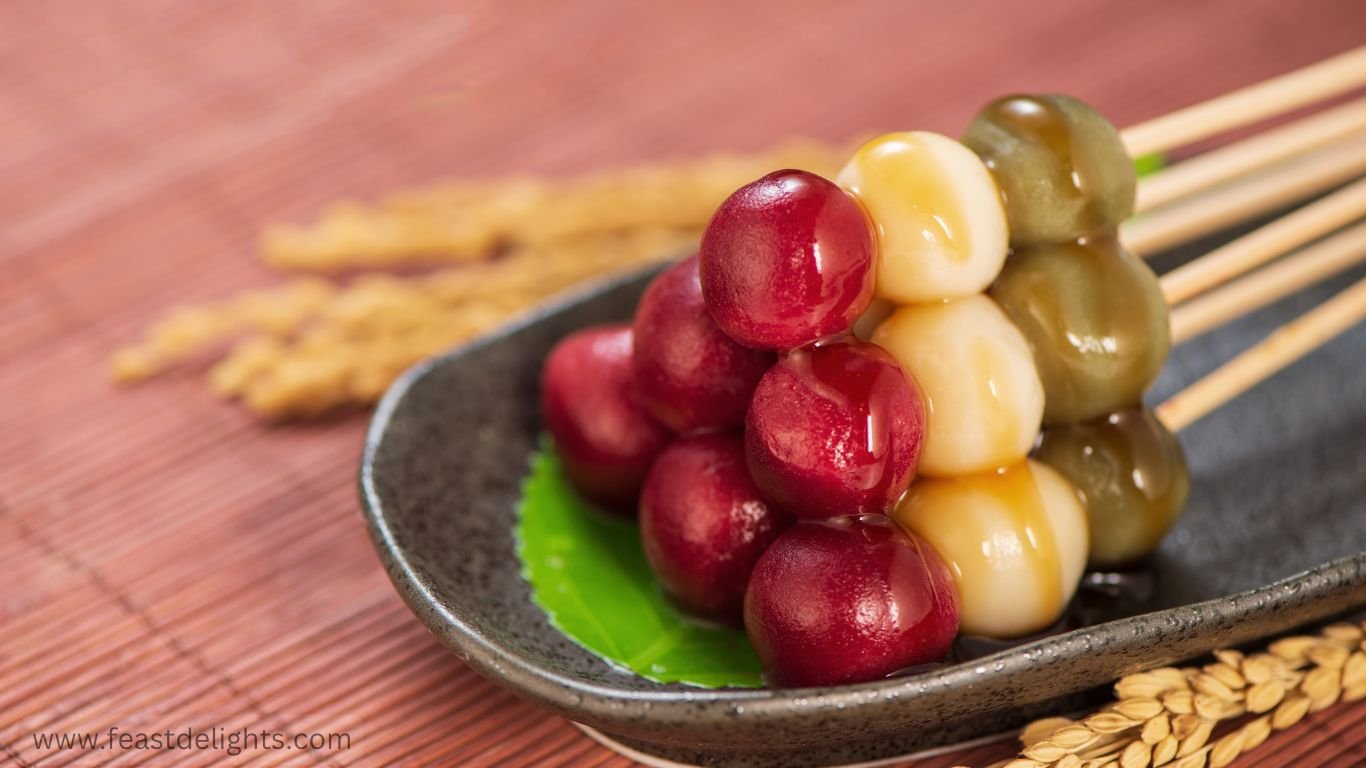
Mitarashi dango are chewy rice-flour dumplings threaded onto skewers and coated with a glossy sweet soy glaze. The source mixes up sweet rice flour, regular rice flour and a dusting starch; use a glutinous rice flour blend for the dough and cornstarch only to keep hands from sticking. Shape evenly sized balls, boil until they float and cook briefly longer. Simmer the glaze until it lightly coats a spoon, then brush it over the skewered dumplings. Place rice flour in a bowl. Add warm water gradually, mixing until a smooth dough forms with the softness of an earlobe. Divide into 20 equal pieces and roll into smooth balls. Dust hands lightly with cornstarch if sticky.
Recipe card
Japanese Mitarashi Dango with Sweet Soy Glaze
Equipment: Measuring scale and spoons, mixing bowls, a sturdy utensil, and the pan or baking dish specified in the method
Ingredients
Instructions
Make dough
Place rice flour in a bowl. Add warm water gradually, mixing until a smooth dough forms with the softness of an earlobe.
Shape
Divide into 20 equal pieces and roll into smooth balls. Dust hands lightly with cornstarch if sticky.
Boil dango
Bring a large pot of water to a boil. Add balls in batches. Once they float, cook 1 to 2 minutes more, then transfer to cold water.
Make glaze
Whisk soy sauce, sugar, water and glaze cornstarch in a small pan. Cook over medium heat, stirring, until glossy and thick enough to coat a spoon.
Skewer and glaze
Drain dumplings and thread 3 to 4 onto each skewer. Brush with warm glaze and serve promptly.
How to tell when it is ready
Drain dumplings and thread 3 to 4 onto each skewer. Brush with warm glaze and serve promptly.
Tips
- Place rice flour in a bowl.
- Divide into 20 equal pieces and roll into smooth balls.
- Bring a large pot of water to a boil.
- Whisk soy sauce, sugar, water and glaze cornstarch in a small pan.
Troubleshooting
- If dough cracks, knead in water a teaspoon at a time.
- If glaze is lumpy, whisk it over low heat or strain it.
Substitutions
- Use tamari instead of soy sauce.
- Use a gluten-free soy sauce if needed.
Variations
- Add a drop of food-safe matcha for green dango.
- Make three-colour dango with naturally coloured dough portions.
Serving suggestions
- Serve as a tea-time sweet.
- Add toasted soybean powder instead of glaze for a different style.
- Serve with green tea.
- Brush with glaze just before eating.
Make ahead
Measure and prepare the ingredients ahead. Follow the storage guidance after cooking: Best eaten the day they are made. Refrigerate leftovers covered for up to 1 day; warm gently to soften.
Storage
Best eaten the day they are made. Refrigerate leftovers covered for up to 1 day; warm gently to soften.
Food safety
Cool cooked dumplings promptly if saving; refrigerate and reheat until hot.
Frequently asked questions
Why are my dango hard?
The dough may be too dry or the dumplings may have chilled too long. Add water gradually when mixing and serve warm.
How should I store japanese mitarashi dango?
Best eaten the day they are made. Refrigerate leftovers covered for up to 1 day; warm gently to soften.
Serve as a tea-time sweet. Best eaten the day they are made. Refrigerate leftovers covered for up to 1 day; warm gently to soften.
More recipes to try




Spotted a detail that needs correcting? Contact the FeastDelights editors.