Bacon and Cheese Quiche with Creamy Egg Custard
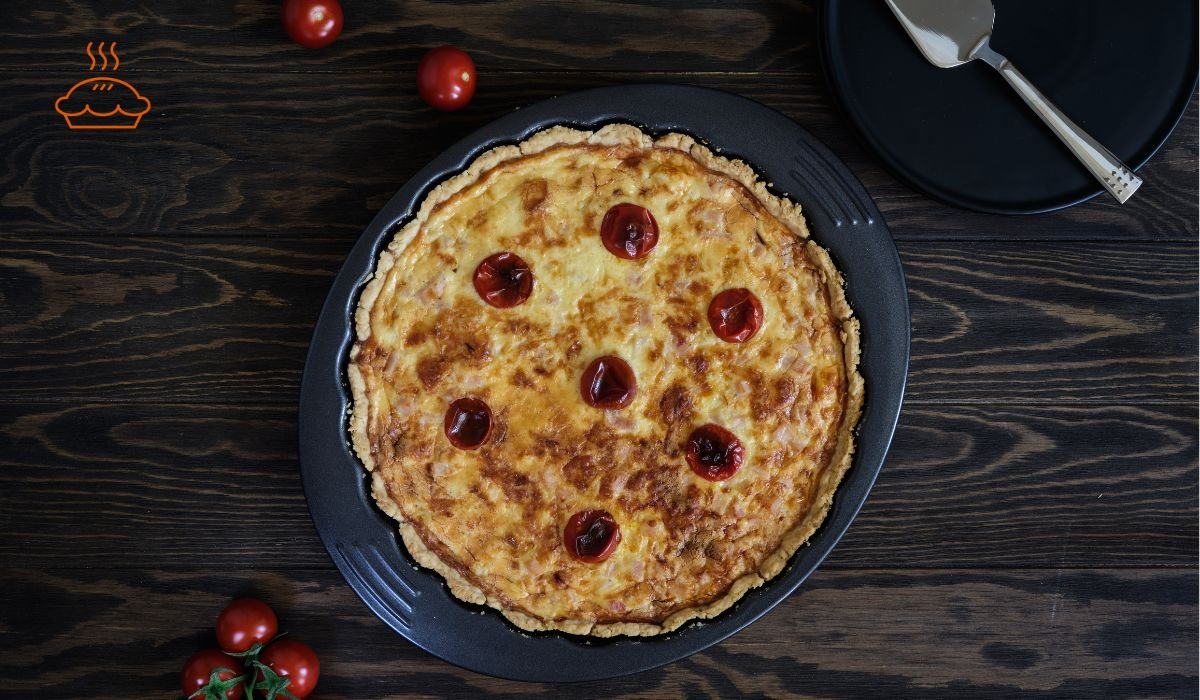
A buttery shortcrust shell holds crisp bacon, grated Gruyère or Emmental and a rich egg, cream and milk custard. This Lorraine-style quiche makes eight slices and is equally suited to lunch or a light dinner with salad. Chill the pastry before baking it empty, drain the bacon and whisk the custard gently for a smooth filling. Allow about two hours and twenty-five minutes, including pastry chilling and the final rest before slicing. The finished quiche should have a golden rim and a set, tender centre.
Bacon and cheese quiche is a French-inspired savoury tart with flaky butter pastry, salty bacon and a creamy baked egg filling. This version includes cheese and is described as Lorraine-style. It yields eight slices from a 24–26 cm tart tin. Plan for 35 minutes of preparation, about 55 minutes of oven time, and 55 minutes of chilling and resting; bacon can cook during the blind bake.
Ingredients and why they work
The pastry uses 250 g flour and 125 g cold butter, a two-to-one ratio by weight. Add only enough cold water to bring it together: extra water and vigorous mixing can toughen the crust. Weigh the cheese and bacon rather than estimating by handfuls. Three large eggs set 200 ml cream and 100 ml milk into a soft custard; use the specified cream rather than replacing it entirely with milk. Nutmeg is optional in flavour but included in the measured recipe. Bacon and cheese already contribute salt.
Recipe card
Bacon and Cheese Quiche with Creamy Egg Custard
Includes 30 minutes dough chilling, 10 minutes chilling the lined tin and 15 minutes resting. Bacon and custard preparation overlap the blind bake. Allow longer if the centre needs more time.
Equipment: Kitchen scale, mixing bowl, rolling pin, 24–26 cm (9½–10 inch) tart tin with at least 3 cm sides, parchment, baking weights, rimmed tray, skillet, whisk, jug, food thermometer
Ingredients
Butter pastry
Filling
Custard
Instructions
Make and chill the pastry
Rub cold butter into the salted flour until it resembles coarse crumbs, with some small butter pieces. Add cold water a tablespoon at a time just until the dough gathers. Flatten into a disc, cover and refrigerate for 30 minutes.
Line the tin and blind-bake
Preheat oven to 180°C (350°F). Roll pastry to about 3 mm thick and ease into a 24–26 cm tart tin without stretching. Trim, prick lightly and chill for 10 minutes. Line with parchment and weights; bake 15 minutes, then carefully remove weights and bake another 5 minutes until the base looks dry.
20 minCook bacon and whisk custard
While the pastry bakes, cook diced bacon in a dry skillet over medium heat until cooked and lightly crisp. Drain excess fat. Whisk eggs, cream, milk, nutmeg and pepper gently in a jug; season sparingly with salt.
Fill and bake the quiche
Scatter bacon and cheese in the blind-baked shell. Pour in custard, stopping below the rim. Bake at 180°C (350°F) for 30–35 minutes or until the edges are set and the centre reaches 74°C (165°F); it may still tremble slightly but must not be liquid. Shield the rim if it darkens too quickly.
35 minRest before slicing
Rest on a rack for at least 15 minutes before slicing into eight wedges. Handle the removable base carefully.
15 min
How to avoid a soggy pastry base
Rub the butter into flour without allowing it to melt. Press the dough into a disc so it chills evenly, then roll it on a lightly floured surface. Lift it into the tin and ease it into the corners, rather than pulling the dough. Chill again to reduce shrinkage. Blind-baking means baking the empty shell first: parchment and baking weights support the sides. After removing them, the base should look dry before the filling goes in. A rimmed tray underneath catches occasional drips.
Cooking the custard without overbaking
Cook the diced bacon first and drain it. Whisk the custard just until uniform; froth can create an uneven surface. Distribute bacon and cheese evenly and pour in the liquid slowly. Do not fill above the pastry rim. Bake at 180°C (350°F), starting to check after 30 minutes. A slight jiggle is normal, but the centre must not be liquid. Because this egg dish contains meat, check that it reaches 74°C (165°F). If the pastry browns too fast, shield its edges with foil. A long bake after the custard is set can make it rubbery or cause it to release moisture. Rest before cutting.
Substitutions and serving
Use Emmental for a milder taste or Gruyère for a nuttier note. A little sautéed onion works if its moisture has evaporated. This dish contains wheat, egg and milk; check bacon and cheese labels for other ingredients. For a different filling, try vegetarian spinach and cheese quiche or spinach and feta pie. Serve a wedge with a salad dressed with lemon and oregano dressing.
Making ahead and storage
Prepare the pastry disc a day ahead and refrigerate it well wrapped. Bake the filled tart before serving or cool and refrigerate it promptly. Refrigerate slices in shallow covered containers at 4°C (40°F) or colder within two hours of baking, or within one hour above 32°C (90°F). Use within three days. Freeze wrapped slices for up to two months for best quality; thaw in the refrigerator. Reheat in a 170°C (340°F) oven until the centre reaches 74°C (165°F).
Allow the quiche to settle for at least 15 minutes before slicing. Serve warm with a crisp salad; the buttery shell and tender custard are the focus.
Frequently asked questions
Is cheese traditional in Quiche Lorraine?
Classic Lorraine formulations commonly use bacon and custard without cheese. This is a cheese-containing Lorraine-style version.
Can I use a ready-made pastry shell?
Yes, choose a deep enough unsweetened shortcrust shell and follow its blind-baking directions. The time for homemade pastry will change.
Why did my pastry shrink?
Stretching the dough into the tin or skipping the chill encourages shrinkage. Ease it into the corners and chill before baking with weights.
Why is my quiche watery?
The bacon may not have drained sufficiently or the custard may be undercooked. Check the centre with a thermometer and avoid adding wet vegetables without cooking them first.
Can I use another cheese?
Emmental and Gruyère both melt well. A mild cheddar gives a different flavour; adjust added salt to suit.
Can I bake the quiche ahead?
Yes. Cool promptly, refrigerate and reheat slices thoroughly before serving, or serve properly chilled.
More recipes to try

Russian Pelmeni Recipe with Soft Buttermilk Dough

Belyashi Recipe with Juicy Beef and Soft Yeast Dough

Turkey Jambalaya with Rice, Corn and Crispy Bacon

Otbivnaya Chicken Tenders with a Crisp Pan Fried Coating
Easy Mushroom Gravy with Browned Mushrooms and Thyme
Chicken and Vegetable Skewers with Lemon Herb Marinade
Spotted a detail that needs correcting? Contact the FeastDelights editors.