Slow-Simmered Beef and Pork Bolognese Sauce
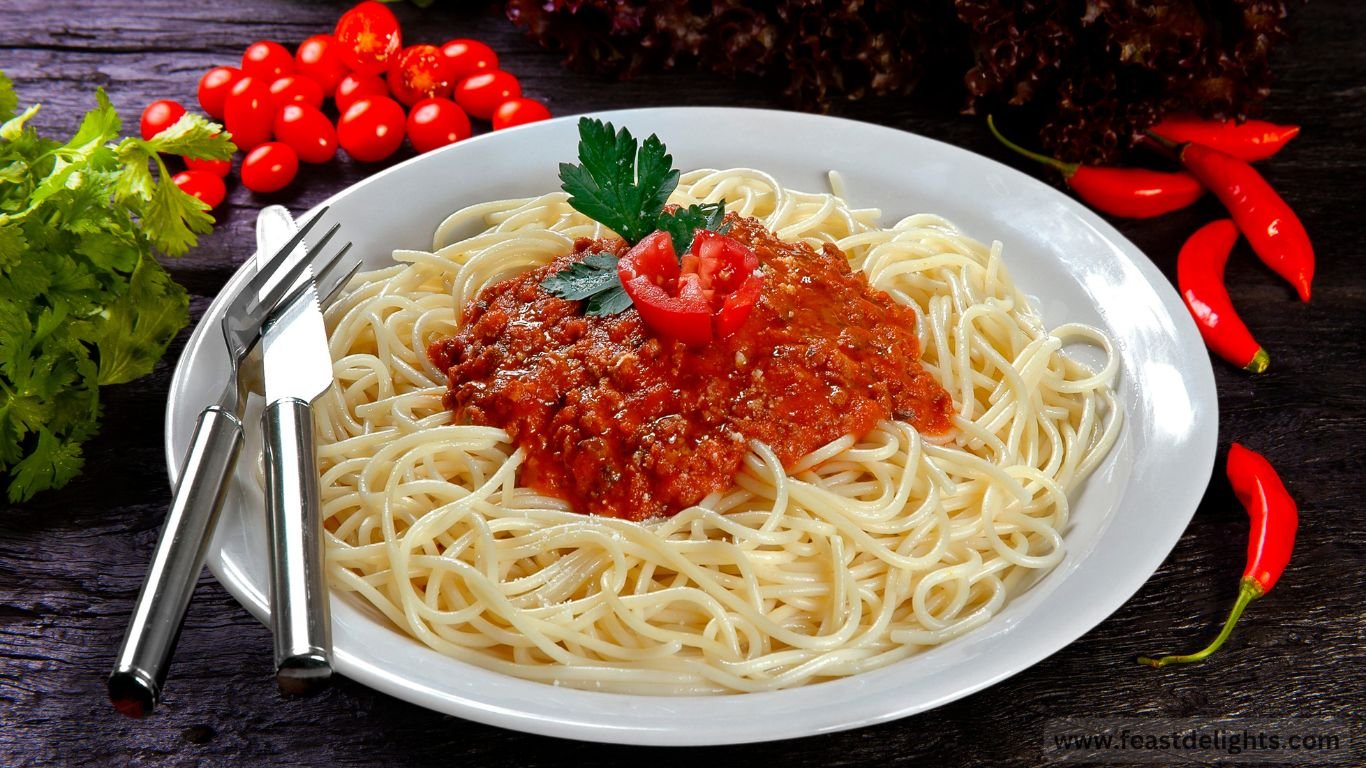
This slow-simmered beef and pork Bolognese sauce combines finely diced onion, carrot and celery with browned minced meat, crushed tomatoes, red wine and milk. The long uncovered simmer reduces the liquid into a rich, spoonable sauce that clings to pasta. This Italian-inspired home version makes about six cups in two and a half hours, excluding pasta cooking, and can be prepared ahead or frozen in portions. Serve with tagliatelle or spaghetti and a little grated Parmesan if desired.
Slow-simmered beef and pork Bolognese sauce is an Italian-inspired meat sauce with finely diced vegetables, tomatoes, wine and milk. This recipe makes about six cups in 150 minutes, before cooking pasta. Its texture is thick, with small pieces of meat and softened vegetables rather than a thin tomato broth. It is a home adaptation, not a claim to reproduce the exact ragù formula registered in Bologna. The Bologna Chamber of Commerce records the updated reference recipe deposited in April 2023.
Choose meat, vegetables and tomatoes
The original formula combines 500 g beef with 200 g pork. Use minced meat that is not extremely lean for a fuller flavour. Finely dice the onion, carrot and celery to form the soffritto, the softened aromatic vegetable base. Keep the pieces small so they integrate into the sauce during the long simmer. Mince the garlic separately and add it briefly at the end of softening to avoid burning.
Use plain crushed canned tomatoes rather than a seasoned pasta sauce. The measured 250 ml dry red wine adds acidity and aroma; choose broth instead if avoiding alcohol, because simmering does not necessarily remove all alcohol. Milk is part of this recipe’s finishing method and softens the overall flavour. The original amounts are retained.
Recipe card
Slow-Simmered Beef and Pork Bolognese Sauce
25 minutes preparation and about 125 minutes cooking; actual reduction depends on the pot and heat. Pasta preparation is separate.
Equipment: Kitchen scale, measuring jug, knife, cutting board, heavy-bottomed 4–5 litre pot or Dutch oven, wooden spoon, ladle and food thermometer.
Ingredients
Meat
Aromatic base
Sauce
Aromatic base
Sauce
Finishing
Instructions
Soften the aromatic vegetables
Heat olive oil over medium heat. Cook finely diced onion, carrot and celery for about 8 minutes until softened; add minced garlic briefly.
Brown the minced meat
Add ground beef and pork, breaking up clumps. Cook until browned and released liquid evaporates; work in batches if necessary.
Deglaze with wine
Pour in the measured wine and scrape browned bits from the pot. Simmer 5 minutes. Use broth instead if avoiding alcohol.
Simmer the sauce
Add crushed tomatoes, oregano, salt and pepper. Simmer gently uncovered about 90 minutes, stirring regularly. Add hot water if needed and ensure the meat reaches 71°C (160°F).
Finish with milk and basil
Stir in milk and simmer gently for another 15 minutes until rich and thick. Taste, adjust seasoning and finish with chopped basil.
Brown, deglaze and simmer gently
Soften the vegetable mixture in olive oil over medium heat for about eight minutes. Add the garlic, then both meats. Break up large clumps with a wooden spoon and cook until browned, allowing released liquid to evaporate. Work in batches if the pot is crowded. Add wine and scrape the browned bits from the bottom of the pan. Simmer five minutes before adding tomatoes and seasonings.
Keep the sauce at a gentle uncovered simmer for about 90 minutes, stirring periodically, especially towards the end. Ground beef and pork must reach at least 71°C (160°F); colour alone is not a reliable safety check. Add a little hot water if the sauce reduces before the vegetables are tender. Stir in milk and simmer a further 15 minutes over moderate-low heat until incorporated and thickened. Taste before adjusting salt. The sauce should coat the back of a spoon without pooling watery liquid.
Troubleshooting and serving
If the sauce is watery, simmer uncovered a little longer. If it catches on the bottom, reduce heat and transfer the unburnt sauce to a clean pot without scraping burnt residue into it. If too thick, add small splashes of water or broth. For pasta, toss a portion of the sauce with cooked tagliatelle or spaghetti, using a little reserved pasta water to help it coat the strands. Finish with basil and grated Parmesan if desired. It can also be used in beef and pork lasagna.
Make ahead, substitutions and allergens
Use all beef if you prefer to omit pork, or replace wine with unsalted broth. Neither variation is identical in flavour. For a meat-free alternative see our vegetarian lentil Bolognese. Cool sauce in shallow containers, refrigerate promptly and reheat thoroughly according to USDA leftover guidance. This sauce contains milk and celery; wine may contain sulphites. Check pasta and broth labels for additional allergens.
Frequently asked questions
Can I make the sauce without wine?
Yes. Replace the measured wine with broth. Do not rely on cooking to remove all alcohol.
Why add milk?
Milk adds richness and softens the flavour of this sauce. It is part of the original home recipe.
Why is my Bolognese watery?
The sauce may need more uncovered simmering. Stir regularly and reduce until it coats a spoon.
Can I use only beef?
Yes. Replace pork with beef; the flavour and fat content may differ.
Can I freeze Bolognese?
Yes. Cool promptly, freeze in portions and thaw in the refrigerator before reheating thoroughly.
More recipes to try






Spotted a detail that needs correcting? Contact the FeastDelights editors.