Lamb Shurpa with Potatoes, Tomatoes and Cumin
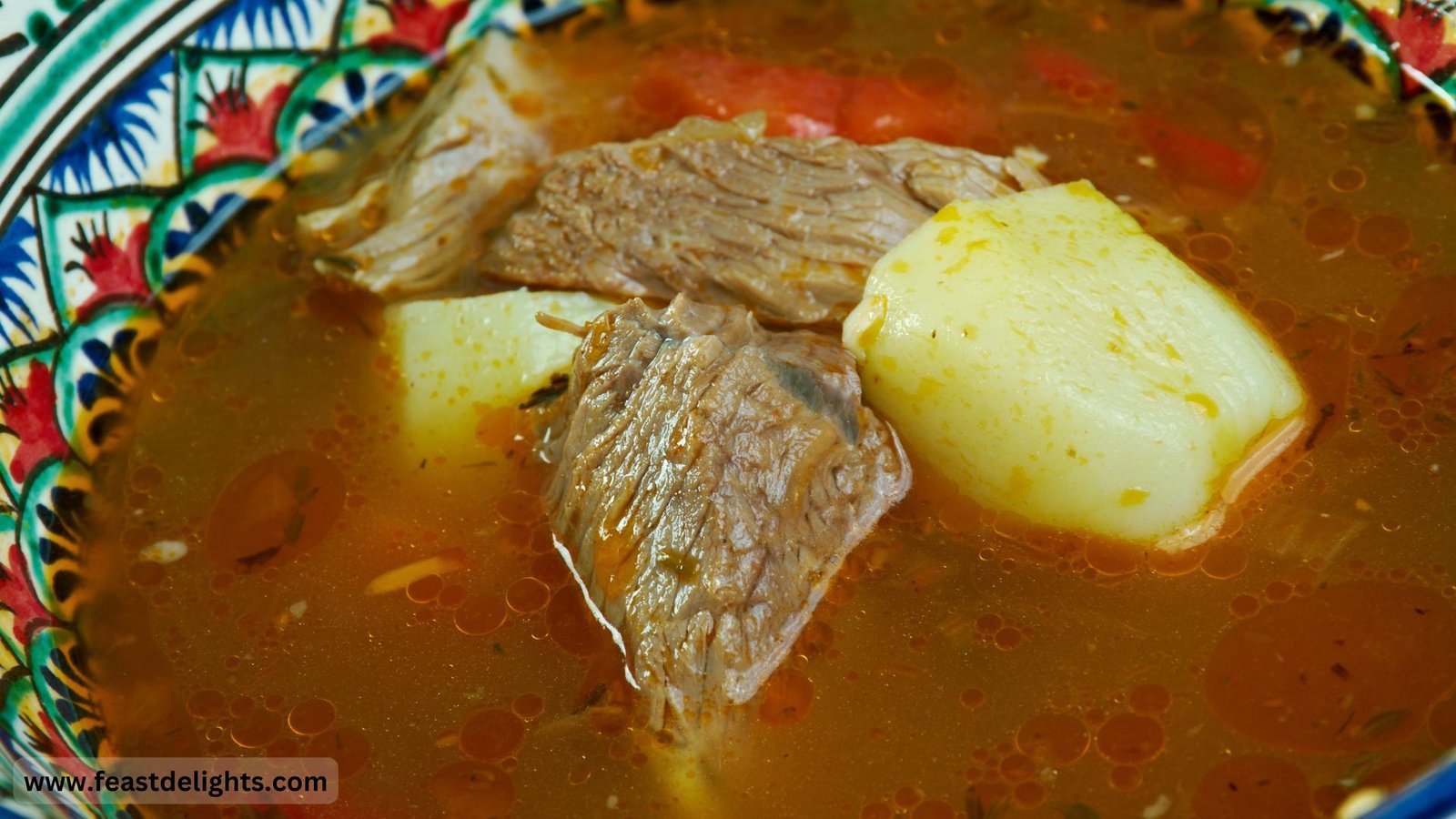
Lamb shurpa is a generous Central Asian-inspired soup of bone-in lamb, potatoes, carrots, sweet peppers and tomatoes in a fragrant broth seasoned with cumin and coriander. Browning the meat first gives the broth a deeper flavour, while gentle simmering softens the lamb without breaking up the vegetables. Fresh garlic and herbs finish the soup. This version makes six to eight bowls in about two and a half hours, with most of the cooking time spent simmering. Serve with warm flatbread to soak up the broth.
Shurpa, also called shorva or sho’rva in Uzbekistan, describes a family of meat and vegetable soups. Some versions begin by boiling the meat; others brown it first. This recipe uses the latter approach, with bone-in lamb and a generous quantity of water rather than a prepared stock.
What distinguishes this lamb shurpa?
In Central Asian cooking, shurpa can be made with different meats, vegetables and methods. The Samarkand culinary guide describes both boiled and fried styles. Browning the lamb in this adaptation gives the soup some of the depth of the fried style, although the vegetables go straight into the broth later. The result is a substantial soup with large pieces of meat and vegetables, rather than a thick stew. No beef is required for this version.
Choosing the lamb and vegetables
Ask for 1 kg (2.2 lb) of bone-in lamb shoulder, neck or breast cut into manageable pieces. These cuts have connective tissue that softens during slow cooking. Choose pieces with some fat so they can brown without added oil. A lean boneless cut may cook more quickly but will give a different broth. Check the cut surfaces for loose bone fragments and remove any before cooking.
Use three litres of water, approximately 12¾ US cups. It may look like a lot at first, but some evaporates during simmering. Choose waxy or all-purpose potatoes that hold their shape, and cut them into pieces about 3–4 cm across. Thick carrot slices soften without disintegrating. Slice the onions and bell pepper, and chop the tomatoes. Ground cumin and coriander give the broth an earthy, fragrant quality. Garlic goes in near the end for a fresher aroma. Parsley or cilantro (fresh coriander) can be used to finish.
Equipment
A heavy 5–6 litre pot with a lid, tongs, ladle, skimming spoon, knife, separate board for raw meat and a thermometer are useful. Choose a pot large enough to leave headroom for the water and vegetables.
Recipe card
Lamb Shurpa with Potatoes, Tomatoes and Cumin
Cooking time includes browning and heating the water; tougher cuts may need longer before vegetables are added.
Equipment: 5–6 litre heavy pot with lid, tongs, ladle, skimmer, knife, separate raw meat board, thermometer
Ingredients
Lamb broth
Vegetables and garlic
Seasoning
To finish
Instructions
Brown the bone-in lamb
Pat lamb pieces dry. Warm a heavy pot over medium heat and brown the meat in its own fat, turning with tongs. Work in batches if needed. Lower heat and add a little of the measured water carefully if browned residue begins to catch.
Simmer and skim the broth
Pour in the remaining water and bring just to a boil. Skim foam, then partially cover and simmer gently for about 60 minutes or longer until the lamb begins to yield to a fork.
Add vegetables and spices
Add sliced onions, carrots and bell pepper, chunked potatoes, chopped tomatoes, cumin and coriander. Simmer gently for 30–40 minutes, until vegetables begin to soften; add hot water if needed.
Finish with garlic and check tenderness
Add minced garlic during the last 10 minutes of the vegetable cooking time. Continue until the lamb pulls readily from the bone and potatoes are knife-tender. Use a thermometer away from bone to confirm lamb exceeds 63°C (145°F) for at least three minutes.
Season and serve
Taste broth and adjust salt and black pepper. Remove loose bone fragments, ladle into six to eight bowls and finish with parsley or cilantro.
Build a rich broth without overcooking the vegetables
Pat the lamb dry using paper towels. Warm the pot over medium heat and place the fattier sides of the meat against the base to release a little fat. Turn with tongs as surfaces brown. Work in batches if the pieces are crowded. If the pot catches, lower the heat and loosen browned residue with a small splash of the measured water, adding it carefully away from splattering fat.
Add the remaining water, bring it just to a boil and remove grey foam with a spoon. Reduce to a gentle simmer, with only occasional bubbles breaking the surface. Keep the lid partly on. Boiling vigorously does not make the meat tender faster and may emulsify fat into the broth. After around an hour, check the meat with a fork. If it is still very firm, continue simmering before adding potatoes. Larger shoulder pieces may take considerably longer than small neck pieces.
Once the meat is beginning to yield, add the vegetables and ground spices. Keep the potatoes large enough to withstand the final 30–40 minutes. Add garlic during the last ten minutes. The lamb should separate readily from the bone with a fork, and a knife should slide into a potato without resistance. Check the thickest meat away from the bone: whole cuts of lamb require at least 63°C (145°F) and a three-minute rest, but tender simmered lamb will ordinarily exceed that temperature. See official minimum-temperature guidance.
Troubleshooting
Tough lamb: keep simmering before adding the vegetables, rather than increasing the heat. Greasy broth: skim floating fat with a ladle; do not remove all of it unless desired. Thin flavour: simmer uncovered briefly after the meat is tender, then season to taste. Cloudy broth: lower the heat and skim early; some cloudiness is normal in a browned-meat soup. Crumbly potatoes: use firmer potatoes and avoid stirring aggressively. If the soup reduces too far, add hot water and taste again.
Variations and serving
Use a similar bone-in lamb cut, or add extra fresh tomato for a brighter broth. Beef shoulder can be used in an adaptation, but it is not part of this recipe and may require longer cooking. Freshly chopped parsley and cilantro are interchangeable here. Offer yeast-free skillet flatbread, soft yeast flatbreads or cucumber salad with dill alongside. Remove loose bones from individual portions before serving children. The soup itself does not require dairy or wheat; check any bread or additional seasoning for allergens.
Make ahead and storage
You can prepare the lamb broth a day ahead, cool it promptly and chill, then skim the solidified surface fat before reheating and adding vegetables. Do not leave a large pot cooling overnight on the counter. Divide soup into shallow containers and refrigerate within two hours (one hour above 32°C/90°F). Keep at 4°C (40°F) or colder for up to three days. Freeze for up to three months for best quality; potatoes may soften. Thaw in the refrigerator and bring the broth to a boil, ensuring the meat and vegetables reach 74°C (165°F) throughout. Follow USDA leftover guidance. Keep raw lamb separate from produce and wash hands and utensils after handling it.
Serve the tender meat and vegetables in deep bowls with plenty of broth, finishing each portion with fresh herbs.
Frequently asked questions
Is this shurpa made with beef?
No. This recipe uses bone-in lamb only. Beef is used in some other versions.
Can I use lamb shanks?
Yes, but large shanks may need a longer simmer before the vegetables are added.
Do I need to peel the potatoes?
Peeling is optional for thin-skinned potatoes. Scrub thoroughly and cut into even chunks.
Can I make shurpa without browning the lamb?
Yes. Some traditional styles start with uncooked meat in water. The broth will be lighter in flavour.
Should I strain the broth?
No, skimming is sufficient for this soup. Remove any loose bones before serving.
Can I use whole cumin seeds?
Yes. Lightly crush them before adding if you prefer their texture and aroma.
More recipes to try






Spotted a detail that needs correcting? Contact the FeastDelights editors.