Ricotta Eggplant Rollatini in Tomato Sauce
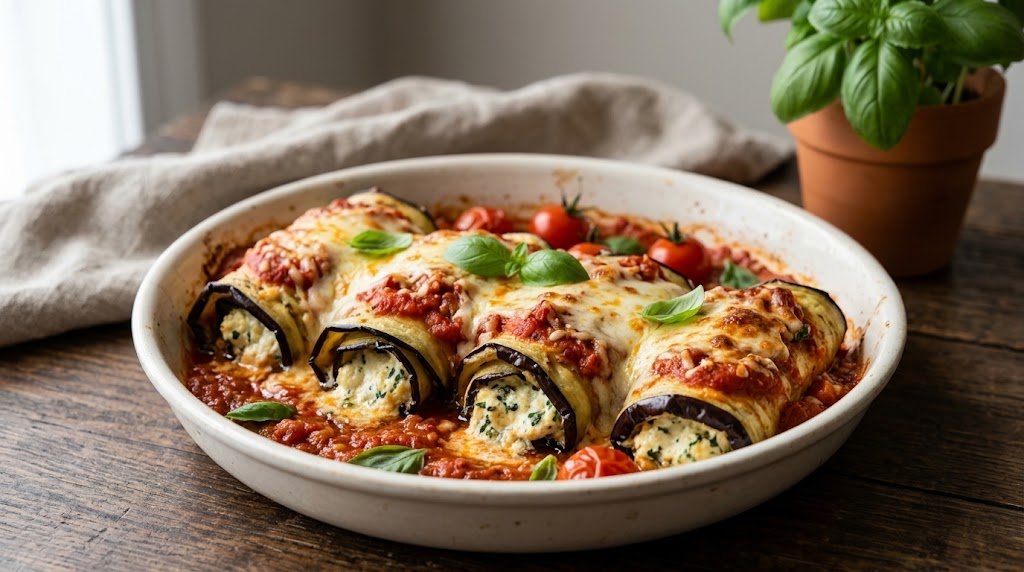
Eggplant rollatini are tender roasted eggplant slices wrapped around a creamy ricotta, egg, Parmesan and basil filling, then baked in garlicky tomato sauce under melted mozzarella. The slices are roasted rather than fried, so they become pliable enough to roll without a breaded coating. This Italian-inspired casserole serves six and takes about 85 minutes before a short serving rest. Let the sauce bubble and check the centre of a roll with a thermometer before removing the dish from the oven.
Eggplant rollatini are Italian-inspired baked rolls of eggplant (aubergine) filled with ricotta, Parmesan, egg and basil. Tomato sauce keeps the rolls moist and mozzarella melts over the top. This version serves six and uses roasted, unbreaded slices, with an estimated 85 minutes for preparation and cooking plus a short rest.
Recipe card
Ricotta Eggplant Rollatini in Tomato Sauce
The 35-minute preparation estimate includes 15 minutes of salting. Simmer the sauce while the eggplant roasts. Allow another 5 minutes to rest before serving; larger or chilled rolls may take longer to bake.
Equipment: Sharp knife or mandoline with guard, two lined baking trays, paper towels, mixing bowl, saucepan, 23 × 33 cm (9 × 13 inch) baking dish and food thermometer.
Ingredients
Eggplant
Filling and topping
Tomato sauce
Shared seasoning and oil
Tomato sauce
Filling and topping
Shared seasoning and oil
Instructions
Salt and roast the eggplant slices
Preheat the oven to 200°C (400°F). Cut eggplants lengthwise into 5 mm slices. Sprinkle lightly with part of the measured salt and rest for 15 minutes. Blot dry, brush with 1 tablespoon olive oil and arrange in a single layer on lined trays. Roast 12–15 minutes, turning or rotating trays if needed, until the slices bend easily without cracking.
Mix the ricotta filling
Drain loose liquid from ricotta. Mix the ricotta with 50 g Parmesan, basil, black pepper and remaining salt to taste before adding eggs. Stir in the eggs until combined; do not taste the raw egg mixture. Refrigerate if the slices are not ready.
Simmer the garlic tomato sauce
While the eggplant roasts, warm the remaining tablespoon of oil over medium-low heat. Stir in garlic for 30 seconds without browning. Add the tomato sauce and simmer gently for 15 minutes, stirring occasionally.
Fill and arrange the rolls
Reduce the oven to 180°C (350°F). Spread a thin layer of sauce in a 23 × 33 cm baking dish. Divide the ricotta filling among the slices, using only enough to roll without squeezing it out. Scatter half the mozzarella over the filling and roll loosely. Arrange seam-side down in one layer. Spoon remaining sauce over the rolls.
Bake until the centre is hot
Top with the remaining mozzarella and the extra 20 g Parmesan. Bake for 25–30 minutes, until sauce bubbles, cheese melts and the centre of a thick roll reaches 74°C (165°F). If the cheese browns before the centre is hot, cover loosely with foil and continue baking. Rest 5 minutes before serving.
Choosing eggplant and cheese
Long, firm eggplants provide slices with enough surface area to wrap around the filling. Cut them lengthwise about 5 mm thick. Very thin slices can tear; thick slices may not soften enough to roll. A mandoline gives uniform thickness if used with its safety guard.
Ricotta is the foundation of the filling. Drain visible whey rather than adding extra dry ingredients to compensate for wet cheese. Eggs help the filling set during baking. Use 50 g Parmesan inside and another 20 g on top; divide the mozzarella between filling and topping. Traditional Parmesan uses animal rennet, so choose vegetarian-labelled hard cheese and check the other cheeses if serving a vegetarian meal.
Roasting and rolling without tearing
Salting the slices for 15 minutes draws out surface moisture. Blot both sides before brushing them with oil. Place the slices in a single layer so that they roast instead of steaming in a stack. Test a slice by lifting it and bending the end gently: it should flex without splitting. If the thickest slices remain stiff, return them to the oven for a few minutes.
Simmer the tomato sauce while the slices roast to avoid unnecessary waiting. Spread a thin layer over the base of the dish before filling the rolls. Let the slices cool enough to handle, then distribute the ricotta mixture across the usable slices. Start at the narrower end if that makes rolling easier and tuck the seam underneath. Do not pack the dish with multiple layers; use a second dish if the rolls will not fit in one layer.
Baking and troubleshooting
Lower the oven to 180°C (350°F) for the assembled dish. The sauce should bubble around the edges and the cheese should melt, but those visual signs alone do not establish that the egg filling is safely cooked. Check the middle of a thick roll with a food thermometer and continue baking to 74°C (165°F), following the official casserole temperature guidance. Cover loosely with foil if the topping is browning too fast.
If the rolls collapse, use less filling and arrange them snugly but not tightly. If liquid collects in the dish, check whether the ricotta was drained and the eggplant blotted. A short rest allows the filling to settle before serving. The exact number of rolls depends on the size and shape of the eggplants; the intended yield remains six portions.
Serving and variations
Serve with toasted bread to catch the sauce and a simple green salad. For a layered version of a similar combination, try baked eggplant Parmesan. For a different baked eggplant main, see vegetarian moussaka with mushroom sauce. A contrasting vegetable side is Sicilian-style caponata.
Well-drained cooked spinach can be added to the filling; squeeze it dry first and avoid overfilling the slices. Parsley can replace basil for a different flavour.
Make ahead and storage
Roast the eggplant and prepare the sauce in advance. Chill both promptly and keep the ricotta filling refrigerated until assembly. An assembled refrigerated dish may need longer in the oven; check its centre temperature rather than relying on the clock. Refrigerate cooked portions at 4°C (40°F) or colder within two hours, or one hour above 32°C (90°F), and use within three days. Freeze cooked portions if needed, thaw in the refrigerator and reheat to 74°C (165°F). Expect slightly softer eggplant after freezing.
Allergens: milk and eggs. Check prepared tomato sauce and cheese labels for other allergens and dietary suitability.
Frequently asked questions
Why do the eggplant slices tear?
Slices may be too thin or under-roasted. Aim for 5 mm thickness and roast until they bend freely.
Why is my rollatini watery?
Blot the salted eggplant and drain ricotta before mixing. Avoid a very thin tomato sauce and leave the baked rolls to rest briefly.
Is eggplant rollatini the same as eggplant Parmesan?
Rollatini are individual slices wrapped around a filling; eggplant Parmesan is generally layered with sauce and cheese.
Can I make it vegetarian?
Choose ricotta and mozzarella made without animal rennet, and replace Parmesan with a vegetarian Italian-style hard cheese.
Can I assemble the rolls the day before?
Yes. Cool the roasted slices and sauce, assemble with chilled filling, cover and refrigerate promptly. Bake until the centre reaches 74°C; allow extra time for a cold dish.
Can I freeze cooked rollatini?
Yes. Freeze cooled individual portions. Thaw in the refrigerator and reheat to 74°C. The eggplant may become softer.
More recipes to try






Spotted a detail that needs correcting? Contact the FeastDelights editors.