Spinach and Ricotta Stuffed Pasta Shells
These spinach and ricotta stuffed pasta shells hold a creamy mixture of chopped spinach, ricotta, Parmesan and egg inside tender jumbo pasta. Marinara sauce surrounds the shells while a topping of mozzarella melts during baking. Cook the pasta just until pliable and squeeze the spinach well to keep the filling from becoming watery. Bake covered first, then uncover to finish the cheese. This Italian-inspired main dish makes 20 shells for four servings in about 80 minutes, including a short rest before serving.
Spinach and ricotta stuffed pasta shells are jumbo pasta shells filled with creamy cheese and chopped greens, baked in marinara sauce beneath melted mozzarella. This Italian-inspired dinner makes 20 shells, or four servings. Allow approximately 80 minutes including boiling the pasta, baking and resting. The main trick is to remove excess water from the spinach while keeping the shells moist with tomato sauce.
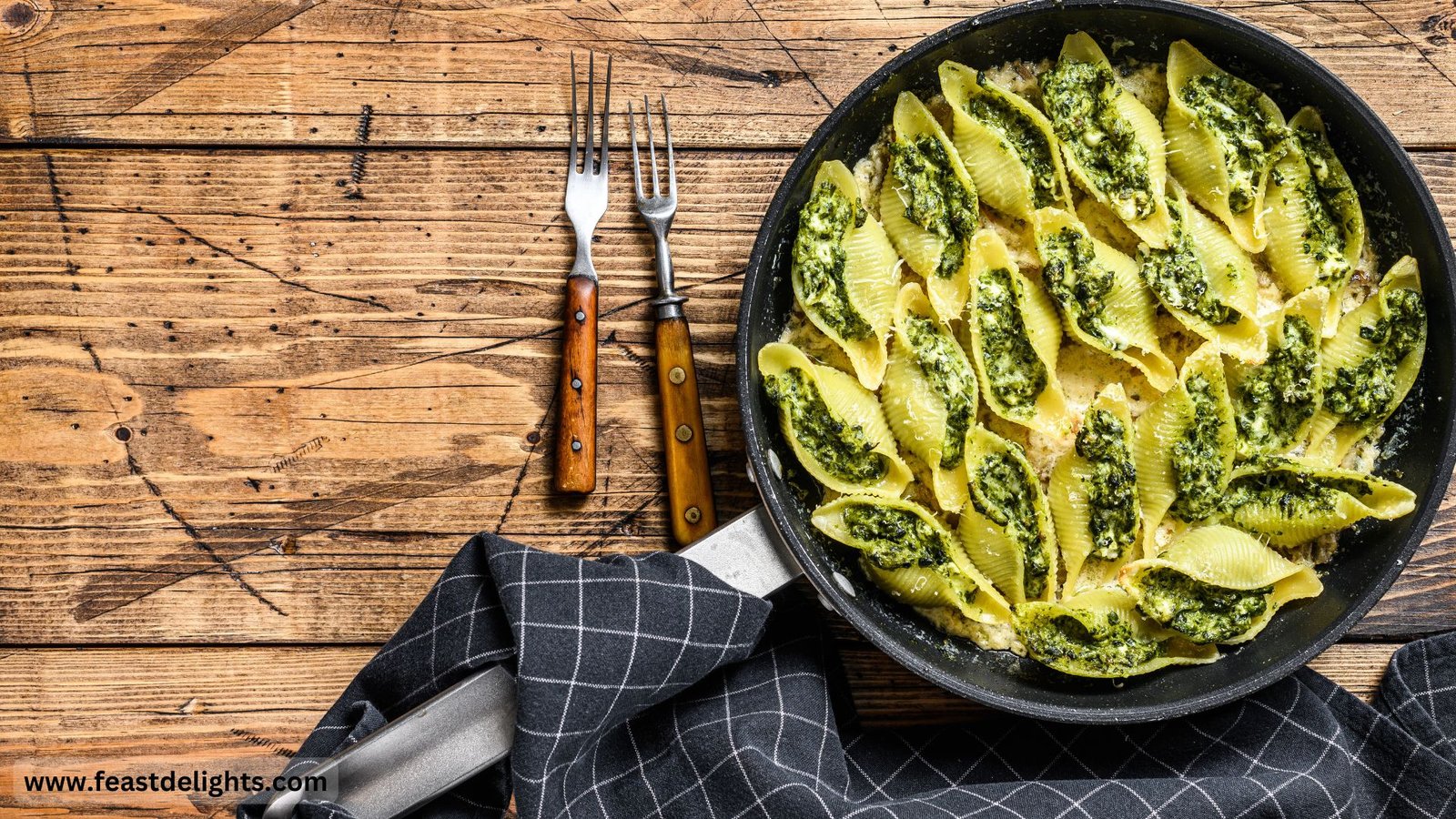
Recipe card
Spinach and Ricotta Stuffed Pasta Shells
Allow about 10 minutes for pasta boiling (check package), 35 minutes baking and 10 minutes resting; spinach preparation may overlap boiling.
Equipment: Large pot, colander, bowl, clean kitchen towel, knife, spoon, large baking dish, foil, food thermometer
Ingredients
Instructions
Boil the jumbo shells
Preheat a conventional oven to 190°C (375°F). Boil jumbo shells in salted water until just pliable, about two minutes less than the package time. Drain gently and cool enough to handle.
Mix the spinach and ricotta filling
Wilt spinach if needed, cool and squeeze out excess water. Chop and combine with ricotta, egg, Parmesan, salt and pepper.
Stuff and arrange in sauce
Spread half the marinara in a baking dish that holds the shells in one layer. Fill each shell with the ricotta mixture and arrange opening-side up. Spoon over remaining sauce and scatter mozzarella.
Bake covered, then uncovered
Cover with foil and bake for 25 minutes. Uncover and bake 10 minutes more, or until sauce bubbles and the centre of the filling reaches 74°C (165°F).
Rest and serve
Rest for 10 minutes before dividing into four portions.
Choosing the pasta and filling ingredients
Look for jumbo shells intended for stuffing, sometimes labelled conchiglioni. Smaller soup shells cannot hold enough filling. Cook them until flexible but still slightly firm; they soften further in the oven. Drain and spread them out so they do not stick together. Ricotta gives the filling a mild, creamy base. If it has a pool of whey, drain that excess liquid before mixing. The 250 g (8.8 oz) of ricotta is combined with 200 g (7 oz) of spinach, wilted and squeezed dry. Use the listed spinach quantity as your starting reference; the amount of moisture lost during wilting varies. Frozen spinach can work if thoroughly thawed, drained and squeezed, but its weight after draining differs from fresh spinach.
The egg binds the filling as it cooks; Parmesan adds savoury flavour, while mozzarella melts over the top. For a vegetarian meal, use cheeses made with vegetarian rennet, since traditional Parmesan uses animal rennet. The 500 ml (about 2 US cups plus 2 tablespoons) of marinara keeps the pasta moist. Choose a sauce thick enough to spoon rather than a watery tomato juice.
How to prevent watery or dry stuffed shells
Wilt the spinach if necessary, cool it and squeeze firmly in a clean kitchen towel or sieve. Chop before mixing with the ricotta, egg and seasonings. The mixture should mound on a spoon without releasing liquid. Do not taste the mixture after adding raw egg. Spread half the marinara across the base of a baking dish large enough for 20 shells in one layer. Fill the pasta gently with a teaspoon, then arrange opening-side up. Spoon the remaining sauce around and over the shells, scatter mozzarella and cover with foil. Covering for the first 25 minutes keeps exposed pasta from becoming leathery. Uncover for another 10 minutes so the cheese melts and the surface develops colour.
Check that sauce bubbles around the shells and the central filling reaches 74°C (165°F) with a food thermometer, in line with FoodSafety.gov casserole guidance. Rest for 10 minutes before serving.
Troubleshooting and substitutions
Shells tear: Stop boiling while the pasta is just pliable and lift gently. Filling leaks: Drain the spinach and ricotta more thoroughly. Pasta edges harden: Cover exposed pasta with sauce and keep the dish covered for the first bake. Cheese browns too quickly: Replace the foil loosely until the centre is hot. Add chopped basil or a pinch of chilli to the sauce for a variation. Swiss chard can replace spinach if cooked, drained and chopped. This recipe contains milk, egg and wheat; check pasta and sauces for other allergens.
Serving, make ahead and storage
Serve five shells per person with a green salad or roasted vegetables. For a different sauce, try mushroom marinara with garlic and basil. If serving meat eaters, lasagna stuffed shells with beef are a separate variation. Assemble the dish up to a day ahead and refrigerate covered immediately; a cold dish may need longer in the oven. Refrigerate cooked shells in shallow covered containers within 2 hours (1 hour above 32°C/90°F) at 4°C (40°F) or below. Use within 3 days. Freeze cooled portions, thaw in the refrigerator and reheat covered to 74°C (165°F) in the centre. Follow official cooling and refrigeration guidance.
Frequently asked questions
Do I need to cook the shells before stuffing?
Yes. Boil them until flexible but slightly firm, about two minutes less than the package directions.
Can I use frozen spinach?
Yes. Thaw, drain and squeeze it thoroughly; the drained weight and yield differ from fresh spinach.
Can I omit the egg?
The filling will be softer and less bound without it. This version uses one egg; an egg-free variation needs a kitchen test.
Why is my ricotta filling watery?
Excess whey or poorly drained spinach can cause this. Drain both before mixing.
Is Parmesan vegetarian?
Traditional Parmesan uses animal rennet. Choose a vegetarian-rennet hard cheese and mozzarella if needed.
Can stuffed shells be frozen?
Yes. Freeze cooked portions after prompt cooling, thaw in the refrigerator and reheat to 74°C (165°F).
More recipes to try






Spotted a detail that needs correcting? Contact the FeastDelights editors.