Vegan Tofu Pad Thai with Tamarind and Lime
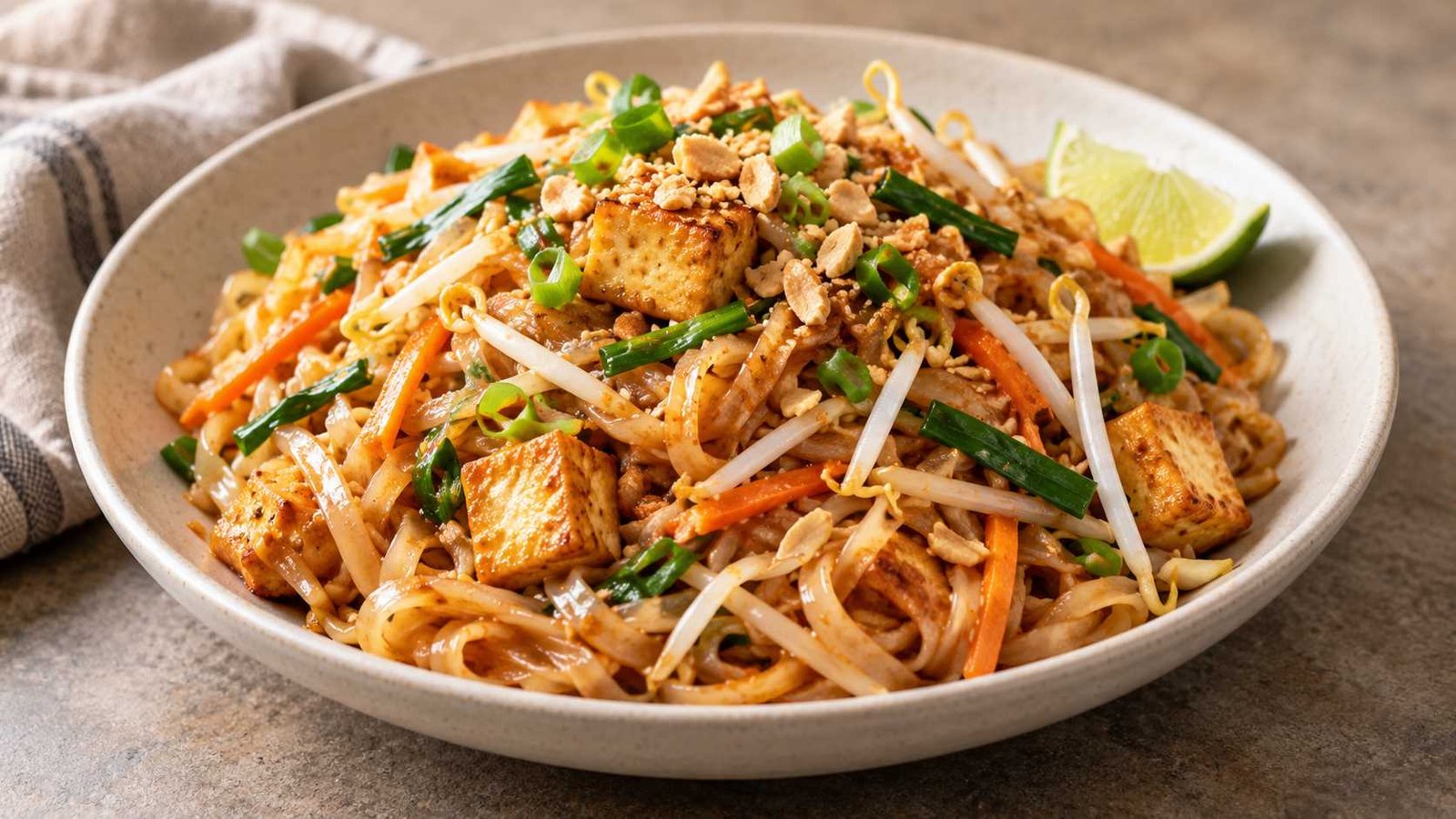
Flat rice noodles, lightly browned tofu, broccoli and carrot are tossed in a savoury, sweet-sour tamarind sauce in this vegan Pad Thai. Cooked bean sprouts add texture, while chopped roasted peanuts, spring onion and coriander finish the noodles. Soy sauce and maple syrup replace the fish sauce and palm sugar often used in other versions. The recipe serves three to four and takes about 40 minutes with quick-soaking noodles and ready-pressed tofu. Serve immediately while the noodles are supple and hot.
Vegan Pad Thai with tofu and vegetables combines flat rice noodles, golden tofu, broccoli, carrot and cooked bean sprouts in a tangy tamarind-lime sauce. Soy sauce replaces fish sauce in this Thai-inspired adaptation, and maple syrup balances the sour ingredients. The recipe serves three to four in about 40 minutes if the noodles and tofu can be prepared within 20 minutes.
Choosing noodles, tofu and tamarind
Use 250 g (8.8 oz) of dried flat rice noodles, preferably medium-width rice sticks. Soaking methods differ between brands: follow the packet and aim for noodles that bend readily but are not falling apart. If the package requires a longer soak, begin earlier. Use 250 g (8.8 oz) of firm, pressed tofu; surface moisture prevents browning, so pat it dry before cooking.
Tamarind is responsible for the characteristic fruity sourness in many Pad Thai sauces. Thai cooking tamarind is usually a pourable pulp or paste; very thick concentrates can be considerably stronger. Start with the measured tablespoon of the suitable cooking paste and taste the sauce before adding it. Soy sauce, rice vinegar, maple syrup and lime give this adaptation a salty, sweet and sharp balance. Check chilli paste for shrimp or fish ingredients. This recipe deliberately contains no egg or fish sauce and adds broccoli and carrot for a vegetable-rich variation, rather than claiming to reproduce every traditional Thai ingredient.
Recipe card
Vegan Tofu Pad Thai with Tamarind and Lime
Total assumes quick-preparation noodles and ready-pressed tofu. Allow additional time if the noodle package requires a long soak or tofu needs pressing.
Equipment: Large bowl or saucepan for noodles, colander, knife, cutting board, small bowl and whisk, wide wok or 30 cm skillet, spatula, tongs
Ingredients
Noodles and stir-fry
Tamarind sauce
To finish
Instructions
Prepare the rice noodles
Prepare the noodles according to their package directions until flexible but still slightly firm, since they finish cooking in the wok. Drain well and rinse briefly if the packet recommends it. If soaking takes longer than 20 minutes, allow extra time.
Whisk the tamarind sauce
Whisk soy sauce, tamarind paste, rice vinegar, maple syrup, lime juice and chilli paste together in a bowl. Taste the sauce before adding it to the wok and adjust only if needed because tamarind strength varies.
Brown the tofu
Pat the pressed tofu dry and cut into bite-size cubes. Heat the neutral oil in a wide wok or skillet over medium-high heat. Cook the tofu in one layer, turning occasionally until golden on several sides, about 6–8 minutes. Transfer to a clean plate.
8 minStir-fry vegetables and cook sprouts thoroughly
Lower heat briefly and stir garlic for about 30 seconds. Add broccoli and carrot with two tablespoons of water and stir-fry until nearly tender. Add the bean sprouts and continue cooking until thoroughly cooked and steaming throughout, adding a splash of water if needed. Do not use raw or lightly cooked sprouts as a garnish.
7 minToss noodles with sauce and finish
Return tofu to the wok, add the drained noodles and sauce, and toss gently for 2–3 minutes or until the noodles are tender and the sauce coats them. Add a splash of water if they are too firm or dry. Serve hot with chopped peanuts, sliced spring onions and coriander.
3 min
How to keep rice noodles separate
Have all vegetables cut, the sauce mixed and the peanuts ready before turning on the heat. Once rice noodles are hydrated, avoid leaving them in hot water until soft. Drain thoroughly. Heat a wide wok or skillet and brown tofu in a single layer. Transfer it out before cooking the vegetables to prevent the cubes from breaking as you toss the noodles. If the pan is crowded, work in batches and divide the sauce proportionately.
Cut broccoli florets small and carrot into thin matchsticks. Briefly stir garlic, then add the vegetables with a splash of water to help them cook without burning. Add bean sprouts early enough to cook thoroughly, not merely warm them at the last second. Raw and lightly cooked sprouts can carry harmful bacteria; rinsing alone is not sufficient. Keep them refrigerated before use, wash hands and utensils after handling and never add raw sprouts as a topping. People at higher risk of foodborne illness should avoid raw or undercooked sprouts.
Checking the sauce and doneness
Add the noodles, tofu and sauce after the sprouts are thoroughly cooked. Use tongs or a broad spatula to lift and turn the noodles rather than cutting them with aggressive stirring. They should be supple, evenly coated and tender through the centre, without a large pool of sauce. If too firm, add water a tablespoon at a time and continue tossing briefly. If the noodles become sticky or tear, they were probably soaked too long or overcooked. Cook a little less next time and serve immediately.
Adjust the sauce cautiously: a little maple syrup can balance excessive acidity, while lime can lift a sauce that tastes too sweet. Because the measured soy sauce is already salty, avoid adding extra salt without tasting. If using a strong soy sauce or tamarind concentrate, use the product guidance and make any changes gradually.
Variations and allergens
Replace broccoli with sliced mushrooms or peppers, or swap maple syrup for agave syrup. For a different noodle dish, see vegetarian Pad Kee Mao, which uses a distinct sauce and basil. This vegan version differs from the site’s vegetable Pad Thai with egg and chicken and shrimp Pad Thai. It contains soy and peanuts; standard soy sauce often contains wheat. For dietary restrictions, check every packaged ingredient and avoid cross-contact. Do not assume gluten-free or allergen-free status from the noodle type alone.
Serving and preparing ahead
Serve hot with lime wedges if desired, chopped peanuts and coriander. A side of fresh cucumber salad offers a cool contrast. Mix the sauce and chop the vegetables ahead, keeping perishable ingredients chilled separately. Cook the noodles and toss the dish close to serving; the rice noodles will absorb sauce and lose their supple texture as they stand.
Storage and reheating
For best texture, serve immediately. Chill leftovers promptly in shallow containers, ideally within one hour, refrigerate at 4°C (40°F) or colder and use within 24 hours. Reheat once to 74°C (165°F) throughout in a skillet with a splash of water. Freezing is not recommended for noodle texture; if frozen promptly, thaw in the refrigerator and use within 24 hours of thawing.
Serve as soon as the sauce clings to the noodles and the sprouts are thoroughly cooked. Add peanuts and fresh herbs at the table to keep their texture and aroma.
Frequently asked questions
Can I use tamarind concentrate?
Yes, but strong concentrate can be much more sour than Thai cooking tamarind paste. Dilute according to its label and add gradually to taste rather than using the same spoonful undiluted.
Why are the noodles sticking together?
They may be over-soaked or left to sit in a clump. Drain thoroughly, separate gently with tongs and add a small splash of water while tossing in the wok.
Can I make this without peanuts?
Omit the peanuts for a different texture. Only use an alternative topping that is suitable for the diners, and check ingredients and equipment for cross-contact.
Can I make this gluten-free?
Use certified gluten-free rice noodles and gluten-free tamari instead of soy sauce. Check the chilli paste and other packaged ingredients as well.
Can I leave the sprouts raw?
No. Cook sprouts thoroughly to reduce foodborne illness risk. People at higher risk of serious illness should avoid raw or lightly cooked sprouts.
Can I substitute another vegetable for broccoli?
Yes. Sliced mushrooms or bell peppers are suitable. Cut pieces small and cook until tender before adding the noodles.
More recipes to try


Spotted a detail that needs correcting? Contact the FeastDelights editors.