Herb and Garlic Prime Rib Roast with Dijon Mustard
This herb and garlic prime rib roast uses a 4 kg bone-in rib joint coated with rosemary, garlic, Dijon mustard, lemon, honey and olive oil. A short hot roasting stage develops a browned exterior, followed by gentler cooking until the centre reaches the required temperature. The joint serves eight to ten, with an estimated 4 hours including preparation and resting. Use a meat thermometer rather than a fixed roasting time, then carve thin slices across the grain and serve with the pan juices.
Herb and garlic prime rib roast is a festive beef centrepiece with a rosemary, mustard and lemon coating. This bone-in version uses a 4 kg joint for eight to ten servings. Budget roughly four hours including preparation and resting, with additional time if the joint is unusually thick. Temperature, not the clock, determines when the roast is done.
Choosing a rib roast
A bone-in rib roast is also known as a standing rib roast because the ribs can support the meat during cooking. Look for an evenly shaped whole-muscle joint with a reasonable amount of marbling. A longer joint may cook differently from a compact joint of the same weight. The term prime rib describes the dish and cut; it does not necessarily mean the meat has been graded USDA Prime. Ask the butcher to loosen and tie the ribs if you want to make carving simpler.
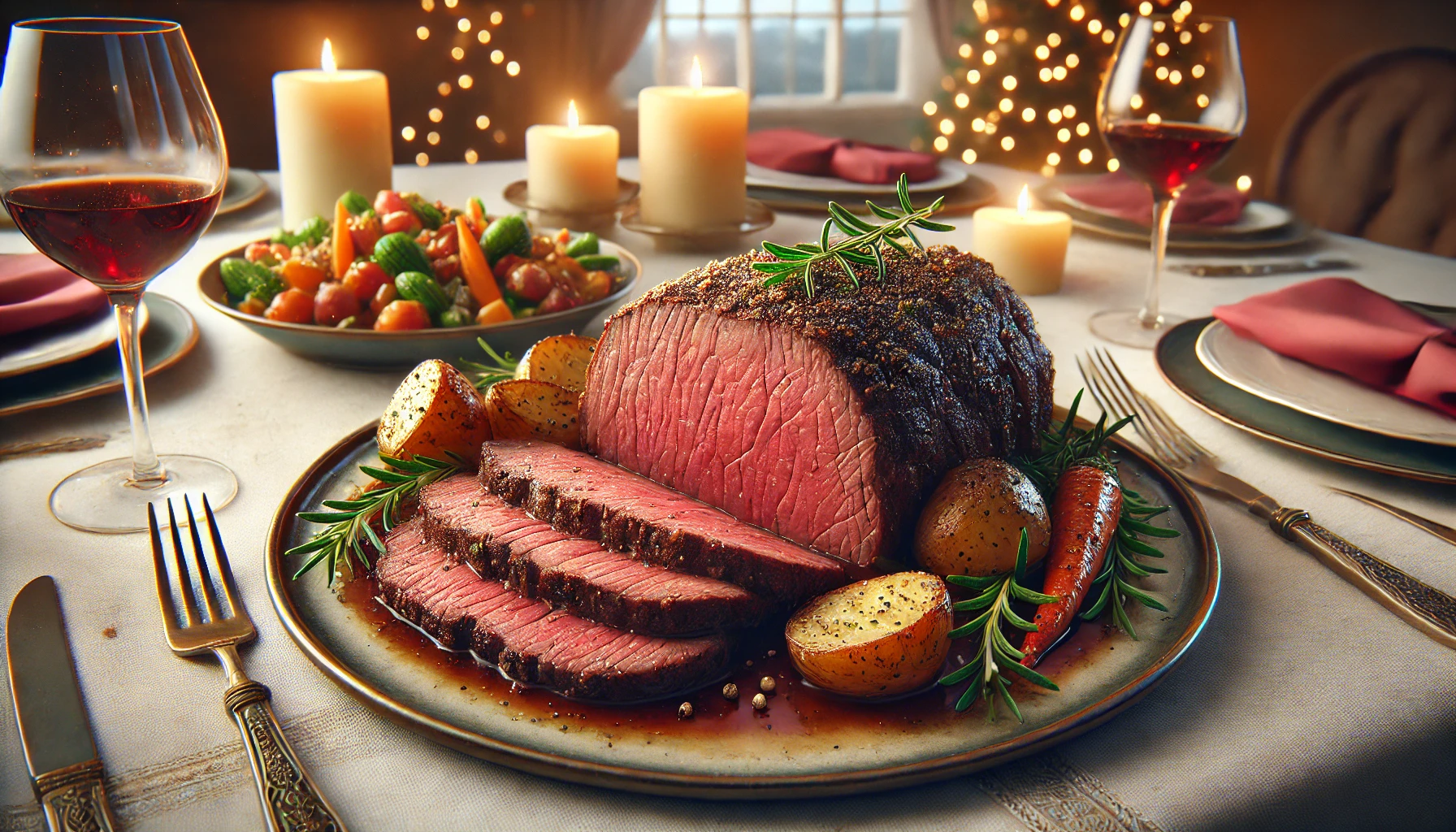
Recipe card
Herb and Garlic Prime Rib Roast with Dijon Mustard
The 200-minute oven estimate includes 20 minutes at high heat and a longer roast at 163°C (325°F). This is a conservative planning estimate for a 4 kg joint, not a tested time; begin checking early and allow longer if needed. Preheat during preparation; no prolonged room-temperature tempering is required.
Equipment: Large roasting pan, bowl, paper towels, oven-safe probe thermometer or instant-read thermometer, carving board, foil, sharp carving knife
Ingredients
Beef
Herb coating
Instructions
Prepare the roast
Preheat the conventional oven to 220°C (425°F, rounded). Remove the beef from the refrigerator during preparation, pat dry with paper towels and place on a clean roasting tray. Keep raw-meat tools separate from cooked food.
Apply the herb coating
Mix crushed garlic, rosemary, olive oil, Dijon, honey, lemon juice, salt and pepper. Rub over the exposed beef surfaces. Discard excess mixture that contacts raw beef.
Start at high heat
Place the joint bone-side down in a heavy roasting pan, fat-side up. Roast for 20 minutes at 220°C. If the herb coating browns rapidly, reduce heat early.
Finish roasting by temperature
Lower oven to 163°C (325°F). Insert an oven-safe probe into the thickest centre away from bone and large fat pockets. Begin checking well before the estimated finishing time, around 90 minutes after lowering heat if using an instant-read thermometer. Continue roasting until the centre reaches at least 63°C (145°F); follow any higher label requirement. Tent loosely with foil if the crust darkens too early.
Rest and carve
Transfer to a clean board and tent loosely with foil. Rest for at least 20 minutes, including the minimum three-minute safety rest. Cut along the bones to remove them, then slice the meat across the grain and serve with cooked pan juices.
How the herb coating flavours the beef
Crush the garlic finely so it distributes evenly. Chopped fresh rosemary gives a woody aroma; dried rosemary is stronger by volume, so use the smaller alternative measure. Dijon helps the coating adhere and provides tang, while lemon juice and honey balance the flavour. Olive oil makes the mixture spreadable. Pat the meat dry before applying the coating. Do not leave a large joint at room temperature for an extended period in an attempt to warm its centre; prepare it while the oven preheats.
Two-stage roasting and reliable doneness
Start with the ribs down and the fat side up, leaving space around the joint for hot air. A short high-temperature stage promotes surface browning. Reduce to at least 163°C (325°F) for the remainder. Honey and garlic can scorch, so monitor colour and cover loosely if necessary. The original 150-minute cooking estimate is revised to 200 minutes as a planning allowance for the large joint. This is not a tested cooking time. The official roasting chart provides estimates for smaller rib roasts at 325°F, which should not be extrapolated as an exact timetable for a 4 kg roast.
Place an oven-safe probe in the thickest part, away from bone and fat. Check more than one location if the joint is uneven. For whole beef roasts, USDA guidance recommends at least 63°C (145°F) and a minimum three-minute rest; follow higher package instructions where relevant. Check well before the estimated time and continue if the target has not been reached. The temperature may continue rising during resting, but do not assume carryover heating will achieve the safe minimum.
Resting and carving
Transfer to a clean board and tent loosely for at least 20 minutes. Resting allows the cooking juices to settle and gives time to finish side dishes. Avoid tight wrapping, which can soften the crust. Cut along the curve of the ribs to release the meat, then slice across the grain into eight to ten portions. Serve with cooked pan juices. If the pan juices are very fatty, skim them before serving.
Troubleshooting
Dark crust before the centre is ready: Tent loosely with foil and continue at the lower temperature. Uneven cooking: Check the thickest section in more than one location. Dry beef: Monitor temperature early instead of extending a fixed time. Difficulty carving: Remove the ribs first and use a sharp knife. Greasy gravy: Skim excess fat before using the pan juices.
Serving and storage
Serve with garlic and rosemary roasted potatoes or mixed roasted vegetables. For a smaller roast dinner with individual puddings, see roast beef with Yorkshire puddings. Store carved leftovers promptly in shallow containers. The coating contains mustard; verify labels for other allergens. Nutrition is omitted because bone weight, trimming, fat loss and serving sizes vary.
Frequently asked questions
What is a standing rib roast?
It is a bone-in beef rib joint that can rest on its ribs in the pan. Prime rib is the common dish name, not necessarily a guarantee of USDA Prime grade.
How long does a 4 kg joint take?
The card allows about 200 minutes in the oven. Actual timing varies substantially with thickness, oven and starting temperature; use the thermometer.
Should I remove the bones before roasting?
No. The original method uses the bones as a natural rack. Ask the butcher to loosen and tie them if easier carving is desired.
Do I need to bring the beef to room temperature?
No. Prepare and season it while the oven preheats. A large joint will not warm evenly during a short counter rest.
Why is the herb crust burning?
Garlic and honey can darken at high heat. Reduce heat sooner or tent loosely with foil if needed.
Can I use dried rosemary?
Yes. Use the original alternative of two teaspoons dried rosemary, crushed between your fingers.
How do I carve the roast?
Cut along the rib bones to separate them from the meat, then slice the boneless section across the grain.
Can I freeze cooked prime rib?
Yes. Freeze promptly in meal-size portions, thaw in the refrigerator and reheat to 74°C (165°F).
More recipes to try






Spotted a detail that needs correcting? Contact the FeastDelights editors.