Vanilla Crème Brûlée with a Crisp Sugar Top
Silky vanilla custard baked in a water bath and finished with a crisp caramelized sugar top.
Crème brûlée is a chilled vanilla custard covered with a thin layer of crisp caramel. The source lists eggs, sugar, cream and a vanilla bean, but the instructions incorrectly suggest cooking the custard on the stovetop until thick and baking until firm. This version tempers the yolks with warm cream, then bakes the custards gently in a water bath until just set. Chill them fully before sprinkling on the sugar and torching it. The result should be cool and silky underneath with a brittle caramel top that cracks under a spoon. Heat oven to 150°C (300°F). Put six ramekins in a deep roasting pan. Warm cream with vanilla seeds and pod in a saucepan until steaming; do not boil. Remove from heat and steep 10 minutes.
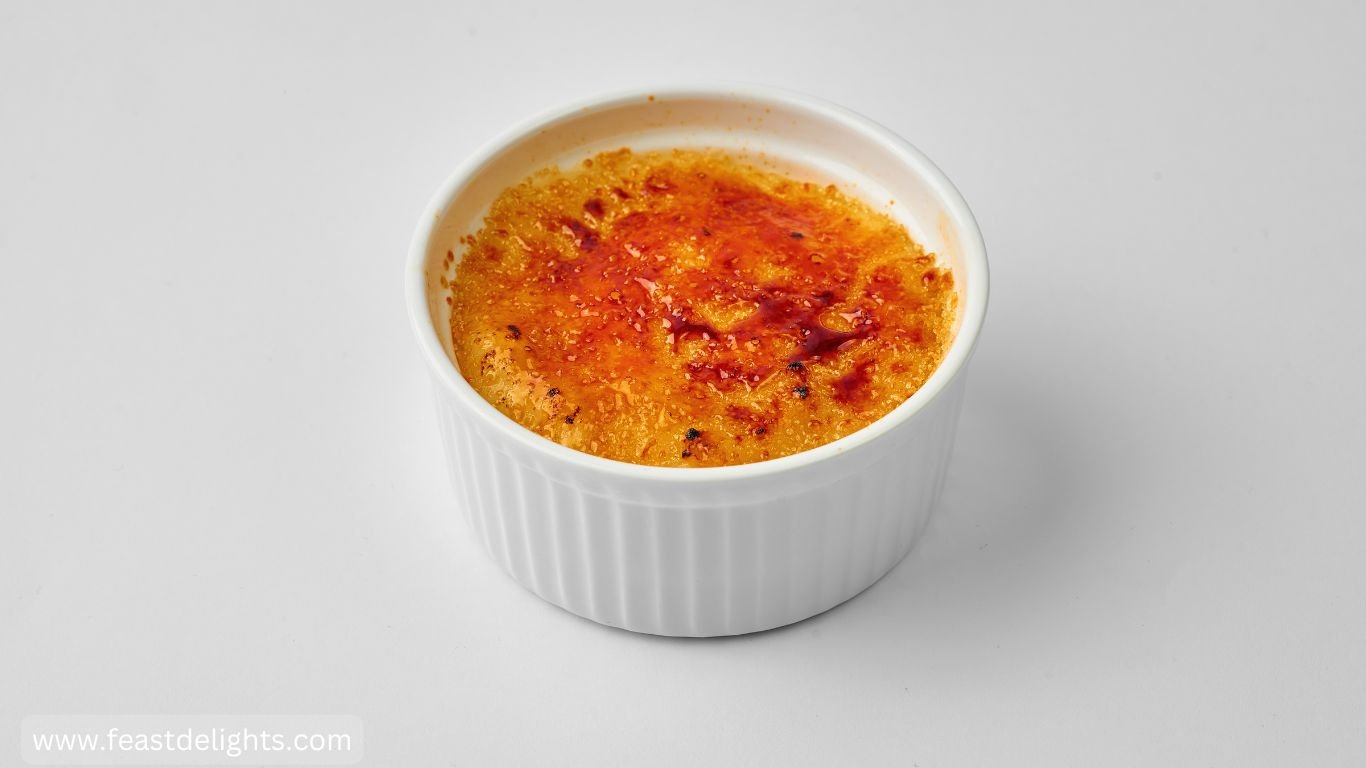
Recipe card
Vanilla Crème Brûlée with a Crisp Sugar Top
Equipment: Six ramekins, deep roasting pan, saucepan, whisk, fine sieve, instant-read thermometer, kitchen torch
Ingredients
Instructions
Warm cream
Heat oven to 150°C (300°F). Put six ramekins in a deep roasting pan. Warm cream with vanilla seeds and pod in a saucepan until steaming; do not boil. Remove from heat and steep 10 minutes.
Mix yolks
Whisk egg yolks with 150 g of the granulated sugar and salt until combined, without whipping in too much air.
Temper custard
Remove vanilla pod. Slowly whisk warm cream into the yolk mixture. Strain into a jug and divide among ramekins.
Bake in water bath
Pour hot water into the roasting pan to come halfway up ramekin sides. Bake 35 to 50 minutes until edges are set and centres still wobble slightly; custard should reach 71°C (160°F).
Chill
Carefully remove ramekins from water. Cool, cover and refrigerate at least 4 hours.
Caramelize
Just before serving, blot any surface moisture. Sprinkle each custard with about 1 tablespoon demerara sugar and torch until melted and amber. Let harden 1 to 2 minutes.
How to tell when it is ready
Edges are set, centres wobble slightly, and custard reaches 71°C (160°F) before chilling.
Tips
- Warm cream gently rather than boiling it.
- Pour cream slowly into yolks while whisking.
- Use hot water in the baking bath and keep it below the ramekin rims.
- Torch the sugar shortly before serving for the crispest top.
Troubleshooting
- If custard has bubbles, strain it and skim foam before baking.
- If the centres ripple like liquid, continue baking in short intervals and recheck temperature.
Substitutions
- Use vanilla paste in place of the scraped vanilla bean.
- Use light brown sugar for the topping if demerara is unavailable.
Variations
- Infuse the cream with a strip of orange zest, then remove it before straining.
- Use vanilla extract if a vanilla bean is unavailable.
Serving suggestions
- Serve with fresh berries.
- Add a small shortbread biscuit.
- Offer espresso after dinner.
- Pair with sliced stone fruit in season.
Make ahead
Bake the custards a day ahead and keep them covered in the refrigerator. Caramelize the tops at serving time.
Storage
Keep covered in the refrigerator up to 3 days. Add and torch the sugar immediately before serving.
Food safety
Contains eggs and dairy. Bake the custard to 71°C (160°F), chill promptly and keep refrigerated. Use a kitchen torch according to its safety directions.
Frequently asked questions
Can I make crème brûlée ahead?
Yes. Bake and chill the custards up to 3 days ahead, but torch the sugar just before serving.
How should I store vanilla crème brûlée?
Keep covered in the refrigerator up to 3 days. Add and torch the sugar immediately before serving.
Serve while fresh and follow the storage guidance for leftovers.
More recipes to try


Spotted a detail that needs correcting? Contact the FeastDelights editors.