Homemade Cooked Eggnog with Vanilla and Nutmeg
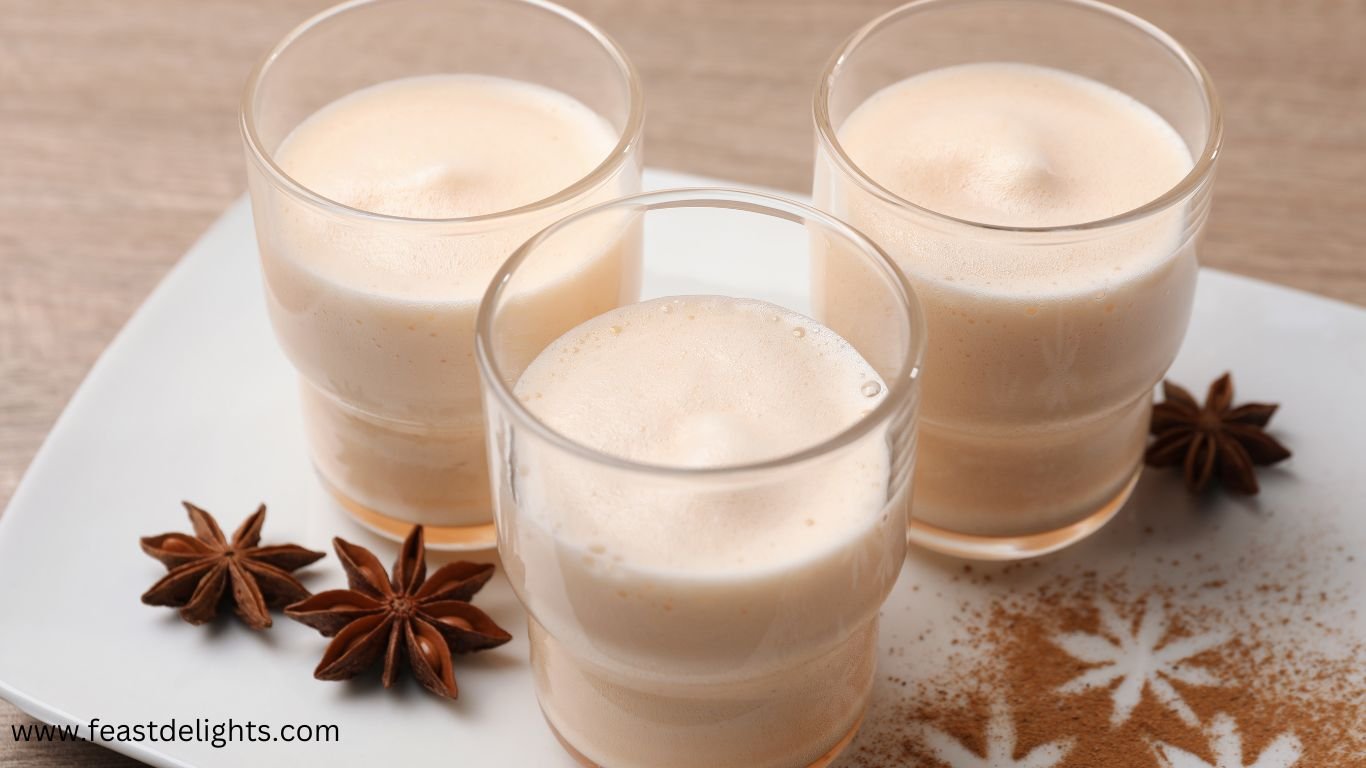
This homemade cooked eggnog has the richness of a pourable custard, with whole milk, cream and egg yolks gently heated together. Vanilla, cinnamon and nutmeg add a warm holiday fragrance, while chilling makes the drink smooth and refreshing. Unlike recipes that fold in uncooked egg whites, this version uses a cooked egg base and a thermometer. It makes six servings with about 30 minutes of preparation and cooking, followed by at least four hours of chilling. Serve with freshly grated nutmeg.
Homemade cooked eggnog is a creamy holiday drink made by gently heating egg yolks, milk and cream with sugar and spices. This recipe makes six servings in about 30 minutes of active preparation and cooking, followed by at least four hours in the refrigerator. A food thermometer helps you cook the custard safely without scrambling it.
Recipe card
Homemade Cooked Eggnog with Vanilla and Nutmeg
Includes at least 4 hours chilling. Cooling in an ice bath and longer refrigeration may extend elapsed time.
Equipment: Kitchen scale, measuring jug, heatproof bowl, whisk, heavy saucepan, flexible spatula, instant-read thermometer, fine sieve and shallow heatproof storage containers.
Ingredients
Custard base
Flavourings
Optional addition
Instructions
Whisk the yolks and sugar
Whisk the egg yolks and sugar in a heatproof bowl until smooth and slightly pale.
Warm milk, cream and spices
Warm milk, cream, cinnamon, nutmeg and salt in a saucepan until steaming, not boiling.
Temper the yolks
Gradually whisk about one cup of the warm dairy into the yolks. Return the tempered mixture to the saucepan.
Cook to a safe custard temperature
Cook over low heat, stirring constantly, until the custard reaches 71°C (160°F) on a thermometer and lightly coats a spoon. Do not boil.
Strain, cool and chill
Strain into a clean heatproof container and stir in vanilla. Cool quickly in an ice-water bath, add optional spirits only after cooling, cover and refrigerate promptly for at least 4 hours.
Serve cold
Whisk gently and pour into six glasses. Finish with nutmeg and serve cold.
Ingredients and texture
Four large egg yolks provide richness and thicken the dairy gently. Use pasteurised eggs when available, especially if serving people at increased risk of foodborne illness. Whole milk (500 ml, about 2 US cups plus 2 tablespoons) keeps the drink pourable, while 240 ml heavy cream (one US cup) supplies body. Granulated sugar dissolves as the custard warms. Ground cinnamon and nutmeg should support, not overpower, the vanilla; grate additional nutmeg at serving if desired.
The original recipe includes optional bourbon or dark rum. Leave it out for an alcohol-free added-spirit version, and use alcohol-free vanilla flavouring if you need to avoid alcohol completely. Alcohol is not a substitute for cooking the eggs safely.
How to cook eggnog without scrambling the yolks
Whisk yolks and sugar in a heatproof bowl until slightly paler and smooth. Warm the milk, cream, cinnamon, nutmeg and salt in a heavy saucepan until steaming, without a rolling boil. Temper the eggs by gradually whisking approximately one cup of warm dairy into the yolk mixture. Pouring all the hot liquid onto the eggs at once risks creating lumps. Return the mixture to the saucepan and stir constantly over low heat, reaching the corners and base with a flexible spatula.
Check with an instant-read thermometer without touching the pan base. Bring the mixture to at least 71°C (160°F), then remove from the heat once it lightly coats a spoon. A coating alone is not proof of safe temperature. The FDA recommends heating egg-containing mixtures for eggnog to 160°F. Do not boil or continue heating once the mixture is ready, as the yolks may curdle.
Cooling and serving
Strain the custard into a clean heatproof container to catch any small cooked egg particles. Add vanilla. Set the container in a larger bowl of ice water and stir occasionally without letting bath water enter the custard. Refrigerate promptly in a covered container once cooled; allow at least four hours in the refrigerator for the flavours to settle and the texture to thicken. Add optional spirits only after cooling, or leave them out altogether. Whisk gently before pouring. Serve cold, with a pinch of freshly grated nutmeg.
Troubleshooting
Small lumps: remove from heat and strain immediately. Severely curdled custard: it may not recover a smooth texture; avoid serving an undercooked batch. Too thick after chilling: whisk in a tablespoon of cold pasteurised milk at a time. Too thin: remember this is a drink, not a spoonable pudding; it thickens as it cools. Overly spiced: dilute a portion with a little cold milk and adjust to taste.
Pairings and substitutions
Serve with honey gingerbread cookies, vanilla butter shortbread or soft honey gingerbread. Lactose-free whole milk and heavy cream can replace regular dairy if they have comparable fat content; they still contain milk proteins. A pinch of cardamom can replace some of the cinnamon for a different aroma. Avoid adding raw whipped egg whites to this cooked version.
Make ahead, storage and allergens
Prepare eggnog the day before serving and keep it refrigerated. For gatherings, pour small amounts at a time and keep the remaining drink chilled. Homemade eggnog is recommended for two to four days refrigerated by FoodSafety.gov; this recipe uses a three-day limit. Freezing can damage the custard texture. Contains egg and milk. Keep any alcoholic version clearly separate from alcohol-free servings.
Frequently asked questions
Can I make eggnog without alcohol?
Yes. Omit the optional spirits; choose alcohol-free vanilla flavouring if avoiding alcohol entirely.
Why temper the egg yolks?
Gradually adding warm dairy reduces sudden heating and helps prevent lumps.
How do I know the eggnog is safely cooked?
Use a food thermometer to confirm 71°C (160°F) throughout the stirred mixture.
Can I use whole eggs instead of yolks?
That changes the custard texture and proportions. This recipe is formulated for four yolks.
Can I serve eggnog warm?
Yes, immediately after cooking if desired, but the specified recipe is served chilled and thickens as it cools.
Can I make it the day before?
Yes. Chill promptly and keep covered at 4°C (40°F) or below; use within three days.
More recipes to try

Spotted a detail that needs correcting? Contact the FeastDelights editors.