Fresh Vegetable Rice Paper Rolls with Avocado
These fresh vegetable rice paper rolls wrap tender rice vermicelli, crisp cabbage, carrot, cucumber and red pepper with creamy avocado and fragrant mint or coriander. The Vietnamese-inspired rolls are served fresh rather than fried, so the vegetables keep their crunch and the wrapper stays soft and slightly chewy. Make eight rolls in about 30 minutes, including the time to cook the noodles. Serve with soy sauce for dipping as a light lunch or a starter, preferably soon after assembly.
These vegetarian fresh spring rolls are Vietnamese-inspired rice paper rolls filled with rice noodles, crunchy vegetables, creamy avocado and herbs. The rice paper is softened in water rather than fried. Eight rolls take about 30 minutes to prepare and are served cool with soy sauce. They work well as a light starter or lunch alongside a bowl of soup.
Prepare the fillings before the wrappers
Choose round rice paper wrappers designed for fresh rolls, not wheat-based wrappers intended for frying. Their size and thickness vary. A wrapper about 20–22 cm (8–9 inches) across provides room for a modest handful of filling. Follow the packet’s softening directions when they differ from this method.
Use thin rice vermicelli rather than thick noodles; they are easier to tuck inside the wrapper. Cook or soak according to the package, rinse under cool water and drain thoroughly. Long, tangled noodles can pull the filling out of the roll, so cut them into manageable lengths with clean kitchen scissors if necessary. Wash the vegetables and herbs under running water, dry them well, and slice the cabbage, carrot, cucumber and pepper into fine strips. Choose ripe avocado that still holds its shape. Slice it just before rolling to limit browning.
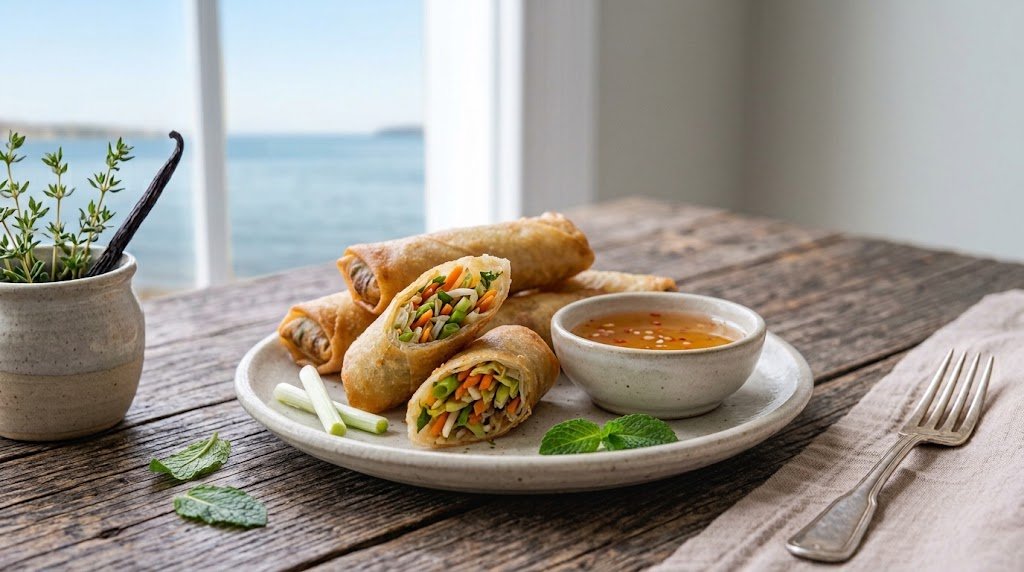
Recipe card
Fresh Vegetable Rice Paper Rolls with Avocado
25 minutes preparation and approximately 5 minutes cooking for the noodles; follow the noodle package if different.
Equipment: Saucepan, colander, knife, cutting board, measuring tools, shallow dish wider than the rice paper and clean rolling board.
Ingredients
Wrappers
Filling
Dipping
Instructions
Cook and drain the vermicelli
Cook or soak the vermicelli according to the packet. Drain, rinse under cool running water and drain thoroughly. Cut long strands into shorter lengths if needed.
Prepare the vegetables and herbs
Wash and dry the vegetables and herbs. Cut cabbage, carrot, cucumber and pepper into fine strips; slice the avocado. Arrange all fillings within reach.
Soften one wrapper
Fill a wide shallow dish with warm water. Dip a single wrapper briefly, following package guidance, and transfer it to a clean, slightly damp board while still firm enough to handle.
Fill and roll snugly
Place a small bundle of noodles, vegetables, avocado and herbs across the lower third, leaving space at both sides. Fold the bottom over the filling, tuck in the sides and roll forward snugly. Repeat with the other wrappers.
Serve fresh
Serve immediately with soy sauce for dipping. If necessary, cover separately with a clean, lightly damp towel in a covered container and refrigerate for up to two hours for best texture.
How to roll without tearing the rice paper
Dip just one wrapper at a time in a shallow dish of warm, not hot, water. Remove it when it begins to soften; it will continue absorbing water on the board. Waiting until the sheet is completely limp in the water often makes it too sticky to handle. Lay it flat on a clean, slightly damp surface. Arrange a small bundle across the lower third, leaving empty space at each side. Keep sharp vegetable ends pointed inward. Fold the bottom over the filling, tuck both sides in and roll forward with gentle tension. The wrapper should hold the filling together without stretching to the point of tearing.
If a wrapper is brittle, briefly moisten it again. If it tears, reduce the amount of filling on the next roll. A second wrapper can rescue an occasional torn roll, but it makes the texture thicker. Keep completed rolls apart so their tacky surfaces do not adhere to each other.
Serving, substitutions and dipping sauce
Divide the measured soy sauce between small dipping bowls rather than pouring it inside the rolls. A little lime juice or rice vinegar may soften its saltiness. Substitute basil for some mint or coriander, or replace a little cabbage with finely sliced lettuce. Cooked and cooled tofu can be added for a more substantial filling, but reduce the vegetables slightly to avoid overfilling. For a larger meal, serve with our vegan ramen with tofu or green coconut curry. The rolls contain soy; ordinary soy sauce may also contain wheat. Choose verified gluten-free tamari if needed and check the wrappers and noodles.
Make ahead safely
Prepare vegetables and noodles in advance, refrigerating them separately in covered containers. Drain well before assembly and slice the avocado last. Cooked rice noodles and cut produce are perishable; keep them chilled rather than leaving them on the counter. Assemble close to serving for the best texture, and follow official refrigeration guidance. Rice paper becomes harder or sticky after prolonged chilling, so freezing assembled rolls is not recommended.
Frequently asked questions
Should I fry these spring rolls?
No. These are fresh rice paper rolls, served after soaking and filling rather than frying.
Why does my rice paper tear?
It may be over-soaked, overfilled or punctured by sharp vegetable ends. Dip briefly and use a smaller bundle.
How do I stop rolls sticking together?
Arrange them with space between each roll on a lightly damp surface or separate them in a covered container.
Can I omit the avocado?
Yes. Replace it with additional cucumber or cooled cooked tofu for a different texture.
Can I make them gluten-free?
Check all labels, particularly soy sauce. Use certified gluten-free tamari if needed.
More recipes to try


Spotted a detail that needs correcting? Contact the FeastDelights editors.