Creamy Tuna Noodle Casserole with Cheddar and Mustard
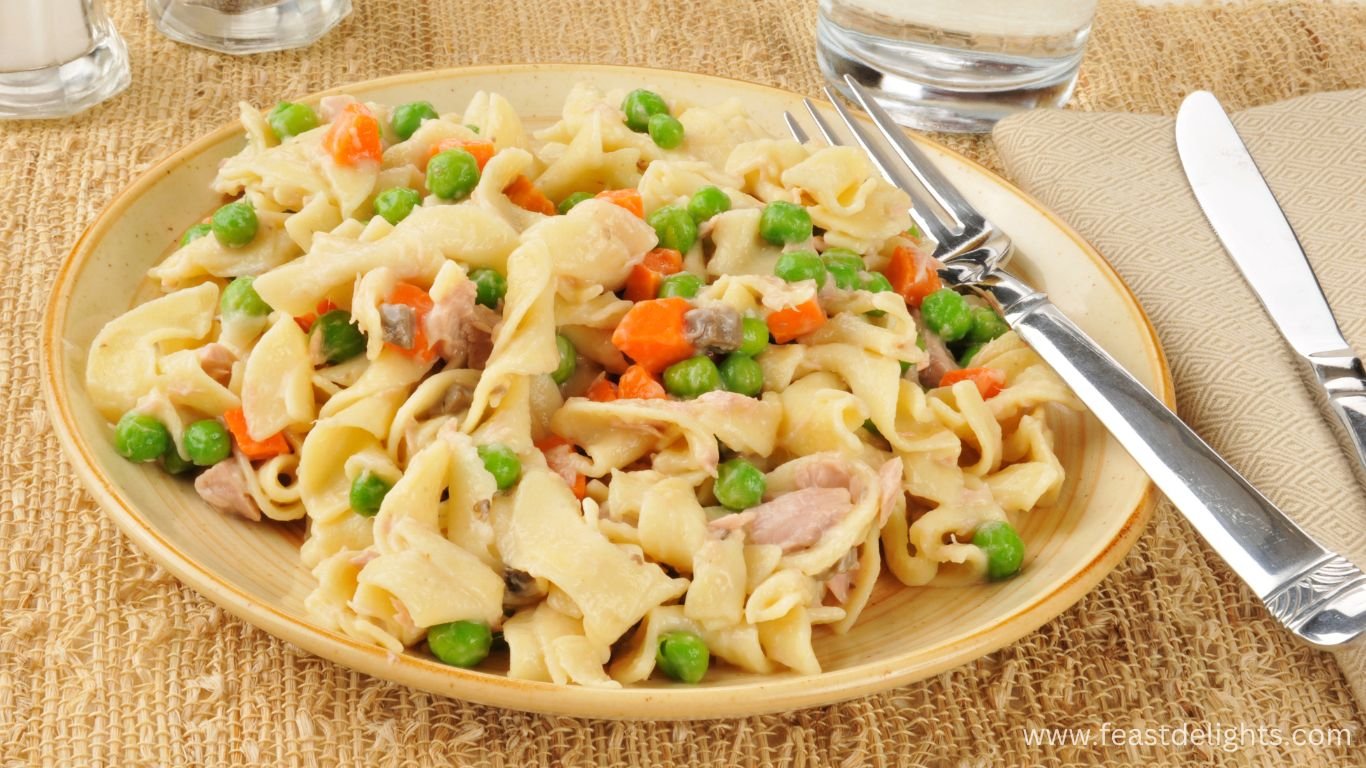
This tuna noodle casserole combines tender egg noodles and flakes of canned tuna with a homemade milk sauce seasoned with mustard, thyme, soy sauce and cheddar. The cheese topping becomes lightly golden while the pasta stays creamy underneath. The recipe serves four to six and takes about 65 minutes, including a brief rest after baking. Undercook the noodles slightly and drain the tuna well to keep the sauce balanced. Serve with peas, broccoli or a crisp green salad.
Creamy tuna noodle casserole is a baked pasta dish made with egg noodles, canned tuna and a homemade cheese sauce. Mustard, thyme, soy sauce and a little lemon bring savoury depth. This recipe makes four to six servings in about 65 minutes, including five minutes of resting.
Why use a homemade milk sauce?
The butter and flour form a roux that thickens the milk. Unlike a casserole made with canned condensed soup, this version lets you control the sauce’s thickness and seasoning. Soy sauce, cheddar and canned tuna all contribute salt, so taste the sauce before adding any extra.
Recipe card
Creamy Tuna Noodle Casserole with Cheddar and Mustard
Includes 40 minutes cooking with noodles and sauce prepared concurrently, and 5 minutes resting. Allow more time if using one burner or assembling from chilled ingredients.
Equipment: Large pasta pot, colander, medium saucepan, whisk, grater, 20 x 25 cm (8 x 10 inch) baking dish, oven, thermometer
Ingredients
Noodles and tuna
Homemade sauce
Cheese, divided
Homemade sauce
Instructions
Cook the noodles
Preheat the oven to 180°C (350°F). Bring a pot of water to the boil and cook the egg noodles about 1–2 minutes less than package directions, until firm but flexible. Drain. Prepare the sauce while they cook.
Prepare the roux
Melt butter in a saucepan over medium-low heat. Add finely diced onion and cook until soft, about 5 minutes. Stir in flour and cook for 1 minute without browning.
Make the cheese sauce
Whisk in milk gradually, smoothing each addition before adding more. Bring to a gentle simmer, stirring until the sauce coats a spoon. Reduce heat and stir in mustard, soy sauce, thyme, pepper and half the cheddar. Stir in lemon juice off the heat.
Assemble the casserole
Drain tuna thoroughly and flake into large pieces. Fold tuna and drained noodles into the sauce. Spread in the 20 x 25 cm baking dish and top evenly with remaining cheddar.
Bake until hot and golden
Bake 25–30 minutes until the cheese is golden and the centre reaches 74°C (165°F). Shield with foil if the top darkens too early. Rest 5 minutes before serving.
Choosing the noodles, tuna and cheese
Dry egg noodles are the starting point. Cook them just shy of tender so they absorb some sauce in the oven without becoming soft. Short pasta can work if the package timing is adjusted. Tuna in water gives a lighter result; drain both cans to remove excess liquid. Break the fish into flakes rather than mashing it, so there are distinct pieces throughout the bake.
Grate cheddar from a block if possible. Half melts into the sauce and half forms the topping. Prepared mustard gives a little sharpness while dried thyme supplies an herbal note. Add lemon off the heat to reduce the chance of the milk separating.
How to make a smooth cheese sauce
Soften the onion in butter, then stir in flour until evenly coated. Cook for about a minute. Add the milk in several small additions, whisking the thick paste smooth before pouring in more. Bring to a gentle simmer and stir along the bottom to prevent scorching. When the sauce coats a spoon, reduce heat before melting the cheddar. Vigorous boiling after cheese is added can cause an oily or grainy texture.
Assemble and bake
Fold the drained tuna and noodles into the warm sauce without breaking up the fish excessively. The mixture should look slightly loose before baking because the noodles absorb moisture. Spread it evenly in the specified 20 x 25 cm dish and scatter the remaining cheese over the top. Bake until bubbling throughout and the centre reaches 74°C (165°F), the safe target for casseroles. Let stand briefly so portions hold together when scooped.
Common problems and fixes
Dry casserole: Do not overcook the noodles before baking or let the sauce reduce too far. Add a splash of milk when reheating. Watery base: Drain tuna thoroughly and simmer the milk sauce until it coats a spoon. Lumpy sauce: Whisk firmly before adding the tuna. Dark topping: Cover loosely with foil while the centre finishes. Too salty: Choose lower-sodium tuna or soy sauce next time; do not automatically add salt.
Serving and related recipes
Serve with peas, steamed broccoli or a cabbage and pea salad. A fresh cucumber salad provides a tangy contrast. For another creamy pasta dinner, try chicken and vegetable penne with Parmesan sauce.
Storage and allergens
Chill cooked portions promptly and reheat until 74°C (165°F). The recipe contains fish, wheat, egg, milk, soy and mustard. Check packaged ingredients for additional allergens. Nutrition is not supplied because tuna brand, cheese composition and the actual number of portions vary.
Frequently asked questions
Can I use tuna packed in oil?
Yes. Drain it thoroughly; the result may be a little richer.
Why do I need to undercook the noodles?
They continue absorbing sauce during baking. Fully cooked noodles can become mushy.
Can I add peas?
Yes. Stir in a small amount of cooked or thawed drained peas before assembly.
Why is the sauce lumpy?
Milk may have been added too quickly. Whisk the sauce before adding tuna and noodles; a fine sieve can remove stubborn lumps.
Can I make it ahead?
Prepare the sauce and cooked noodles, chill promptly and keep separately until assembly for the best texture. A cold casserole may need longer baking; check for 74°C (165°F).
Can I use other pasta?
Yes. Short pasta such as fusilli or penne can work; cook just short of tender.
Does the recipe use condensed soup?
No. Butter, flour and milk create the homemade base, with cheddar and seasonings added.
More recipes to try






Spotted a detail that needs correcting? Contact the FeastDelights editors.