Caramel Apple Tarte Tatin with Puff Pastry
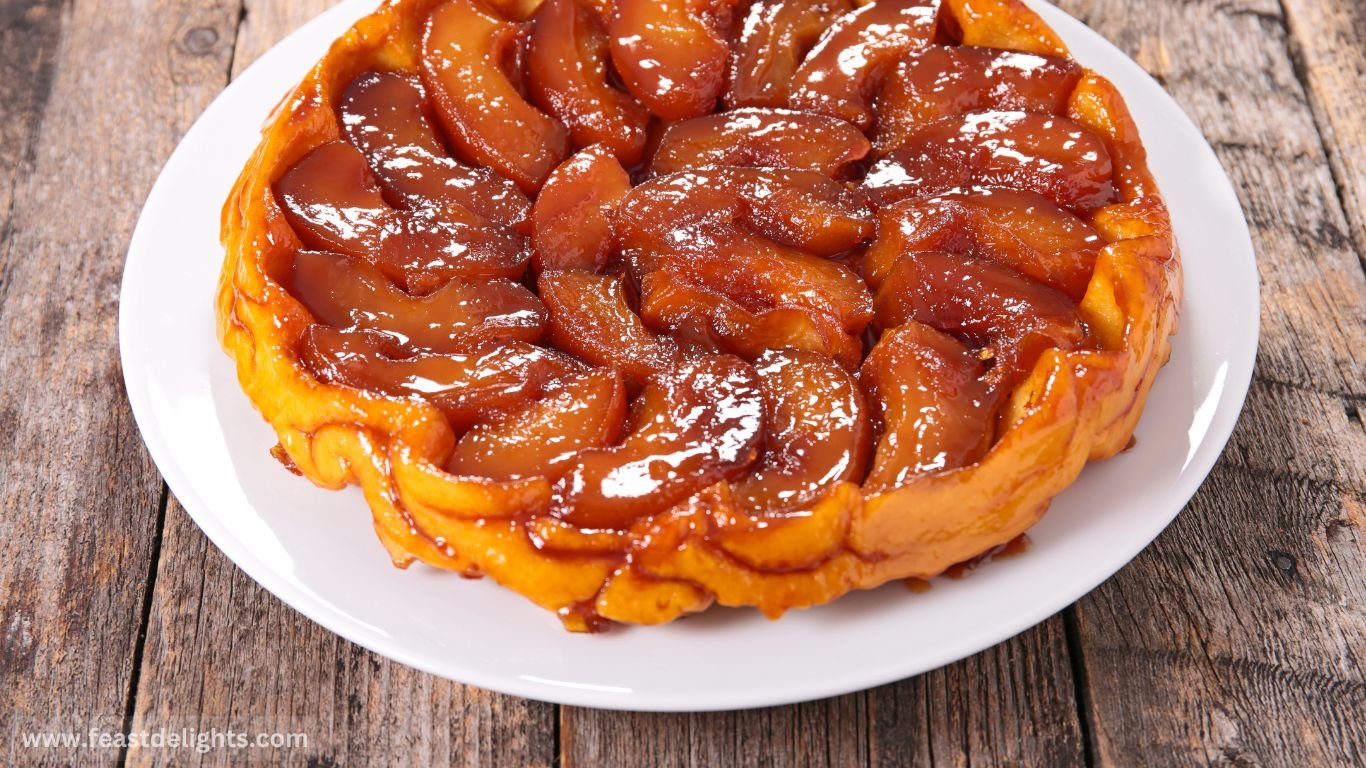
Apple tarte Tatin is a French upside-down tart with tender, caramel-coated apples sitting above a crisp puff pastry base. In this version, firm tart apples cook briefly in a buttery caramel before baking beneath a ready-rolled pastry lid. A 24 cm oven-safe skillet lets you prepare the fruit and bake it in the same pan. After a short rest, carefully turn the tart onto a rimmed serving platter to reveal the glossy apples. It makes eight slices, especially good served warm with vanilla ice cream.
Apple tarte Tatin is a French upside-down tart made by cooking apples in caramel, covering them with pastry and baking before turning the whole tart onto a platter. The apples become glossy and tender while the pastry forms a golden base. This five-ingredient recipe uses ready-rolled puff pastry and a 24 cm (9½-inch) oven-safe skillet. It makes eight slices in approximately 75 minutes, including a brief rest before inversion.
Why this tart is baked upside down
Unlike an open apple tart, tarte Tatin starts with fruit directly against the pan and pastry on top. This allows the apples to soften in their own juices and caramel while the exposed pastry browns in the oven. Inverting the tart reveals the fruit and turns the lid into the base. This version uses purchased puff pastry for convenience rather than requiring homemade pastry. For a different method, our apple tart with shortcrust pastry bakes the fruit on a conventional base.
Choosing apples, sugar and pastry
Choose medium-sized firm tart apples such as Granny Smith, which retain their shape when heated. Seven apples is the original quantity, but their size determines how tightly they fit. Peel, core and quarter them evenly, fitting them snugly without piling them above the skillet rim. Granulated sugar forms the caramel and unsalted butter adds richness. Vanilla sugar provides a gentle aroma without extra liquid. The recipe is deliberately rich and caramel-forward; reducing sugar or butter substantially changes the sauce and may affect release from the pan. Use a cold 320 g sheet of puff pastry, preferably all-butter if available, and cut it slightly wider than the skillet interior. Save pastry trimmings for another bake.
Equipment and safe preparation
A 24 cm oven-safe metal skillet with a secure handle is essential for the one-pan method. Choose a sturdy, heatproof serving platter wider than the skillet and with a rim to catch caramel. Test its fit while the pan is cold. Have a trivet, dry oven mitts, tongs and a long-handled heatproof utensil ready before melting sugar. Wet mitts can transfer heat rapidly, and melted sugar can cause serious burns. Keep children away from the stove and the inversion area. If the pan is too heavy to handle confidently, serve the tart from the pan rather than attempting to invert it.
Recipe card
Caramel Apple Tarte Tatin with Puff Pastry
Cook time includes melting caramel, 8–10 minutes cooking apples and 25–30 minutes baking. Rest about 5 minutes before inversion, then cool further as needed before serving.
Equipment: 24 cm (9½-inch) oven-safe skillet with secure handle, knife, peeler, tongs, long-handled heatproof spoon, pastry cutter, dry oven mitts, heatproof rimmed serving platter and trivet.
Ingredients
Caramel and apples
Pastry
Caramel and apples
Instructions
Prepare the apples and pastry
Preheat the conventional oven to 190°C (375°F). Peel, core and quarter the apples. Cut the cold puff pastry into a circle slightly wider than the inside diameter of a 24 cm (9½-inch) oven-safe skillet. Refrigerate the pastry until needed.
Make the caramel
Place the sugar in an even layer in the dry skillet over medium to medium-low heat. Let it melt gradually, gently swirling the pan when liquid sugar appears; avoid vigorous stirring. When the melted sugar is evenly amber, remove from the heat and carefully add the butter in small pieces using a long-handled heatproof spoon. Expect bubbling; keep hands and face away. Stir gently until combined, then add the vanilla sugar.
Cook the apples
Carefully arrange the apple quarters tightly in the caramel, using tongs if the pan is hot. Return to medium-low heat and cook for 8–10 minutes, until the fruit begins to soften and releases some juice. Do not let the caramel turn very dark or smoke. Remove from the heat.
Cover and bake
Lay the chilled pastry circle over the apples. Use a heatproof utensil to tuck the edges down between fruit and pan, keeping fingers clear of hot caramel. Prick a few small vents in the pastry. Bake for 25–30 minutes, until the pastry is puffed, deeply golden and cooked through and the fruit is tender when tested through a vent.
Rest and invert safely
Set the skillet on a heatproof surface for about 5 minutes, until the vigorous bubbling subsides. Use dry oven mitts and a large, sturdy, heatproof rimmed platter wider than the skillet. Place it upside down over the pan, hold both securely and turn them together in one controlled motion over a clear, stable work surface, away from your body. Set the platter down before lifting the skillet. Use tongs to reposition any apples left in the pan. Let the caramel cool to a comfortable eating temperature before slicing.
How to control the caramel
Spread sugar in an even layer and heat it gradually. When some of the sugar melts, gently swirl the skillet to encourage even melting. Watch its colour rather than relying on a fixed time: aim for amber, not dark brown or smoking. Remove the pan from direct heat before adding butter in pieces. The mixture may bubble strongly, so use a long-handled spoon and stand clear of splashes. Never taste hot caramel. If the sugar burns, allow the pan to cool safely before cleaning and starting again; do not pour water into extremely hot caramel.
Getting tender apples and crisp pastry
Arrange the fruit tightly because it will shrink as it cooks. The apples need only begin softening on the stove; the oven finishes them. If they release a great deal of water, allow a little extra time over gentle heat to reduce the liquid, without letting the caramel burn. Cover the fruit with cold pastry and tuck the edges in using a utensil. Vent the top so steam can escape. Bake until the pastry is deeply golden and the apples are tender, not simply until the timer rings.
Turning out the tarte Tatin
Rest the tart for about five minutes so vigorous bubbling subsides while the caramel remains fluid. Protect both hands with dry oven mitts. Use the prepared rimmed platter and turn the two pieces together in one controlled motion over a stable, clear surface, keeping them away from your body. Lift the skillet only after the platter is supported. If any fruit remains behind, reposition it with tongs. Allow the caramel to cool sufficiently before serving.
Troubleshooting
The pastry is soggy
Check that the oven is fully preheated and that the apples were not swimming in excess juice before covering. Bake until the pastry has a firm, deep golden surface. Once inverted, caramel inevitably softens the base over time, so serving soon after turning gives the best contrast.
The apples fall apart
Choose firmer fruit and avoid overcooking on the stove. Cut even quarters and turn them gently rather than stirring repeatedly.
The caramel is bitter
Burnt sugar cannot be repaired by adding more butter or apples. Start again once the cookware has cooled. Keep the heat moderate and remove the skillet from direct heat at an even amber colour.
Variations and serving ideas
Add a pinch of cinnamon if desired, or try firm pears with adjusted cooking time. Serve warm with vanilla ice cream or unsweetened cream to contrast the caramel. If you have extra puff pastry, try our apple puff pastry turnovers or French palmiers.
Make ahead, storage and allergens
Measure the ingredients and cut the pastry in advance, keeping it chilled. Prepare the fruit just before cooking to limit browning. Refrigerate cooled leftovers, covered, at 4°C (40°F) or below within 2 hours and enjoy within 2 days. Rewarm portions in a 160°C (320°F) oven until hot throughout (74°C/165°F for reheated leftovers). Freezing is possible but may soften the apples and pastry; fresh or chilled leftovers have better texture. Contains milk and usually wheat; check the pastry packaging for additional allergens. Refrigerate cream or ice cream separately according to its label.
Frequently asked questions
Which apples work best for tarte Tatin?
Firm tart apples such as Granny Smith hold their shape well. Firm sweet-tart varieties can also work; avoid apples that quickly collapse into purée.
Can I make tarte Tatin with shortcrust pastry?
Yes. It gives a more crumbly, less layered base than puff pastry. Baking time may differ, so check the pastry carefully.
Why does the caramel look separated when I add butter?
The mixture can bubble and separate briefly. Remove the pan from direct heat and stir gently with a long-handled utensil. Keep clear of splashes.
What if apples stick to the skillet?
Lift them carefully with tongs or a heatproof spatula and place them back on the tart. Do not touch hot caramel with bare fingers.
Can I use a glass baking dish?
Do not use a dish on the stovetop unless the manufacturer explicitly rates it for that use. An oven-safe metal skillet is preferable for this one-pan method.
Can I use pears instead of apples?
Firm pears can work in a variation, but their moisture and softening rate differ. Check the fruit frequently and adjust the stovetop time.
More recipes to try

Cream Cheese Chocolate Truffles Rolled in Cocoa

Cream Cheese Cheesecake Danish with Lemon and Vanilla

Fresh Fruit Salad with Orange Honey Dressing

Ptichye Moloko Bird’s Milk Mousse with Chocolate Glaze
Bird’s Milk Jello with Creamy Mousse and Raspberry Jelly
Cream Horn Trubochki with Vanilla Cream Filling
Spotted a detail that needs correcting? Contact the FeastDelights editors.