Apple Puff Pastry Turnovers with Cinnamon and Lemon
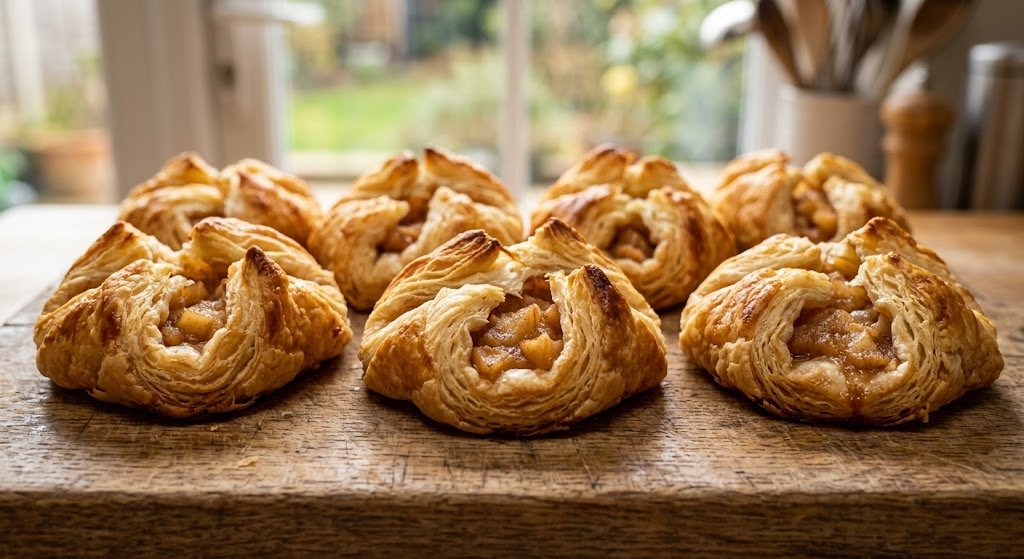
These apple puff pastry turnovers have crisp layers around tender diced apples, cinnamon and lemon. The filling is cooked briefly with a little cornflour, then cooled so it does not melt the pastry before baking. Ready-rolled puff pastry makes eight parcels, brushed with egg yolk and finished with optional coarse sugar. Bake until the tops and bases are golden, then let the hot fruit settle before eating. Allow about 90 minutes including cooling; the hands-on work is much shorter.
Apple puff pastry turnovers wrap a cooked cinnamon-and-lemon apple filling in crisp, buttery layers. Ready-rolled pastry keeps the work manageable, but the filling must be cold before you shape the parcels. This batch makes eight turnovers from 500 g of pastry and three medium apples. Allow around 90 minutes from preparation to a safely warm first bite, including filling cooling and a short rest after baking. A pale underside means the pastry needs longer, even if the tops already look golden.
Choose pastry and apples
Ready-rolled puff pastry is the shortcut here. Packages vary in sheet size, so aim for eight squares of similar thickness rather than assuming one brand’s sheet dimensions. If the pastry is frozen, thaw it according to the manufacturer; do not force a folded sheet open while it is brittle. A cold but flexible sheet is easiest to handle.
Firm, slightly tart apples balance the sugar and retain small pieces after cooking. Cornflour, also called cornstarch, thickens their juices. Stir it with the measured cold water first: adding dry starch straight to hot fruit can leave lumps. The lemon supplies brightness rather than a strong lemon flavour.
How to keep the layers crisp
Cooked apple filling removes some excess moisture before the pastry goes into the oven. Spread it on a shallow plate to cool faster. Fillings cool at different speeds, so touch the centre of the mixture rather than relying on a timer alone. The filling should no longer feel warm.
Cold pastry contains distinct fat layers that expand as the pastry bakes. If it becomes soft while you work, pause and chill it. Stretching a square over too much filling creates a weak seam; reduce the filling instead. Trim uneven edges cleanly and leave enough room between turnovers for hot air to circulate.
Recipe card
Apple Puff Pastry Turnovers with Cinnamon and Lemon
Allow about 25 minutes active preparation, 8 minutes stovetop cooking, 25 minutes baking, 20 minutes cooling the filling and 10 minutes cooling the pastries. Filling cooling may take longer; add 10 minutes chilling if the shaped pastry has softened.
Equipment: Kitchen scale; knife and board; medium saucepan; small bowl for slurry; spatula; shallow plate; baking parchment; one or two baking trays; pastry brush; fork; cooling rack.
Ingredients
Pastry
Apple filling
Finish
Instructions
Cook filling
Peel, core and cut the apples into small, even dice, about 1 cm (3/8 inch). Put them in a saucepan with the granulated sugar, cinnamon and lemon juice. Cook over medium heat for 5–7 minutes, stirring, until just tender and releasing juice; avoid cooking them into purée.
Thicken and cool
Stir the cornflour with the tablespoon of cold water until smooth. Add to the bubbling apples and stir for about 1 minute, until the juices thicken and turn glossy. Spread on a shallow plate and cool completely, allowing about 20 minutes. Do not put warm filling on pastry.
Prepare pastry
Heat the oven to 200°C (400°F), conventional, or 180°C fan. Line a tray or two with parchment. Unroll the cold pastry and cut eight equal squares, approximately 12 cm (4 3/4 inches) across where the sheet dimensions permit. Keep unused pieces refrigerated.
Fill turnovers
Divide the cold filling between the eight squares, placing it on one half of each and leaving a clear border of about 1.5 cm (1/2 inch). Keep syrup off the edges. Lightly dampen a dry border if needed, fold diagonally without stretching and press to seal, then crimp with a fork. Leave space between parcels.
Glaze
Cut a small steam vent in each top. Brush the tops with beaten egg yolk, avoiding the cut edges, and add optional coarse sugar. If the pastry feels soft or greasy, refrigerate the shaped turnovers for 10 minutes before baking.
Bake
Bake for 20–25 minutes until well puffed, deeply golden and crisp underneath. If using two trays, rotate as needed once the pastry has set. Transfer to a rack and wait at least 10 minutes before serving; the apple filling can remain very hot.
Fixing common problems
Flat turnovers: check whether the pastry softened before baking or the oven was still heating. A compressed cut edge can also limit the rise. Burnt sugar patches: keep coarse sugar on top and avoid scattering it over the bare tray, where it can scorch.
Filling too loose: let the slurry bubble and thicken before removing the pan from the heat. If the apples release unusually large amounts of juice, cook off some moisture before filling; do not pour liquid into the pastry. Uneven browning: rotate trays only once the pastry structure has set, and use the underside as the final check.
Make ahead and allergens
The best advance preparation is to cook and chill the filling separately. Keep the pastry wrapped in the refrigerator, then assemble close to baking. These turnovers contain wheat and egg; butter pastry also contains milk, and some packaged pastries contain soy. A plant-based pastry is not automatically free from all allergens. Keep raw egg wash away from ready-to-eat food and wash the brush and work surface after use.
Other ways to bake with apples
For a soft sliced bake, use the apple yoghurt tea cake. A shortcrust apple tart gives a different pastry texture, while apple-walnut yeast pastries suit a longer baking project.
Frequently asked questions
Can I use a jar of apple pie filling?
A thick, cooled pie filling can work. Drain loose syrup and divide only as much as the squares can enclose without stretching. Do not add the cornflour slurry again if the filling is already thickened.
Why did the turnovers leak?
Warm filling, excess syrup, overfilling or a dirty sealing edge can open the seam. Cool the filling, leave a clean border and press firmly. A small leak is usually a presentation issue; the pastry still needs a fully baked base.
Should frozen puff pastry be fully thawed?
Follow the package directions. It should unfold without cracking but still feel cold and firm. Brittle pastry needs a little more thawing; sticky, greasy pastry needs refrigeration.
Can I use milk instead of egg yolk?
A light milk wash gives less shine and usually a paler finish. Use plant milk for an egg-free wash, then check that the pastry itself meets your ingredient needs.
Can I shape the turnovers ahead?
You can cook and refrigerate the filling a day ahead, then shape and bake the next day. Keep it covered and cold. For assembled pastry, follow the pastry manufacturer's storage guidance rather than leaving it at room temperature.
Why is the base soggy while the top is browned?
The filling may be too wet or the oven insufficiently preheated. Bake on a metal tray, leave space between parcels and judge the underside as well as the colour on top.
More recipes to try






Spotted a detail that needs correcting? Contact the FeastDelights editors.