Sticky Toffee Pudding with Dates and Toffee Sauce
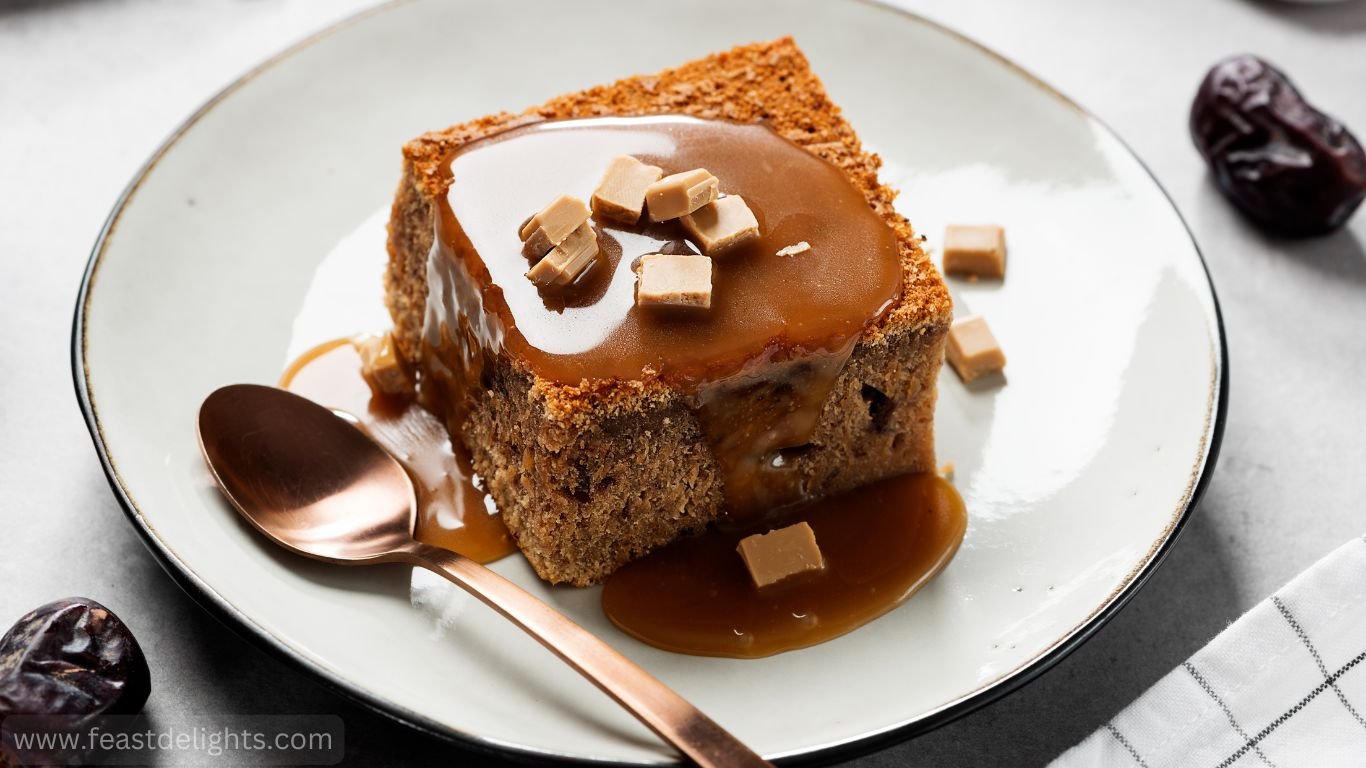
Sticky toffee pudding is a warm British dessert of tender date sponge soaked with a buttery brown sugar and cream sauce. Chopped dates soften in hot water before being folded into the batter, adding sweetness and moisture without a separate purée. Bake in a 20 cm square dish and make the toffee sauce while the pudding cooks. The recipe serves six to eight and takes about 55 minutes. Spoon sauce over the warm sponge and offer the rest at the table.
The contrast between a light, moist date sponge and a rich toffee sauce is what makes sticky toffee pudding distinctive. The dates and their soaking liquid belong in the batter, while the sauce is cooked separately to control its thickness. This version makes six to eight servings in a 20 cm (8-inch) square dish, with 20 minutes preparation and about 35 minutes baking.
Choosing dates, flour and sugar
Use pitted dates and check each for fragments before chopping. Drier dates benefit from soaking in the measured boiling water; soft Medjool dates also work. Baking soda softens the date mixture and contributes to the batter’s lift. Keep all the liquid. Dark brown sugar gives the sponge and sauce a deeper molasses flavour than white sugar. Self-raising flour contains leavening already, so do not add extra baking powder unless substituting plain flour.
Recipe card
Sticky Toffee Pudding with Dates and Toffee Sauce
20 minutes prep includes softening dates while preparing the tin; 30–35 minutes baking, with sauce prepared during baking.
Equipment: Heatproof bowl, kitchen scale, 20 cm (8-inch) square baking dish, mixer or wooden spoon, spatula, skewer, saucepan, whisk
Ingredients
Date sponge
Toffee sauce
Instructions
Soften and mash the dates
Put chopped pitted dates into a heatproof bowl. Pour over the boiling water and stir in baking soda; the mixture may foam. Leave 10 minutes, then mash lightly with a fork. Keep the soaking liquid and let the mixture cool until warm, not hot.
Mix the date sponge batter
Preheat conventional oven to 180°C (350°F). Grease and line a 20 cm (8-inch) square baking dish. Beat softened sponge butter with 100 g brown sugar until lighter and fluffy. Beat in eggs one at a time and vanilla. Fold in self-raising flour and the date mixture with its liquid just until combined.
Bake until the centre is set
Spread evenly in the prepared dish. Bake 30–35 minutes until the centre springs back lightly and a skewer comes out with moist crumbs but no raw batter. Continue a few minutes if needed.
Make the brown sugar toffee sauce
While the sponge bakes, melt sauce butter and 150 g brown sugar together over low heat. Stir in cream and bring to a gentle simmer, stirring for 3–4 minutes until glossy and slightly thickened. Do not boil vigorously; hot sugar sauce can burn.
Sauce and serve the pudding
Let the baked pudding stand briefly, then pierce lightly with a skewer. Spoon some warm sauce over it. Divide into six to eight portions and serve remaining sauce separately. Allow sauce to cool to a safe eating temperature.
How to keep the sponge moist
Cream softened butter and sugar until lighter, then add eggs gradually. Allow the soaked dates to cool before adding them so they do not melt the creamed butter. Fold the flour and dates in just until no dry streaks remain. Check the centre at 30 minutes: a skewer should have moist crumbs, not wet batter. Do not keep baking until every crumb is dry.
Making a smooth toffee sauce
Use a separate saucepan and gentle heat. Stir the butter, sugar and cream until the sugar dissolves and the sauce looks glossy. It thickens as it cools, so do not reduce it into hard caramel. If it looks too thick, stir in a little warm cream off the heat. Hot sugar can cause burns; avoid tasting straight from the pan.
Troubleshooting
If the sponge is dense, check the freshness of the flour’s raising agents and avoid overmixing. If the centre is still wet, bake a few minutes longer and shield the top if necessary. If the sauce separates, lower the heat and whisk gently. Keep the sauce separate for storage so the sponge does not become excessively saturated.
Serving and variations
Serve warm with vanilla ice cream, plain cream or extra sauce. For other fruit-based desserts, see fig and potato pudding cake, honey fruitcake or vanilla panna cotta for a chilled alternative.
Make ahead, storage and allergens
Refrigerate pudding and sauce in separate covered containers at 4°C (40°F) or below within 2 hours (1 hour above 32°C/90°F), for up to 3 days. Freeze unsauced portions for up to 2 months for best quality; thaw in the refrigerator. Reheat portions and sauce to 74°C (165°F), stirring sauce over gentle heat. Contains wheat (gluten), milk and eggs. Check packaged ingredients for additional allergens. Warm sauce and pudding separately and combine at serving time.
Serve once the sauce is warm rather than scalding.
Frequently asked questions
Should I drain the dates?
No. The measured soaking liquid belongs in this batter and contributes moisture.
Can I use Medjool dates?
Yes. Weigh after removing pits and chop before soaking; softer dates may mash more easily.
Can I use plain flour instead of self-raising?
Use 175 g plain flour with about 2 teaspoons baking powder as a practical substitute; retain the baking soda in the date mixture. Results may differ slightly.
Why is my sponge dense?
Overmixing after adding flour or inactive raising agents can reduce lift. Cream softened butter and sugar first and fold gently.
Why is my toffee sauce grainy?
Warm gently and stir until sugar dissolves. Avoid scorching or prolonged boiling.
Can I make it the day before?
Yes. Refrigerate the baked sponge and sauce separately, then reheat thoroughly before serving.
More recipes to try






Spotted a detail that needs correcting? Contact the FeastDelights editors.