Vanilla Panna Cotta with Cream and Milk
Vanilla panna cotta is a gently set Italian cream dessert with a smooth, delicate wobble and a clean vanilla flavour. This version mixes 500 ml of heavy cream with 250 ml of whole milk for a rich but spoonable texture. The mixture needs only gentle heating and dissolving gelatin, rather than baking or whipping. Divide it among four to six small glasses, then refrigerate for four to six hours. Fresh berries or a tart fruit sauce complement the sweet dairy base.
Panna cotta means cooked cream, but the important work happens in the refrigerator. Gelatin sets the sweetened dairy into a soft dessert. Serve in glasses for a forgiving set rather than relying on a firm enough gel to unmould. This version makes four to six servings from 750 ml dairy. Allow 30 minutes for preparation and gentle heating, followed by up to six hours in the refrigerator.
Choosing cream and gelatin
Heavy cream with 33–36% fat provides richness while whole milk lightens the texture. Vanilla sugar adds flavour without visible seeds; vanilla extract can replace it. The sugar is retained at half a cup, about 100 g. For gelatin, the number of sheets is less reliable than their stated setting capacity. The original two or three sheets may not be enough for every brand. Check the gelatin industry guidance and your packet, choosing a soft-set dose for 750 ml. Sheet sizes and strengths differ. A kitchen test is needed to establish an exact dose for a specific product.
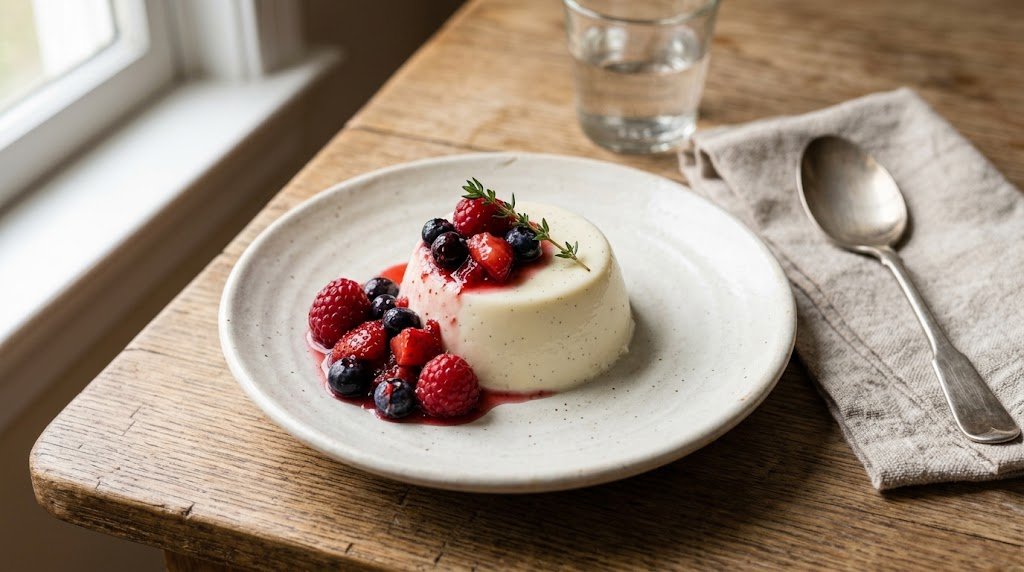
Recipe card
Vanilla Panna Cotta with Cream and Milk
20 minutes prep, 10 minutes gentle heating and up to 6 hours chilling; overnight chilling is optional.
Equipment: Small saucepan, bowl for soaking gelatin, whisk, fine sieve, measuring jug, 4–6 heatproof dessert glasses or moulds
Ingredients
Dairy base
Setting agent
Instructions
Soften the gelatin leaves
Check the gelatin packet for a soft-set dessert using 750 ml of dairy. Sheet weights and strengths vary; use the specified amount, not a universal sheet count. Submerge leaves separately in cold water for the package's soaking time until pliable.
Warm milk and dissolve gelatin
Warm milk, sugar and vanilla sugar over low heat, stirring until sugar dissolves and milk steams. Remove from heat. Lift softened leaves out of water, squeeze gently and stir into the warm milk until completely dissolved.
Mix in the cream
Stir in the cream and warm gently if necessary until uniform. Do not boil. Strain through a fine sieve if any particles remain.
Divide into dessert glasses
Divide evenly among 4–6 heatproof glasses or moulds, approximately 125–190 ml dairy per portion plus sugar volume. Cool briefly, then refrigerate promptly.
Refrigerate until softly set
Chill 4–6 hours or overnight until the surface is set and the centre wobbles gently when moved. Cover when cool and serve chilled; do not leave dairy desserts at room temperature for extended periods.
How to achieve a silky set
Soak leaves in cold water until pliable, then squeeze away excess water. Warm the milk just until the sugar dissolves and steam rises. Remove from the heat before stirring in gelatin. It should disappear completely without flecks. Mix the cream in gently rather than whipping air into the liquid. Strain before pouring if necessary. Use heatproof glasses and divide evenly so the portions cool at a similar rate.
Troubleshooting
If the dessert is liquid after six hours, verify the gelatin type, quantity and refrigerator temperature. A soft wobble is desirable, but a liquid centre is not a set. A rubbery texture suggests too much gelatin. If particles remain before chilling, strain the warm mixture; avoid prolonged boiling. For a fragile set, serve in glasses instead of attempting to turn it out. Do not assume agar and gelatin can be exchanged in identical amounts.
Serving ideas and variations
Choose tart berries or a cooled fruit compote to balance the cream. For citrus aroma, warm a strip of washed lemon peel in the milk and strain it out. For other individual or fruit desserts, try cherry clafoutis, pastéis de nata or pavlova with fresh fruit.
Make ahead, storage and allergens
Refrigerate at 4°C (40°F) or below within 2 hours of preparation (1 hour above 32°C/90°F). Cover once cool and use within 3 days. Freezing is not recommended because thawing can cause separation and weeping. Contains milk. Conventional gelatin may come from pork, beef or fish; check the label for dietary or allergy requirements. Add fresh toppings just before serving.
Keep the dessert cold until ready to eat.
Frequently asked questions
How many gelatin leaves do I need?
Use the manufacturer's soft-set recommendation for 750 ml. The original two or three leaves may be insufficient with smaller or weaker sheets; verify the dosage and test the set.
Can I use powdered gelatin?
Yes. Follow the brand's dosage for a soft set and its cold-liquid hydration directions; do not substitute sheet counts directly.
Can I make panna cotta the day before?
Yes. Chill covered overnight and add toppings just before serving.
Why is my panna cotta rubbery?
Too much gelatin can make it firm. Measure according to the product and aim for a soft set in glasses.
Is gelatin vegetarian?
Conventional gelatin is animal-derived. Agar requires a different formula and heating method, not a direct swap.
How do I unmould it?
Only attempt this if fully set. Briefly dip the mould exterior in warm water, loosen the edge and invert onto a cold plate. Serve in glasses if too delicate.
More recipes to try

Cream Cheese Cheesecake Danish with Lemon and Vanilla

Fresh Fruit Salad with Orange Honey Dressing

Ptichye Moloko Bird’s Milk Mousse with Chocolate Glaze
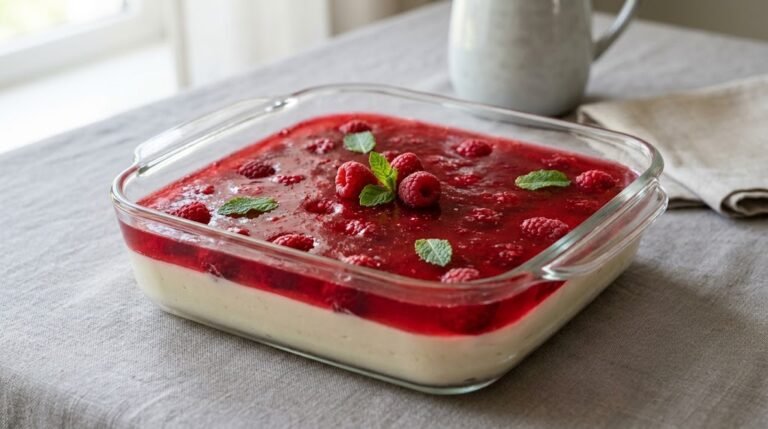
Bird’s Milk Jello with Creamy Mousse and Raspberry Jelly
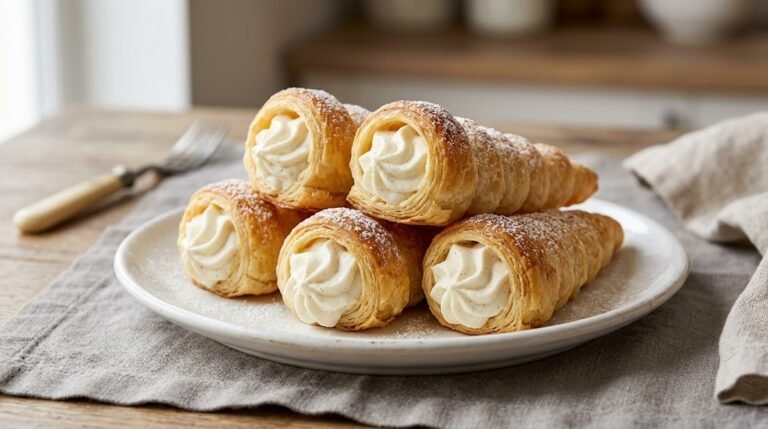
Cream Horn Trubochki with Vanilla Cream Filling
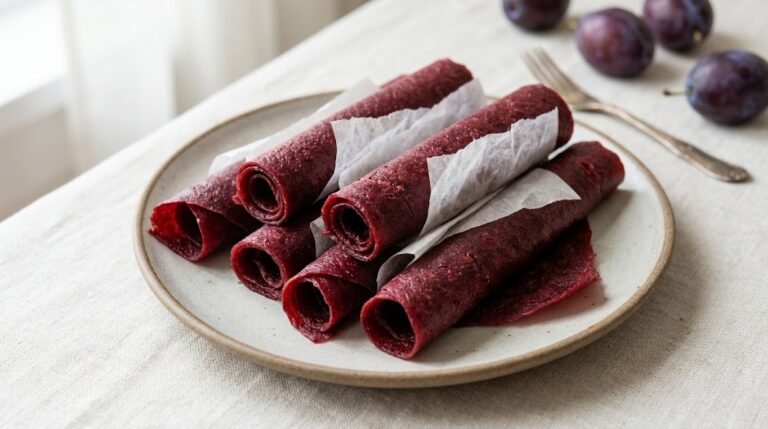
Homemade Plum Fruit Leather with a Little Lemon
Spotted a detail that needs correcting? Contact the FeastDelights editors.