Solyanka with Beef, Smoked Sausage and Olives
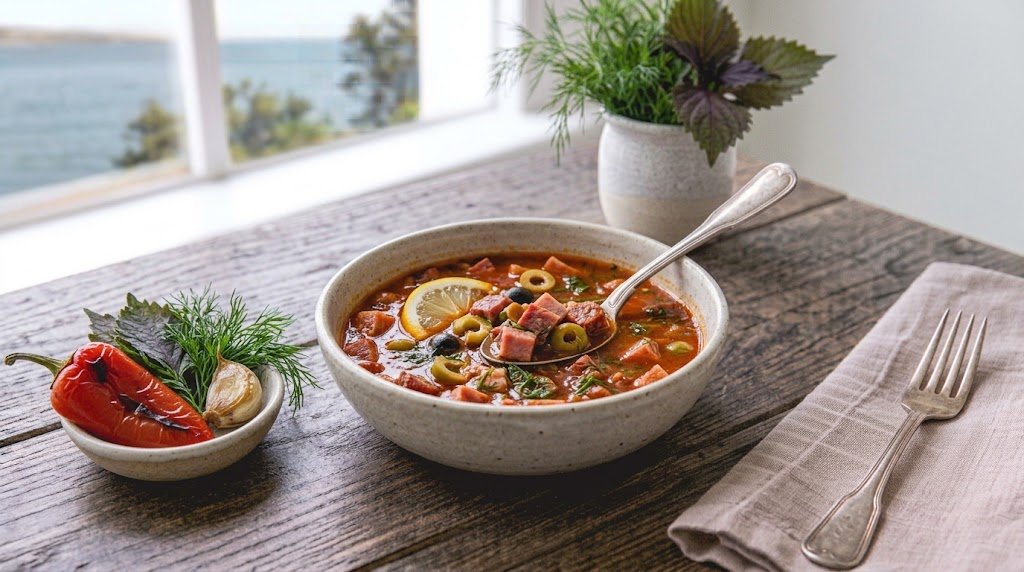
This beef and sausage solyanka combines tender cooked beef, smoked sausage and frankfurters with dill pickles, olives and tomato paste in a savoury beef broth. The pickles and lemon give the soup its sour edge, while the smoked meat contributes depth. Start with fully cooked meats and a lower-salt broth if available, then simmer gently to bring the flavours together. The recipe makes six bowls in about 55 minutes and is best served hot with thin lemon slices and rye bread.
Beef and sausage solyanka is a hearty Eastern European soup with a distinctly savoury, sour and smoky broth. This version combines diced cooked beef, smoked sausage, frankfurters, dill pickles, tomato paste and olives, with lemon added when serving. It makes six bowls in about 55 minutes, assuming the beef and sausages are already cooked. Unlike the potato-based versions, it relies on mixed meats and pickles rather than potatoes for its substance.
Recipe card
Solyanka with Beef, Smoked Sausage and Olives
Uses already cooked beef and ready-to-eat sausages; allow additional time to cook raw meats separately. Includes heating two litres of broth.
Equipment: Large soup pot, knife, cutting board, measuring jug, wooden spoon, ladle, food thermometer
Ingredients
Instructions
Soften onion and fry tomato paste
Heat neutral oil in a soup pot over medium heat. Cook diced onion for about 5 minutes until soft. Stir in tomato paste for 1 minute.
Bring broth to a simmer and add meats
Add beef broth and bay leaves; bring to a simmer. Add diced cooked beef, sliced fully cooked sausage and frankfurters, and diced dill pickles.
Simmer and check seasoning
Return to a gentle simmer for 15 minutes until meats are hot throughout; check leftover beef reaches 74°C (165°F). Taste before adding salt.
Finish with olives and lemon
Stir in drained olives and black pepper and simmer 2 minutes. Remove bay leaves. Serve hot with thin lemon slices.
Choosing the meat and broth
Use 400 g (14 oz) cooked beef, diced into bite-sized pieces, 150 g (5.3 oz) smoked sausage and two frankfurters. Choose fully cooked sausages; smoked does not necessarily mean ready to eat. Check the package and cook any raw sausage separately according to its directions before adding it. This is a useful way to use properly refrigerated cooked beef, but do not use meat that has exceeded its safe storage period. The two litres of beef broth (about 8½ US cups) form the base. Choose unsalted or lower-salt broth if possible because pickles, sausage and olives already contribute salt.
Balancing the sour and smoky flavours
Use three dill pickles rather than sweet bread-and-butter pickles. Dice them finely enough to distribute their acidity through the soup. The two tablespoons of tomato paste add savoury depth and colour without turning this into a thick tomato sauce. Pitted olives add a briny finish; use the measured 50 g (1.8 oz), drained. Lemon is served in thin slices so each diner can adjust the brightness of their own bowl.
How to make the soup
Heat two tablespoons of neutral oil in a large soup pot over medium heat. Cook diced onion for about five minutes until soft, then stir in tomato paste for a minute. Avoid scorching the paste. Add broth and bay leaves, bring to a simmer and add diced beef, sliced smoked sausage, frankfurters and pickles. Return to a gentle simmer for about 15 minutes. The meat should be hot throughout and the broth should taste integrated, not strongly of raw onion. If using leftover cooked beef, heat it to 74°C (165°F). Add drained olives and pepper for the last two minutes. Remove the bay leaves and taste before adding any extra salt. Serve with lemon slices rather than boiling them in the pot for an extended period, which can introduce bitterness.
Troubleshooting and variations
Too salty: Dilute with unsalted broth or water and avoid adding extra pickle brine. Too sour: Use less lemon at serving and dilute the broth if needed. Weak flavour: Allow the onion and tomato paste to cook properly, then simmer a little longer. Tough beef: Start with tender cooked beef; the short soup simmer is not designed to tenderise raw chuck. Use another fully cooked smoked sausage if desired, checking saltiness. The broth and processed meats may contain wheat, soy, milk, celery or mustard depending on their formulation; read labels carefully.
Serving, make ahead and storage
Serve hot with lemon, optional fresh herbs or a spoonful of sour cream. Pair with rye and wheat bread. For different solyanka styles, see sausage solyanka or meat solyanka with smoked pork and potatoes. Chop the meats and pickles shortly before cooking, or keep them separately refrigerated until needed. Refrigerate in shallow covered containers at 4°C (40°F) or below within 2 hours (1 hour above 32°C/90°F). Use within 3 days, or sooner if the cooked beef was already stored before making the soup. Freeze promptly if needed, thaw in the refrigerator and reheat to 74°C (165°F), bringing the soup to a rolling boil. Follow official food handling guidance.
Frequently asked questions
Can I start with raw beef?
Cook it separately until tender first. The short soup simmer is intended for cooked beef.
Does smoked sausage need to be cooked first?
Check its label. Use fully cooked sausage here; cook raw products separately according to the package.
Why is solyanka sour?
Dill pickles, olives and lemon provide its distinctive tang.
Can I add potatoes?
Yes, but this version is potato-free. Cook potatoes until tender before adding the ready-to-eat meats.
Why is the broth too salty?
Processed meats, olives and pickles contribute salt. Start with lower-salt broth and taste before seasoning.
More recipes to try






Spotted a detail that needs correcting? Contact the FeastDelights editors.