Smoked Salmon Shuba Salad with Beet Layers
Shuba is a layered salad whose beet topping covers the fish and vegetables beneath it.
Shuba is a layered salad whose beet topping covers the fish and vegetables beneath it. This version uses smoked salmon in place of the herring found in many familiar preparations. Potatoes, carrots and eggs make the layers substantial, and a restrained amount of mayonnaise binds them after chilling. Cook the vegetables separately so the beet colour does not stain everything before assembly. The long total time includes cooling and a two-hour chill, not just hands-on preparation.
Recipe at a glance
Yield: 8 side servings. Prep: 30 minutes. Cook: 60 minutes. Total: 270 minutes, including 180 minutes of additional resting, cooling, chilling or draining where stated. Times are estimates; follow the doneness checks.
Equipment
Two saucepans, grater, 20 cm square dish, food thermometer, refrigerator.
Ingredients and directions
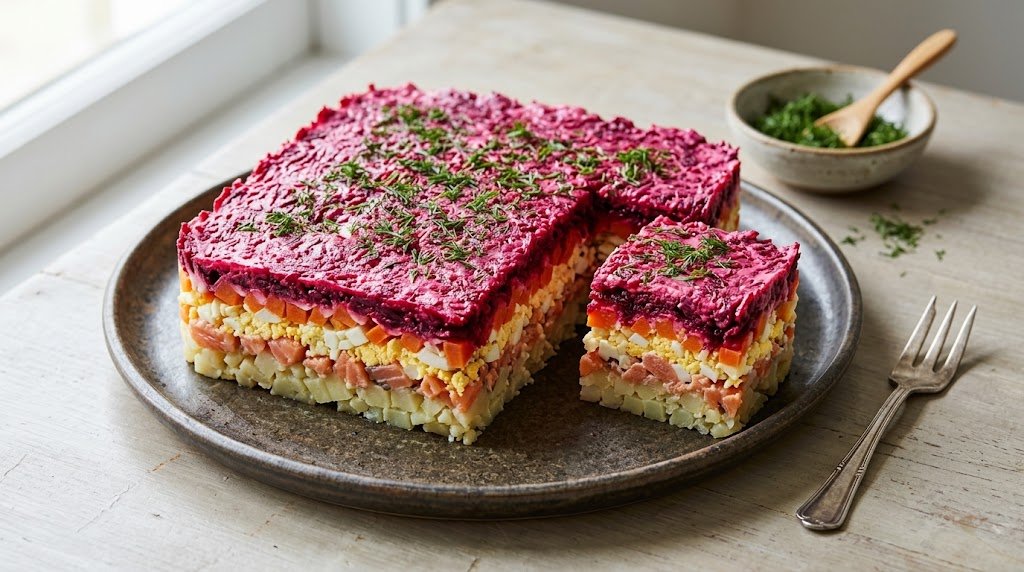
Recipe card
Smoked Salmon Shuba Salad with Beet Layers
Equipment: Two saucepans, grater, 20 cm square dish, food thermometer, refrigerator.
Ingredients
Instructions
Cook the vegetables
Simmer whole beets in one saucepan for 45–60 minutes until easily pierced. In another saucepan simmer whole potatoes and carrots until tender, about 20–30 minutes; remove each as ready.
Cook the eggs
Cover eggs with water, bring to a boil, then simmer gently for 10–12 minutes. Cool under cold water and peel.
Cool and grate
Cool cooked vegetables promptly in shallow dishes, refrigerating within 2 hours. Peel beets and potatoes when manageable. Grate each vegetable and the eggs separately; allow a 1-hour cooling period in the total time.
Layer
In a 20 cm square dish, spread potatoes, then salmon and onion, followed by carrots, eggs and beets. Spread a thin layer of mayonnaise between the main layers and over the beets; reserve a small amount for the top if desired.
Chill and serve
Cover and refrigerate for at least 2 hours. Scatter dill on top and cut into portions with a wide spatula. Keep the salad chilled until serving.
Doneness checks
Cooked roots are easily pierced; cold assembled layers hold when lifted with a wide spatula.
Helpful tips
- Keep each grated component in its own bowl.
- Use a fine dice for onion so it does not dominate a bite.
- Spread mayonnaise thinly instead of pressing the layers flat.
- Use a wide spatula to lift chilled portions.
Troubleshooting
- Warm vegetables soften mayonnaise and can warm the ready-to-eat fish. Chill the components before assembling.
- Keep each grated component in its own bowl.
Serving ideas
- Serve cold in small portions as a starter.
- Offer rye bread alongside.
- Pair with sliced cucumbers for extra crunch.
- Keep the serving dish on a chilled tray at gatherings.
Substitutions
Cooked and chilled salmon can replace smoked salmon for a milder variation. Use commercial mayonnaise made with pasteurized eggs.
Variation
Assemble in individual clear glasses instead of a single dish to show the coloured layers.
Make ahead
Cook and chill vegetables a day ahead. Assemble on the serving day or the evening before, keeping all components refrigerated.
Storage and reheating
Cover, refrigerate at 4°C (40°F) or below and use within 2 days, or sooner if the fish label requires. Freezing harms the mayonnaise and vegetable texture.
Food safety
Use ready-to-eat fish and pasteurized-egg mayonnaise. Refrigerated smoked fish is unsuitable for pregnant or immunocompromised people unless cooked in a dish; offer fully cooked salmon instead.
Frequently asked questions
Why should the vegetables be cold before layering?
Warm vegetables soften mayonnaise and can warm the ready-to-eat fish. Chill the components before assembling.
Can I use raw salmon?
No. This recipe uses ready-to-eat smoked salmon or fully cooked, chilled salmon; raw fish is not a substitute.
How to tell when it is ready
Cooked roots are easily pierced; cold assembled layers hold when lifted with a wide spatula.
Tips
- Keep each grated component in its own bowl.
- Use a fine dice for onion so it does not dominate a bite.
- Spread mayonnaise thinly instead of pressing the layers flat.
- Use a wide spatula to lift chilled portions.
Troubleshooting
- Warm vegetables soften mayonnaise and can warm the ready-to-eat fish. Chill the components before assembling.
- Keep each grated component in its own bowl.
Substitutions
- Cooked and chilled salmon can replace smoked salmon for a milder variation. Use commercial mayonnaise made with pasteurized eggs.
Variations
- Assemble in individual clear glasses instead of a single dish to show the coloured layers.
Serving suggestions
- Serve cold in small portions as a starter.
- Offer rye bread alongside.
- Pair with sliced cucumbers for extra crunch.
- Keep the serving dish on a chilled tray at gatherings.
Make ahead
Cook and chill vegetables a day ahead. Assemble on the serving day or the evening before, keeping all components refrigerated.
Storage
Cover, refrigerate at 4°C (40°F) or below and use within 2 days, or sooner if the fish label requires. Freezing harms the mayonnaise and vegetable texture.
Food safety
Use ready-to-eat fish and pasteurized-egg mayonnaise. Refrigerated smoked fish is unsuitable for pregnant or immunocompromised people unless cooked in a dish; offer fully cooked salmon instead.
Frequently asked questions
Why should the vegetables be cold before layering?
Warm vegetables soften mayonnaise and can warm the ready-to-eat fish. Chill the components before assembling.
Can I use raw salmon?
No. This recipe uses ready-to-eat smoked salmon or fully cooked, chilled salmon; raw fish is not a substitute.
More recipes to try

Spotted a detail that needs correcting? Contact the FeastDelights editors.