Baked Cabbage and Onion Pie with Butter Pastry
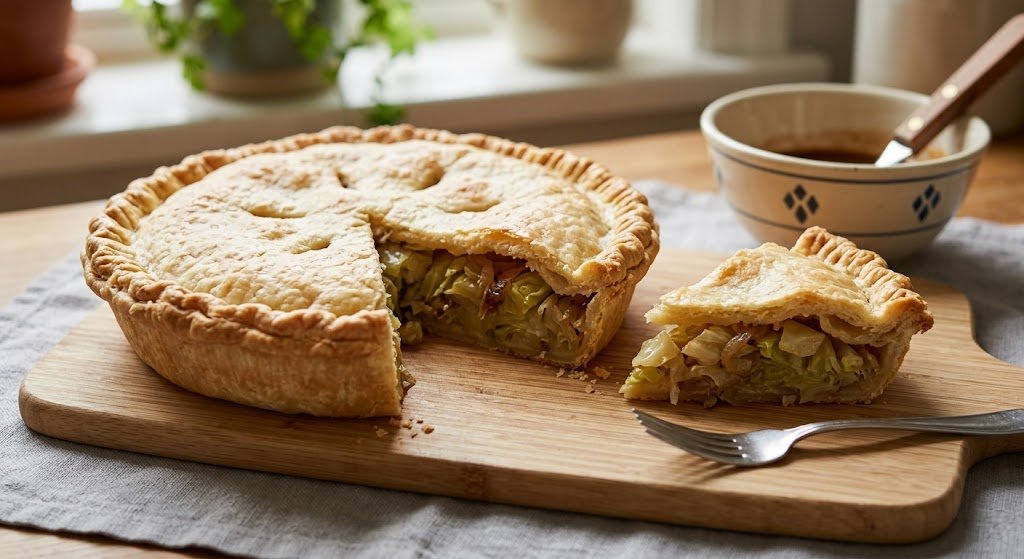
This baked cabbage and onion pie encloses a tender, savoury vegetable filling in golden homemade butter pastry. The cabbage is cooked uncovered to remove excess moisture, then cooled before the pie is assembled. A 23 cm (9 inch) dish makes eight slices, suitable for lunch, a light dinner or a side with soup. Allow around two hours including pastry chilling and a short rest after baking. Cut steam vents and bake until the base is cooked as well as the top.
Baked cabbage and onion pie is a double-crust savoury pie with soft, lightly sweet cabbage inside a tender butter pastry. This Eastern European-inspired version uses baking powder, eggs and milk rather than yeast. It makes eight slices from a 23 cm (9 inch) dish in about 2 hours 5 minutes, including chilling and resting. Cook the filling until fairly dry and cool it before assembly to help the bottom crust bake through.
What makes this cabbage pie different?
Instead of individual yeast-raised buns, this recipe makes one large covered pie. The buttery dough is enriched with eggs and a little milk, giving a tender crust rather than the airy crumb of bread. Cabbage softens and develops a gentle sweetness as it cooks with onion. The filling should hold together without a puddle of liquid; it does not need a cream sauce or cheese to bind it.
Ingredients and equipment
Weigh the 400 g flour and 150 g butter. Keep the butter cold and cut it into small cubes. The eggs provide moisture as well as structure, so add the cold milk gradually rather than automatically pouring in all 80 ml (about one-third US cup). Flour absorption and egg size vary. A dough that comes together when pressed is ready; it need not feel wet or stretchy. Baking powder gives a little lift. Divide the measured salt between the dough and filling.
Choose firm white or green cabbage and remove the tough core and damaged outer leaves before weighing the 600 g (about 1.3 lb) shredded amount. Slice it thinly enough to soften evenly. Dice the onion rather than leaving large wedges that might tear the pastry during slicing. Use a neutral vegetable oil and the measured pepper. The final egg is for brushing the lid, not for adding to the dough.
A 23 cm (9 inch) metal pie dish with a moderate depth is a good starting point. A deep dish or small diameter can change how thick the crust and filling are. Have a rolling pin, mixing bowl, wide skillet, pastry brush and cooling rack ready. A metal dish tends to transfer heat to the base more quickly than a thick ceramic one.
Prepare the pastry without overworking it
Combine flour, baking powder and half the salt. Rub the cold butter into the flour with fingertips until the mixture looks like coarse crumbs with a few small pieces of butter remaining. Add the two eggs, then enough cold milk to form a soft cohesive dough. Press together rather than kneading like bread. Flatten into a disc, cover and refrigerate for 20 minutes. Cold butter and a rested dough are useful for a tender crust; see King Arthur Baking’s pie crust guide for the underlying technique.
Cook the cabbage filling until dry
Heat the oil over medium heat in a wide skillet. Cook the onion for about four minutes until softened, add the cabbage, remaining salt and pepper, and stir. Cook uncovered for about 15 minutes, stirring periodically. If the cabbage releases a lot of water, continue until the excess evaporates. The leaves should be tender but not reduced to a paste. Spread the filling in a shallow dish to cool promptly; refrigerate if it will not be used soon. Warm wet filling can soften the pastry before it reaches the oven.
Shape, seal and bake
Preheat a conventional oven to 190°C (375°F). Divide the pastry into two-thirds for the base and one-third for the lid. Roll the larger piece on a lightly floured worktop so it covers the bottom and sides of the dish with enough overhang for sealing. Lift it loosely over the rolling pin rather than stretching it. Patch small holes with scraps and press gently into the corners.
Spread the cooled cabbage evenly in the lined dish. Roll the lid, lay it over the filling and pinch or crimp the edges. Cut several short steam vents near the centre. Brush the lid with the beaten egg in a thin layer. Bake on a lower-middle rack for 35–45 minutes, checking that the rim and lid are golden and the bottom is set, not pale and gummy. If the rim darkens too early, shield it loosely with foil. Rest 15 minutes before cutting into eight wedges.
Recipe card
Baked Cabbage and Onion Pie with Butter Pastry
30 minutes hands-on, about 60 minutes cooking (19 minutes filling and 35–45 minutes baking), 20 minutes chilling and 15 minutes resting. Filling cooling overlaps chilling or shaping preparation where possible; allow extra time if needed.
Equipment: Kitchen scale, mixing bowl, rolling pin, wide skillet, shallow cooling dish, 23 cm (9 inch) pie dish, pastry brush and cooling rack.
Ingredients
Butter pastry
Cabbage filling
Seasoning
Egg wash
Instructions
Make and chill the butter pastry
Rub cold butter into flour, baking powder and half the salt until coarse crumbs form. Mix in two eggs and just enough of the measured cold milk to form a dough. Cover and chill 20 minutes.
Cook and cool cabbage filling
Heat oil over medium heat. Cook onion 4 minutes, add cabbage, remaining salt and pepper and cook uncovered about 15 minutes until tender and fairly dry. Spread in a shallow dish to cool promptly.
Line the pie dish
Preheat conventional oven to 190°C (375°F). Roll two-thirds of dough to line a 23 cm (9 inch) pie dish, allowing an overhang. Spread cooled filling evenly.
Seal and vent the lid
Roll remaining dough for the lid. Seal edges, cut steam vents and brush with the separately beaten egg.
Bake and rest
Bake 35–45 minutes until golden and the bottom crust is set. Shield browned edges if necessary. Rest 15 minutes before cutting into eight slices.
Troubleshooting
Soggy base: the cabbage may have retained water, the filling may have been warm, or the oven may have been insufficiently preheated. Dry the vegetables in a wide pan and cool before filling. Crumbly dough: add cold milk a teaspoon at a time until it holds together. Tough pastry: avoid prolonged kneading and excess dusting flour. Splitting lid: leave room for steam to escape, seal the rim without stretching and avoid mounding filling above the dish. Uneven browning: rotate the pie once the pastry has set if your oven has a hot spot.
Serving and variations
Serve warm with sour cream, a green salad or hearty beet borscht. For a different cabbage preparation, try cabbage casserole with dill or fried cabbage pirozhki. Chopped dill can be stirred into the cooked filling. If adding mushrooms, sauté them separately until their moisture has evaporated and replace some cabbage rather than overfilling the crust. A firm baking margarine can be tried in place of butter, but water content and texture differ by brand.
The standard recipe contains wheat, eggs and milk. Check labels and avoid cross-contact if serving someone with allergies. Do not taste raw flour or egg dough.
Make ahead and storage
The cabbage can be cooked the day before, cooled promptly and refrigerated; assemble with cold filling. The dough can be made ahead and chilled, although a longer chill may require a brief rest before rolling. Refrigerate portions in shallow covered containers at 4°C (40°F) or below within 2 hours, or 1 hour above 32°C (90°F). Use within 3 days of cooking the filling. Freeze cooled baked slices for up to 2 months for best quality; thaw in the refrigerator and reheat to 74°C (165°F) throughout. Follow FoodSafety.gov’s cooling guidance. Reheat in an oven to restore the crust rather than relying on a microwave for crispness.
Give the pie a short rest before slicing so the tender filling stays inside the golden crust.
Frequently asked questions
Can I use red cabbage?
Yes, but the colour and flavour will differ. Cook until tender and evaporate excess moisture before filling.
Do I need to blind bake the base?
Not for this double-crust method. Use a thoroughly preheated oven, cooled dry filling and a suitable pie dish.
Can I use puff pastry?
It produces a different pie and may need different baking instructions. This recipe uses homemade egg-enriched butter pastry.
Why did the crust shrink?
Stretching during lining or overworking the dough can cause shrinkage. Rest it and ease it into the dish without pulling.
Can I make smaller pies?
Yes, but divide the dough and filling carefully and start checking earlier because individual pies bake more quickly.
Can I add cooked mushrooms?
Yes. Cook them separately until dry and substitute for some cabbage to avoid excess filling moisture.
More recipes to try






Spotted a detail that needs correcting? Contact the FeastDelights editors.