Refrigerator Pickled Tomatoes with Garlic and Bay
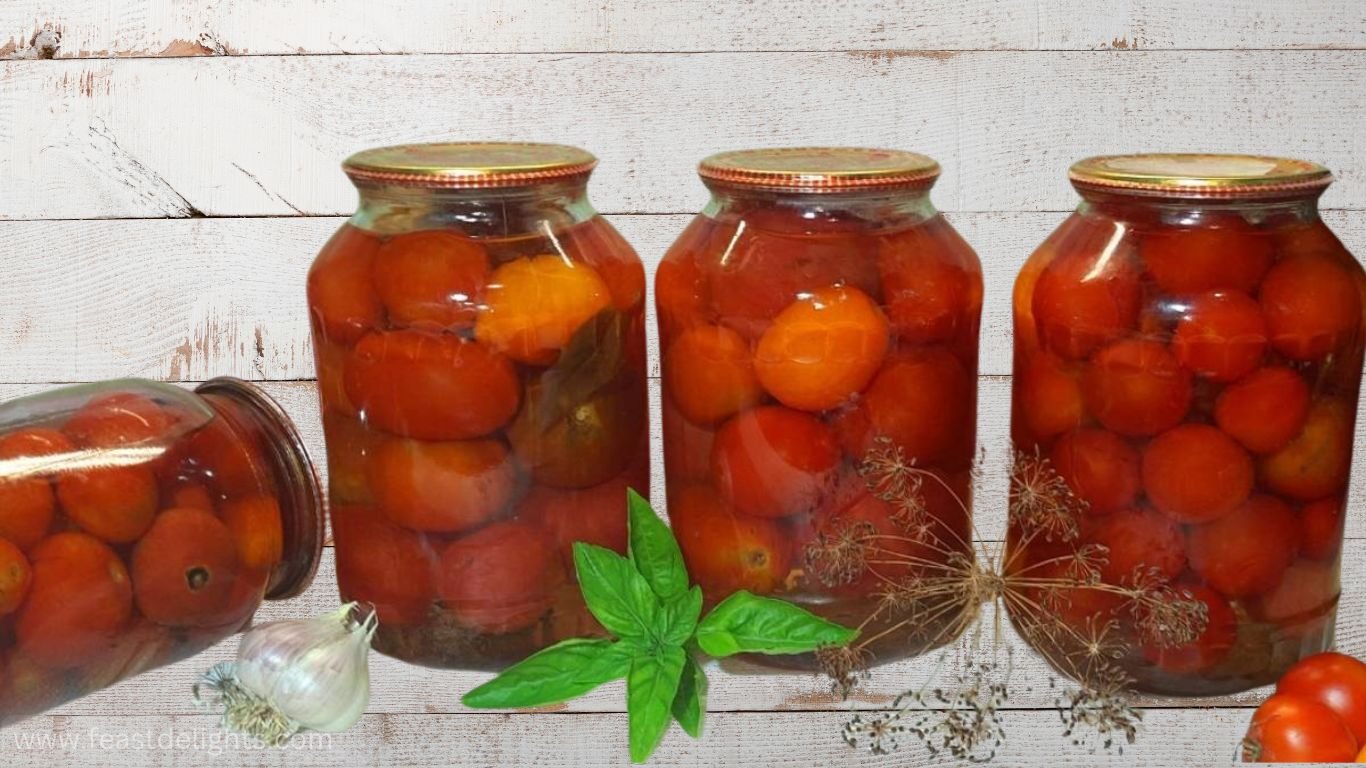
Small firm tomatoes absorb the sharp, lightly sweet flavour of a warm vinegar brine scented with garlic, bay leaves, black peppercorns and optional dill. After a day in the refrigerator, the tomatoes remain juicy and pleasantly firm, with a tangy skin and aromatic seasoning. The recipe makes about eight condiment servings and takes around 25 minutes of active preparation and heating before chilling. Keep the tomatoes refrigerated throughout storage and serve them cold with potatoes, grilled dishes or a cheese board.
Refrigerator pickled tomatoes with garlic and bay are a tangy, lightly sweet condiment made from small, firm tomatoes and an equal-volume vinegar and water brine. This batch makes about eight condiment servings and needs 25 minutes of preparation and heating, plus at least 24 hours in the refrigerator. It is a short-term chilled quick pickle, not a winter canning recipe.
Food safety: This is a refrigerated condiment, not a tested preservation formula. The historic winter-preserving URL does not imply that the jars can be stored in a pantry.
Choosing tomatoes and vinegar
Use 1 kg (2.2 lb) firm cherry or small plum tomatoes, discarding damaged or rotten fruit. Choose food-grade white vinegar clearly labelled 5% acidity. The measured 250 ml vinegar and 250 ml water give a sharp brine; sugar softens the taste and salt adds seasoning. Garlic, bay and peppercorns are the defining aromatics. Wash optional fresh dill before adding it. Do not substitute a weaker vinegar or dilute the liquid.
Recipe card
Refrigerator Pickled Tomatoes with Garlic and Bay
Includes 24 hours of refrigerated pickling. Allow extra time for jar preparation and prompt cooling.
Equipment: Two heat-resistant jars and compatible lids, large pot for jar preparation, clean skewer, non-reactive saucepan, scales, measuring jug, ladle, refrigerator thermometer
Ingredients
Tomatoes
Vinegar brine
Aromatics
Instructions
Clean jars and prepare tomatoes
Wash two heat-resistant jars and lids with hot soapy water and rinse. Sterilise suitable jars in boiling water for 10 minutes at elevations up to 305 m (1,000 ft), adding one minute per additional 305 m; prepare lids according to the maker. Wash firm, undamaged tomatoes under running water and prick each once using a clean skewer.
Pack with aromatics
Divide the garlic, bay leaves, peppercorns and optional dill between the clean jars. Pack tomatoes gently without crushing them, leaving space for the brine.
Heat measured brine
Combine the measured 5% acidity vinegar, water, salt and sugar in a non-reactive saucepan. Bring to a boil, stirring until dissolved. Do not dilute further.
5 minCover tomatoes with brine
Place the warm jars on a heat-resistant surface. Carefully pour the hot brine over the tomatoes until submerged, leaving a little headspace. If more brine is necessary, make more using the same proportions; do not top up with plain water.
Cool promptly and chill
Cover appropriately and cool promptly; transfer to the refrigerator within two hours of preparation (one hour above 32°C/90°F). Chill for at least 24 hours before serving. Never leave the jars on the counter to pickle.
1440 minServe cold
Use a clean utensil to remove portions. Keep remaining tomatoes submerged and refrigerated at 4°C (40°F) or colder. Use within three days of preparation; this is not a shelf-stable canned product.
Making a quick pickle rather than a canned preserve
Clean and sterilise suitable jars before packing, as recommended by University of Minnesota Extension. Use non-reactive cookware such as stainless steel for the acidic brine. Prick each tomato and pack gently. Pour the measured hot liquid carefully into warm heat-resistant jars to reduce thermal shock. Make extra brine in the same proportions if the tomatoes are not covered. Cool promptly and refrigerate within the stated limit; the overnight flavour development takes place in the refrigerator, never at room temperature. A closed or vacuum-sealed lid does not make these jars safe for pantry storage.
Texture and flavour
After 24 hours the tomatoes should taste tangy and aromatic while retaining some firmness. If skins split, use firmer fruit next time. If the flavour is too sharp, drain a serving and pair it with a richer dish; do not dilute the stored brine. The short storage period is deliberately conservative because the exact formula is not independently tested for extended refrigerated preservation.
Serving ideas
Serve with garlic and rosemary roasted potatoes or a grilled main. Other recipes with different seasonings include garlic and mustard refrigerator tomatoes and sweet refrigerator tomatoes with dill; each needs its own storage guidance. Check accompaniments and spices for allergens.
Cold storage
Refrigerate promptly at 4°C (40°F) or colder, within two hours of preparation (one hour above 32°C/90°F). Keep the tomatoes submerged and use within three days of making as a conservative short-term storage limit for this unvalidated formulation. Do not store at room temperature, can, reuse brine that has contacted produce, or freeze for pickle texture. Discard any batch left warm beyond these limits. For shelf-stable tomato preservation, select an independently tested canning recipe and follow its exact directions.
Lift a few chilled tomatoes from the brine with a clean utensil and serve alongside the main dish. Return the covered jar to the refrigerator promptly.
Frequently asked questions
Can I keep these jars in a pantry?
No. The formula has not been validated for shelf-stable canning. Refrigerate promptly and use within three days.
Can I use apple cider vinegar?
Food-grade apple cider vinegar labelled 5% acidity gives a different taste. Keep the measured vinegar-to-water ratio unchanged.
Why prick the tomatoes?
A small puncture helps the brine flavour the fruit and may reduce splitting. Choose firm tomatoes and avoid crushing them.
What if the brine does not cover the tomatoes?
Prepare additional brine in exactly the same ingredient proportions. Do not add plain water or use old brine.
Can I reuse the brine?
Do not use brine that has contacted tomatoes to pickle another batch. Produce dilutes its acidity.
More recipes to try






Spotted a detail that needs correcting? Contact the FeastDelights editors.