Garlic and Mustard Refrigerator Pickled Tomatoes
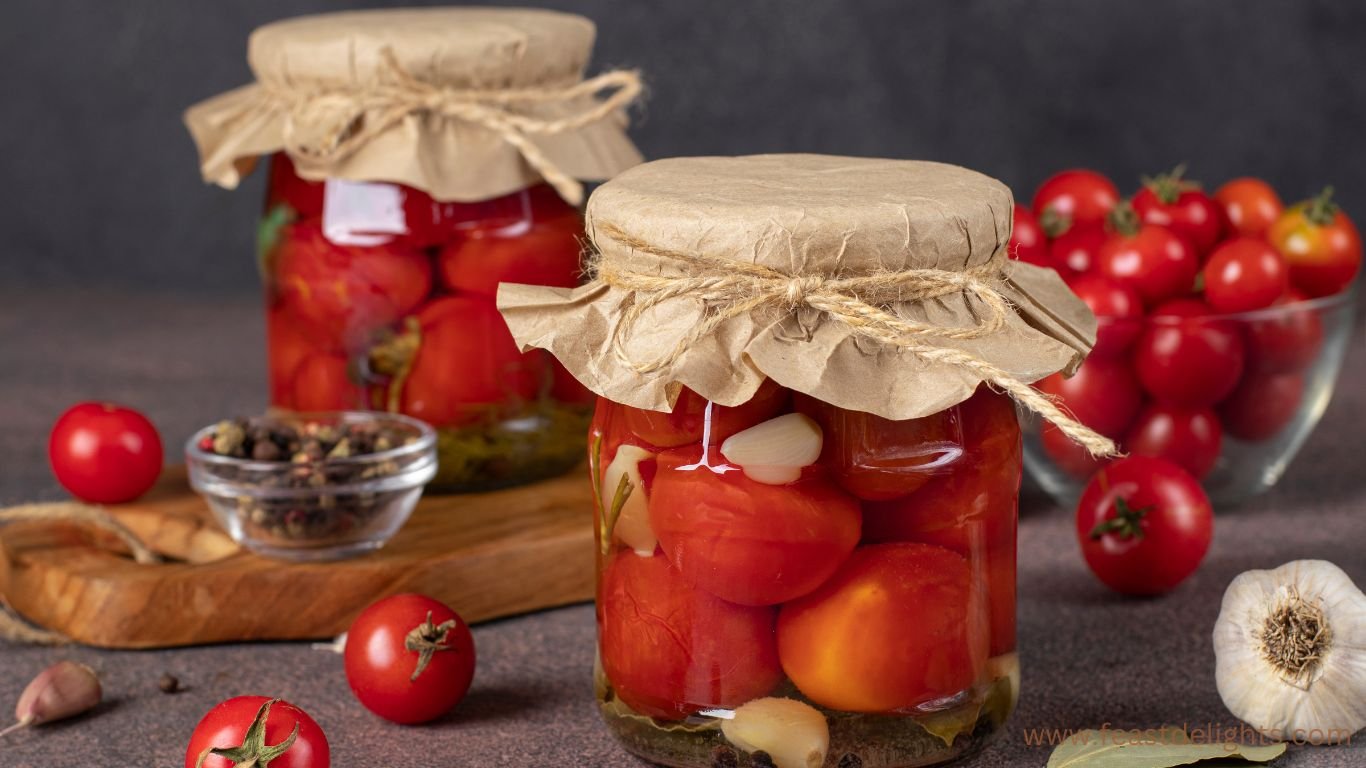
These garlic and mustard refrigerator tomatoes are a short-term chilled side, with firm fruit in a sweet-savoury vinegar brine flavoured with bay and peppercorns. The recipe keeps its relatively mild brine and whole small tomatoes rather than turning them into a different, sharply acidic pickle. It makes about 2 kg of tomatoes plus liquid. Allow 35 minutes to prepare and cook the brine, then at least 24 hours in the refrigerator before tasting. Keep the batch cold and use within 4 days of preparation; it is not suitable for pantry canning.
Garlic and mustard refrigerator tomatoes offer a cool, savoury contrast to potatoes, grilled food or a sandwich plate. Small firm tomatoes hold their shape better than very ripe slicing tomatoes when hot brine is poured over them. This version keeps the existing 2 kg tomato batch, five garlic cloves, mustard seed, bay and peppercorn seasoning, with sugar balancing the vinegar. It is a mild refrigerator preparation rather than a validated preserving formula. Give the tomatoes a full day in the fridge before tasting, but expect seasoning to reach the surface before the centre, especially in larger fruit. The four-day storage period starts when the batch is made and includes that initial waiting day.
Choose tomatoes for shape and texture
Use 2 kg firm, unblemished small tomatoes, about 4 lb 6 oz. Cherry or small plum tomatoes are practical because they fit closely into containers. Remove stems and discard bruised, cracked, mouldy or soft fruit. Rinse under running water and drain. This recipe keeps the skins on and the tomatoes whole.
Very ripe beefsteak tomatoes can soften and break under the hot brine. Do not use green tomatoes as a direct substitute here: their flavour and texture differ, and they belong in a recipe designed for them. Keep tomatoes of similar size together so one container does not contain both tiny cherries and much larger fruit.
Measure this mild brine accurately
The base uses 1 litre water, about 4¼ US cups, 2 level tablespoons fine salt, 4 level tablespoons sugar and 100 ml food-grade 9% vinegar. The sugar is about 50 g and the fine salt about 36 g, but crystal size affects the salt’s volume. Use level 15 ml tablespoons rather than heaped household serving spoons.
If you only have labelled 5% food-grade vinegar, a flavour-only equivalent is 180 ml of that vinegar with 920 ml water, replacing the original 100 ml of 9% vinegar plus 1 litre water. This keeps the approximate amount of acid and total liquid consistent. It does not prove shelf stability or permit a longer storage period. Never use cleaning vinegar, concentrated essence or homemade vinegar of unknown acidity.
Five garlic cloves, two bay leaves, one teaspoon mustard seed and one teaspoon black peppercorns season the liquid. Peel and lightly crush the garlic to expose its surface. The mustard is part of this recipe’s distinctive character; it should not be confused with a plain garlic-and-bay tomato pickle.
Pack into containers that cool quickly
Use several clean heatproof containers with lids, providing about 4 litres of combined capacity, rather than one deep heavy jar. Exact volume depends on tomato size and packing. Set glass containers on a suitable heatproof surface and follow their manufacturer’s hot-liquid instructions to avoid thermal shock.
Arrange tomatoes snugly without crushing them. Divide the garlic between containers. The measured brine should cover the fruit when packed efficiently, but container shapes vary. If it does not, use smaller, closer-fitting containers or make additional brine with the same proportions. Do not simply top up with plain water.
Recipe card
Garlic and Mustard Refrigerator Pickled Tomatoes
35 minutes preparation/cooking plus at least 24 hours in the refrigerator. Whole-fruit seasoning varies with size; the waiting day counts within the 4-day storage limit.
Equipment: Saucepan, measuring jug and level 15 ml spoons, clean heatproof lidded containers with about 4 L combined capacity, ladle, clean serving utensil; optional food-safe pickle weight
Ingredients
Tomatoes
Brine and whole spices
Garlic
Brine and whole spices
Instructions
Prepare the tomatoes and containers
Rinse 2 kg firm small tomatoes, remove stems and discard damaged or soft fruit. Pack whole tomatoes snugly but without crushing into several clean heatproof lidded containers, about 4 litres combined capacity. Divide 5 peeled lightly crushed garlic cloves between them.
Dissolve and infuse the brine
Put 1 litre water, 2 level tablespoons fine salt, 4 level tablespoons sugar, 2 bay leaves, 1 teaspoon mustard seeds and 1 teaspoon black peppercorns in a saucepan. Bring to a boil, stirring until salt and sugar dissolve, then simmer for 5 minutes.
Add the measured vinegar
Remove from the heat and stir in 100 ml food-grade 9% vinegar. If using the article's 5% vinegar alternative, measure the adjusted water and vinegar amounts before starting; do not guess the substitution.
Pour over the tomatoes
Carefully pour hot brine over the tomatoes, distributing whole spices and covering the fruit. Leave space below the rim. If necessary, repack in closer-fitting containers or make more brine in the same proportions; do not top up with plain water.
Refrigerate promptly
Cover and cool promptly in small containers. Refrigerate within 2 hours of preparation, or 1 hour above 32°C/90°F, and keep at 4°C/40°F or colder. Do not leave wrapped jars cooling slowly or store them in the pantry.
Wait a day, then serve cold
Allow at least 24 hours in the refrigerator before tasting. Lift out a drained serving with a clean utensil. Use the whole batch within 4 days from preparation, counting the initial waiting day. Keep the remaining tomatoes below their brine and refrigerated.
What the hot brine does
Simmering water with salt, sugar and whole spices dissolves the seasoning and releases some spice flavour. Add the measured vinegar off the heat, then pour carefully over the tomatoes. A few skins may split from the heat; that is a texture change, not a sign that the jars have been safely canned.
Cool the small containers promptly and refrigerate within 2 hours, or within 1 hour if the room is above 32°C/90°F. Do not leave a large jar wrapped in towels to cool slowly. A lid may draw down as the liquid cools, but a vacuum seal does not establish a safe pantry process.
The National Center for Home Food Preservation’s tomato guidance uses specified acidification and processing for canning. Those are separate tested procedures; adding garlic and mustard or guessing a short boiling-water process is not an interchangeable method for this recipe.
Troubleshooting and adjustments
Fruit floats above the liquid: settle it gently with a clean spoon or use a clean food-safe pickle weight. Keep the containers refrigerated. Do not force the tomatoes tightly enough to burst them.
The skins split or the fruit is too soft: start with firmer small fruit and avoid holding it in hot brine on the counter. Some splitting is unavoidable with delicate skins. Very soft, slimy tomatoes or an off smell are reasons to discard the batch, not to add more vinegar.
The centre tastes plain after a day: whole tomatoes season gradually through their skins. Smaller fruit develops flavour more quickly, but waiting does not extend the four-day limit. Cut a tomato on the serving plate and spoon over a little brine if you want more seasoning in that portion.
Too salty or too sharp: drain the serving and pair with unsalted potatoes or another plain food. Do not dilute the stored brine. Taste the cold tomatoes, since hot brine gives a different impression of salt and acidity.
Serving and small variations
Serve drained tomatoes alongside garlic and rosemary roast potatoes, cooked meat or grilled tofu. Add a few to a lunch salad immediately before serving, or offer a small bowl on an appetiser board. Keep the rest in the fridge.
Add fresh dill to the serving bowl rather than repeatedly opening the stored batch to adjust it. Cherry tomatoes are a smaller-fruit variation; keep their total weight the same. For a different seasoning balance and brine, see refrigerator tomatoes with garlic and bay. For a firmer vegetable pickle beside them, try crisp refrigerator cauliflower. Prepare and store those batches separately.
Make ahead and storage
Allow at least 24 hours in the refrigerator before the first serving. Keep at 4°C/40°F or below and use within 4 days from preparation, including the waiting day. Date each container and use a clean utensil. Remove only the portion you need; do not return tomatoes from a used serving plate to the main container.
Do not reuse the brine for fresh tomatoes or mix a new batch with an older one. Discard a batch stored incorrectly, or any container showing mould, unexpected gas, slime or an off smell. Tasting is not a safety test.
Freezing is not recommended for this whole-tomato side because the fruit becomes soft on thawing. Serve cold; reheating is unnecessary. If you need tomatoes for freezer meals, use a separate cooked tomato preparation rather than expecting this pickle to retain its texture.
Allergens
Mustard seed is an allergen. If preparing food for someone with a mustard allergy, omit it only after checking all ingredients and avoiding cross-contact; do not label the standard batch mustard-free. Check vinegar labels for gluten where relevant. The base ingredients do not include milk or eggs, while accompaniments may introduce additional allergens.
Choose firm small tomatoes, keep the measured brine and cool the containers promptly. Serve a cold, drained portion and return the remaining batch to the refrigerator.
Frequently asked questions
Are these shelf-stable canned tomatoes?
No. This is a mild, short-term refrigerator preparation. A tight lid, hot fill or vacuum seal does not replace a validated canning process.
Can I use cherry tomatoes?
Yes. Keep the total at 2 kg and choose firm unblemished fruit. Smaller tomatoes may take on flavour sooner, but the same four-day refrigerator limit applies.
Should I peel the tomatoes?
No. This recipe keeps whole small tomatoes with their skins for structure. Peeled tomatoes would soften and behave differently in hot brine.
Can I use 5% vinegar?
For this refrigerator flavour profile, use 180 ml labelled 5% vinegar and 920 ml water in place of 100 ml of 9% vinegar and 1 litre water. The storage limit and no-canning restriction remain the same.
What if the brine does not cover the tomatoes?
Use closer-fitting containers or prepare more brine with the same ratios. Do not add plain water. A clean food-safe weight can help with floating fruit.
Does the waiting day count toward storage?
Yes. Use within four days from preparation, so the initial 24-hour wait is included.
Can I halve the batch?
Yes. Use 1 kg tomatoes and halve all other ingredients, including 500 ml water and 50 ml 9% vinegar. Keep the same chilling and storage instructions.
Can I reuse the liquid for a second batch?
No. Make fresh brine and use clean containers. Do not mix new tomatoes into a partly used container.
More recipes to try



Spotted a detail that needs correcting? Contact the FeastDelights editors.