Pork Belly Ramen with Mushrooms, Egg and Nori
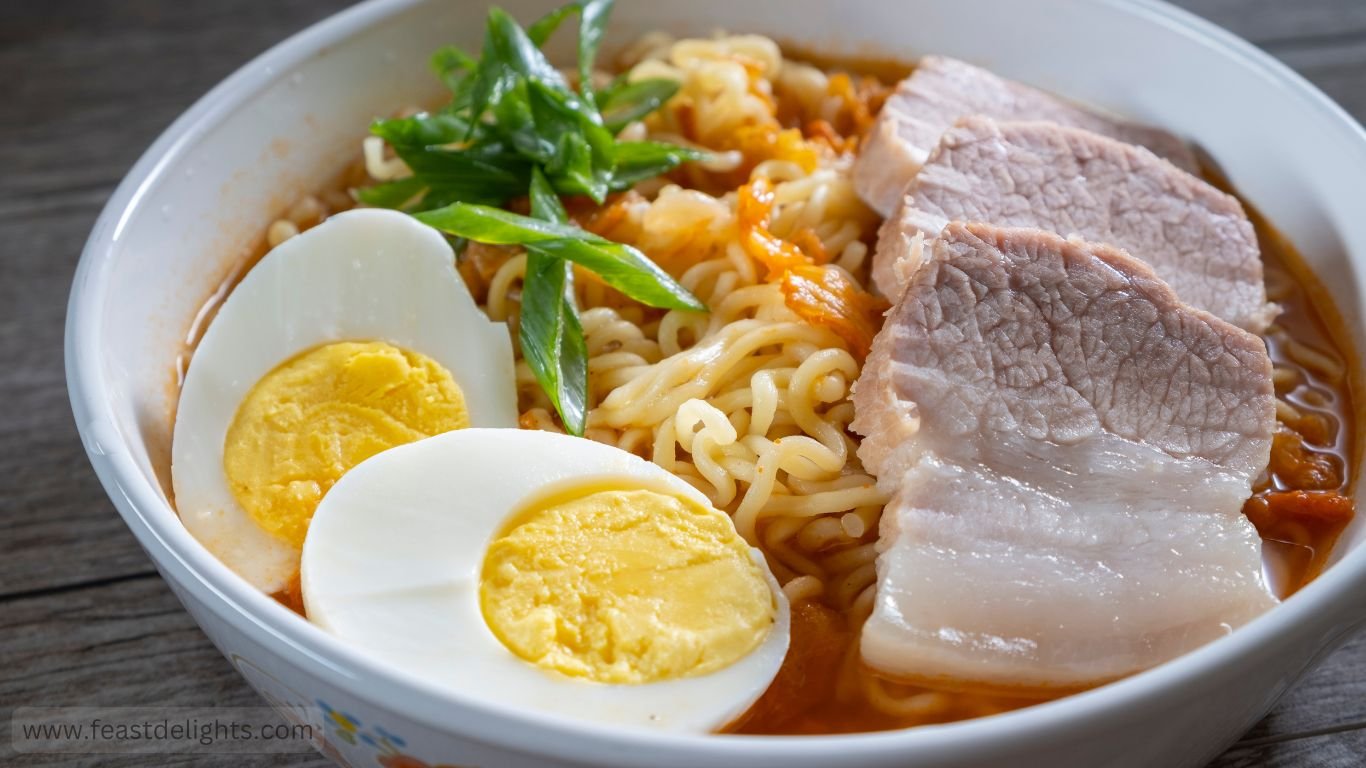
This Japanese-inspired pork belly ramen pairs tender braised pork with noodles, mushrooms, sliced leek and a savoury ginger, garlic and soy broth. The pork is browned first, then simmered gently until a fork slides into the meat easily. Hard-boiled eggs and nori complete the bowls, while separately cooked noodles keep the broth from becoming overly starchy. Allow about two hours and fifteen minutes for this home-style recipe, which makes four hearty bowls. The pork and broth can also be prepared ahead.
For four bowls of pork belly ramen, start with 500 g pork belly and a litre of chicken broth, then build flavour with leek, mushrooms, ginger and soy sauce. This is a Japanese-inspired home adaptation, not a long-simmered tonkotsu broth. Allow 20 minutes preparation and about 115 minutes cooking, with extra time if the pork is still tough.
Choosing pork belly and noodles
Use a boneless piece of pork belly with a good balance of lean meat and fat. Five hundred grams is approximately 1.1 lb. Skinless belly is easier to slice after braising; if skin is attached, check that it is tender or trim it off before serving. Pat the pork dry before browning. A heavy pot helps the meat colour evenly without needing additional oil, as the belly releases its own fat.
The 400 g noodles (about 14 oz) are weighed as purchased. Fresh and dried ramen noodles have very different cooked yields: use the package’s serving guidance and check the intended portion size during kitchen testing. One litre of chicken broth is roughly 4¼ US cups. Use reduced-salt broth because three tablespoons of soy sauce (45 ml) add considerable seasoning. Choose unsalted plain nori sheets rather than heavily seasoned snacks.
Recipe card
Pork Belly Ramen with Mushrooms, Egg and Nori
Eggs and noodles can cook concurrently with the broth. Allow longer if the pork belly is thick or not yet tender.
Equipment: Heavy 3–4 litre pot with lid, two saucepans, separate chopping boards, knife, tongs, colander, thermometer
Ingredients
Pork
Noodles
Broth
Toppings
Instructions
Brown and braise pork belly
Pat pork dry and brown on all sides in a heavy pot over medium heat. Spoon away excess rendered fat if needed. Add chicken broth, cover and simmer gently 75–90 minutes or longer until fork-tender. Lift out, rest briefly and slice.
Finish the broth
Wash and slice leek; slice mushrooms, mince garlic and grate ginger. Add these and soy sauce to the broth, simmer 10 minutes until vegetables are tender. Taste and add unsalted stock or water if needed.
Cook and prepare eggs
Hard-boil eggs in a separate saucepan until whites and yolks are firm. Cool, peel and halve.
Cook ramen noodles
Cook noodles separately according to package instructions shortly before serving. Drain well and divide among four bowls.
Assemble hot bowls
Ladle hot broth over noodles, add sliced pork and half an egg to each bowl, and finish with nori pieces. Serve immediately.
Braising the pork and building the broth
Brown the pork in a heavy pot over medium heat, turning until the surfaces are golden. If a substantial pool of fat collects, carefully spoon some away. Add the broth gradually and bring to a gentle simmer, then cover and cook until tender. Depending on the thickness of the belly, this may take 75–90 minutes or longer. Whole-cut pork must reach at least 63°C (145°F) with a three-minute rest; belly generally needs much longer cooking to soften its connective tissue. A fork should enter the meat easily before it is lifted out. Rest briefly before cutting into manageable slices.
Wash the leek between its layers to remove grit, then slice the white and light-green parts. Slice the mushrooms, mince garlic and grate ginger. Simmer them in the braising broth with soy until tender. If the liquid has reduced too far for four bowls, add a little hot water or unsalted stock and adjust seasoning after tasting. For a less fatty broth, skim the surface with a spoon.
Eggs, noodles and assembly
Cook the eggs in a separate saucepan until both yolks and whites are firm, then cool under cold running water, peel and halve. Each bowl receives half an egg. Cook ramen noodles according to their package directions shortly before serving. Drain and divide among warmed bowls. Keeping noodles separate avoids releasing excess starch into the broth and prevents them from swelling in leftovers. Add hot broth, sliced pork, egg and pieces of nori immediately before serving.
Variations, serving and storage
Offer chilli oil or sliced spring onions separately if desired. Pork stock can replace chicken broth for a richer flavour; shiitake mushrooms are a suitable alternative to button mushrooms. For another Asian-inspired broth, try hot and sour soup, egg drop soup or Thai red curry chicken soup. Store pork and broth separately from noodles and eggs, cool promptly and reheat only the portions needed. Contains egg and soy; ramen noodles and ordinary soy sauce commonly contain wheat. Check stock and noodles for additional allergens.
Frequently asked questions
Is this tonkotsu ramen?
No. It uses a chicken-stock base enriched by simmering pork belly, rather than a long-cooked pork-bone broth.
Why is my pork belly chewy?
Continue simmering gently until a fork slides into the meat easily. Thickness affects timing.
Can I use fresh ramen noodles?
Yes. Follow the package cooking instructions and serving guidance; fresh and dry noodles yield different amounts.
Can I make the pork ahead?
Yes. Cool and refrigerate the pork and broth promptly, then reheat thoroughly and cook fresh noodles.
Why is my broth greasy?
Skim excess rendered fat before or after braising. Chilling the broth also allows some fat to solidify for removal.
Can I freeze the broth?
Yes. Freeze cooled broth and pork without noodles, eggs or nori for best texture.
More recipes to try






Spotted a detail that needs correcting? Contact the FeastDelights editors.