Herb-Roasted Pork Belly with Garlic and Mustard
This herb-roasted pork belly is seasoned with garlic, Dijon mustard, thyme, bay and black pepper, then roasted in two stages for tender meat and browned edges. A covered roast softens the fatty layers before an uncovered finish concentrates flavour and colours the surface. The recipe uses a kilogram of skin-on pork belly and serves six. Allow 15 minutes of preparation, at least four hours of refrigerated seasoning, around two hours of roasting and a ten-minute rest. Use a thermometer and check tenderness before slicing.
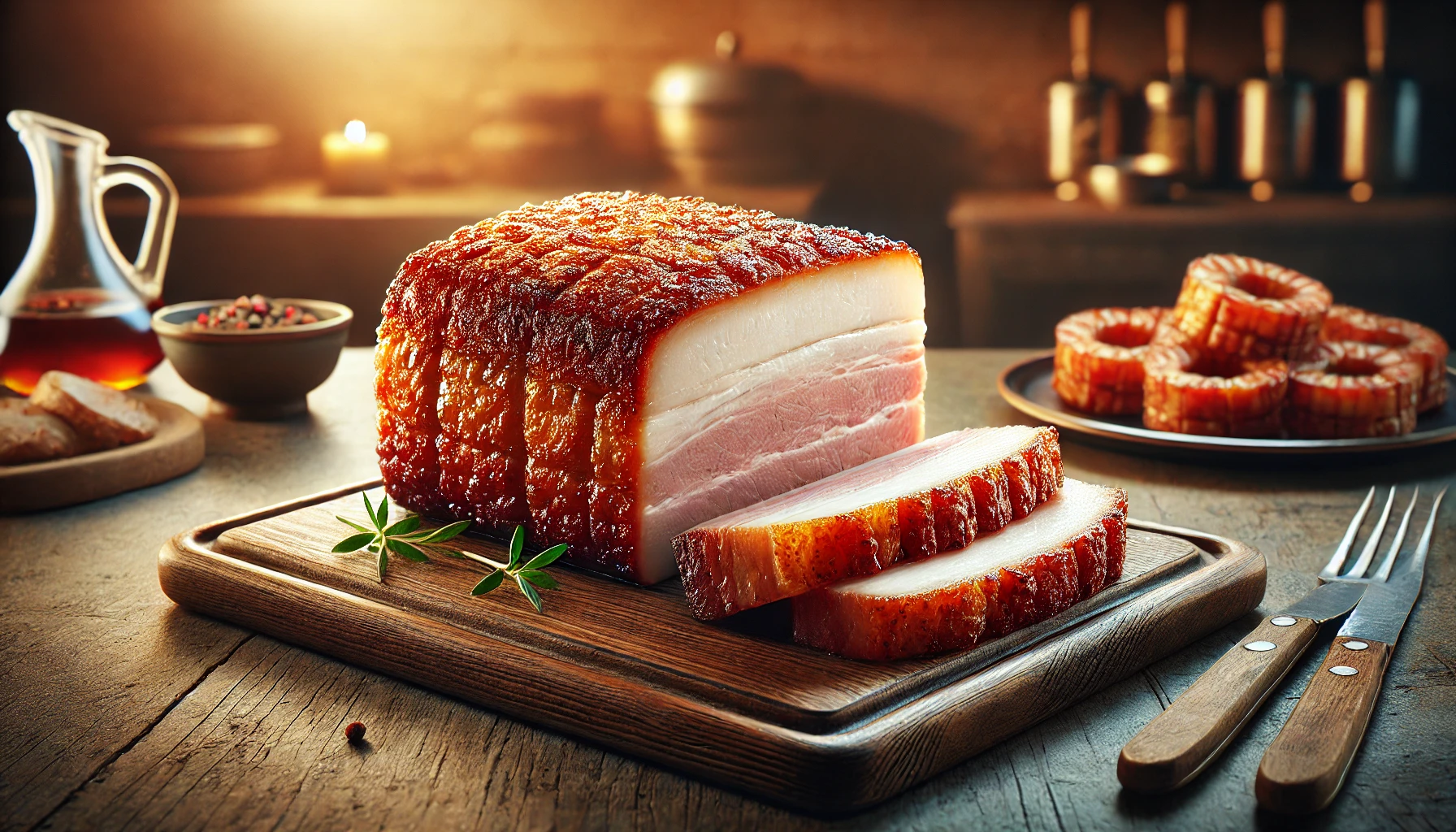
Herb-roasted pork belly uses the rich layers of meat and fat found in Eastern European podcherevok-style preparations. This version is a garlic-and-mustard roast, not a cured or smoked product. Roasting covered first helps tenderise the meat; uncovering later allows the surface to brown. It is intended to be sliceable, with tender fat and browned edges rather than guaranteed brittle crackling. A 1 kg (2.2 lb) slab makes six servings. Allow four hours for refrigerated seasoning, then around 90–105 minutes to roast, with additional time if the cut is thick, and ten minutes to rest.
Choose the cut and season it evenly
Look for a flat slab with visible alternating layers of meat and fat. An evenly thick piece cooks more predictably than a tapered one. If the butcher has not scored the skin, ask them to do so; deep cuts into the meat can dry it out. Garlic, thyme, black pepper and bay give the roast its savoury flavour. Dijon mustard helps the seasoning adhere, and a little neutral oil makes the rub easier to distribute. Keep the skin relatively dry rather than coating it heavily with wet mustard.
Editorial adjustment: The earlier recipe used two tablespoons of fine salt for one kilogram of meat, a highly variable and potentially very salty amount. This revision uses 15 g of fine salt (1.5% of the meat weight) for an ordinary roast rather than a cure. The other seasoning quantities remain unchanged. Confirm the preferred salt level through kitchen testing.
Recipe card
Herb-Roasted Pork Belly with Garlic and Mustard
15 minutes preparation, minimum 4 hours refrigerated seasoning, up to 105 minutes initial roasting and 10 minutes resting. Add roasting time until tender; overnight seasoning takes longer.
Equipment: Rimmed roasting pan, foil, mixing bowl, kitchen scales, food thermometer, skewer, sharp knife, cutting board
Ingredients
Pork
Seasoning
Instructions
Season the pork belly
Pat the pork dry with paper towels; do not rinse raw meat. Check that the skin is scored through the surface fat without cutting into the meat. Mix the salt, pepper, sliced garlic, finely crumbled bay, mustard, oil and thyme. Rub over the meat and sides, keeping the skin as dry as possible. Refrigerate in a covered or protected tray on the lowest shelf for at least 4 hours or overnight.
Roast covered
Preheat the conventional oven to 180°C (350°F). Place the slab skin-side up in a roasting pan and cover tightly with foil. Roast for about 60 minutes. Keep the meat in the oven while the fat begins to render.
60 minUncover and finish roasting
Remove the foil carefully. Spoon away excess rendered fat if needed. Roast uncovered for another 30–45 minutes. Check the thickest meaty part with a thermometer, avoiding fat pockets; it must reach at least 63°C (145°F), followed by a 3-minute minimum rest. For tender belly, continue until a skewer slides into the meat with little resistance; around 88–93°C (190–200°F) is a useful texture target, not a safety requirement. If still tough, extend cooking in 15-minute intervals, loosely covering if the top darkens.
45 minRest and slice
Transfer to a clean board and rest for at least 10 minutes. Slice across the grain with a sharp knife. Serve warm, removing any large bay fragments.
Why roast covered first?
The covered pan traps moisture, helping the tough connective tissue soften. Once the foil is removed, surface moisture can escape and the outside browns. Open the foil away from your face because steam escapes quickly. Pork belly releases substantial fat, so use a rimmed pan and handle the hot drippings carefully. If the pan fills deeply, spoon off some fat into a heatproof container, not the sink.
Distinguish safe temperature from tenderness
For intact pork roasts, FoodSafety.gov specifies at least 63°C (145°F) followed by a three-minute rest. Pork belly generally benefits from cooking well beyond that minimum to soften connective tissue. A useful texture target is around 88–93°C (190–200°F), together with a skewer that meets little resistance. Use both checks. The time varies with slab thickness, oven accuracy and how much fat the cut contains. If the meat is safe but still firm, cover loosely if needed and continue roasting in 15-minute intervals. Do not treat the original time as a guarantee.
Troubleshooting and serving
Chewy meat: extend the covered or loosely covered roast until tender. Dark garlic or herbs: keep wet rub on the meat side, and shield exposed areas with foil if they darken too quickly. Soft skin: the covered method is not designed to guarantee crisp crackling; leave the skin exposed during the final roast. Greasy slices: rest on a clean board and slice across the grain. Serve modest portions with boiled potatoes and a sharp vegetable side, such as cabbage and beet kryzhavky or cabbage and pepper salad. For a different preparation, see boiled pork belly with garlic.
Make ahead, storage and allergens
Season in advance and refrigerate the raw pork at 4°C (40°F) or below. Keep it separated from ready-to-eat food, wash hands and utensils after handling, and discard any unused rub that touched raw meat. Chill cooked portions promptly in shallow covered containers within two hours, or one hour above 32°C (90°F). Use within three days or freeze for up to two months for quality. Thaw in the refrigerator and reheat to 74°C (165°F). This dish contains pork and mustard; check the mustard label for other allergens. No nutrition estimate is supplied because the quantity of rendered fat retained in the portions is uncertain.
Frequently asked questions
Is 63°C enough for tender pork belly?
It is the minimum safe temperature for an intact pork roast with a three-minute rest, but the belly can still be tough at that point. Continue until the connective tissue softens and a skewer meets little resistance.
Will the skin become crackling?
Not necessarily. The covered stage creates steam. Keeping the skin dry and uncovering helps it brown, but brittle crackling needs a separately developed dry-roasting method.
Can I use skinless pork belly?
Yes, it will brown at the edges but cannot produce crackling. Check tenderness and temperature in the thickest meaty portion.
Can I marinate it overnight?
Yes, refrigerate the seasoned slab at 4°C (40°F) or below on the lowest shelf, protected from contact with ready-to-eat food.
Why does the pan contain so much fat?
Pork belly naturally renders fat during roasting. Carefully spoon off excess if necessary and let it cool before disposal; never pour hot fat down a drain.
Can I use a different cut of pork?
A lean loin or shoulder requires different timing and may not give the same texture. Use belly for the stated method.
More recipes to try





Spotted a detail that needs correcting? Contact the FeastDelights editors.