Baked Prune and Apricot Christmas Pudding Cake
This baked Christmas pudding cake is packed with tea-soaked prunes and dried apricots, with honey, brown sugar and butter for a moist, fruit-rich crumb. Cinnamon and nutmeg give it a warm aroma without overpowering the fruit. Unlike a traditional steamed plum pudding, this version bakes in a lined 20 cm (8 inch) round tin and is served in slices. Allow two hours to soak the fruit, then bake gently and cool completely before dusting with icing sugar. It makes ten slices for a festive tea or dessert table.
This baked prune and apricot Christmas pudding cake is a moist, warmly spiced fruit cake made with dried fruit soaked in strong tea. It serves ten and bakes in a 20 cm (8 inch) round tin. Allow two hours for the fruit to soak in the refrigerator, up to 80 minutes for baking and at least an hour for cooling.
This version is a baked fruit-rich cake, not a traditional steamed Christmas pudding. Its distinctive ingredients are prunes, apricots, honey and brown sugar, and it is intended to be cooled and sliced rather than served as a hot steamed pudding.
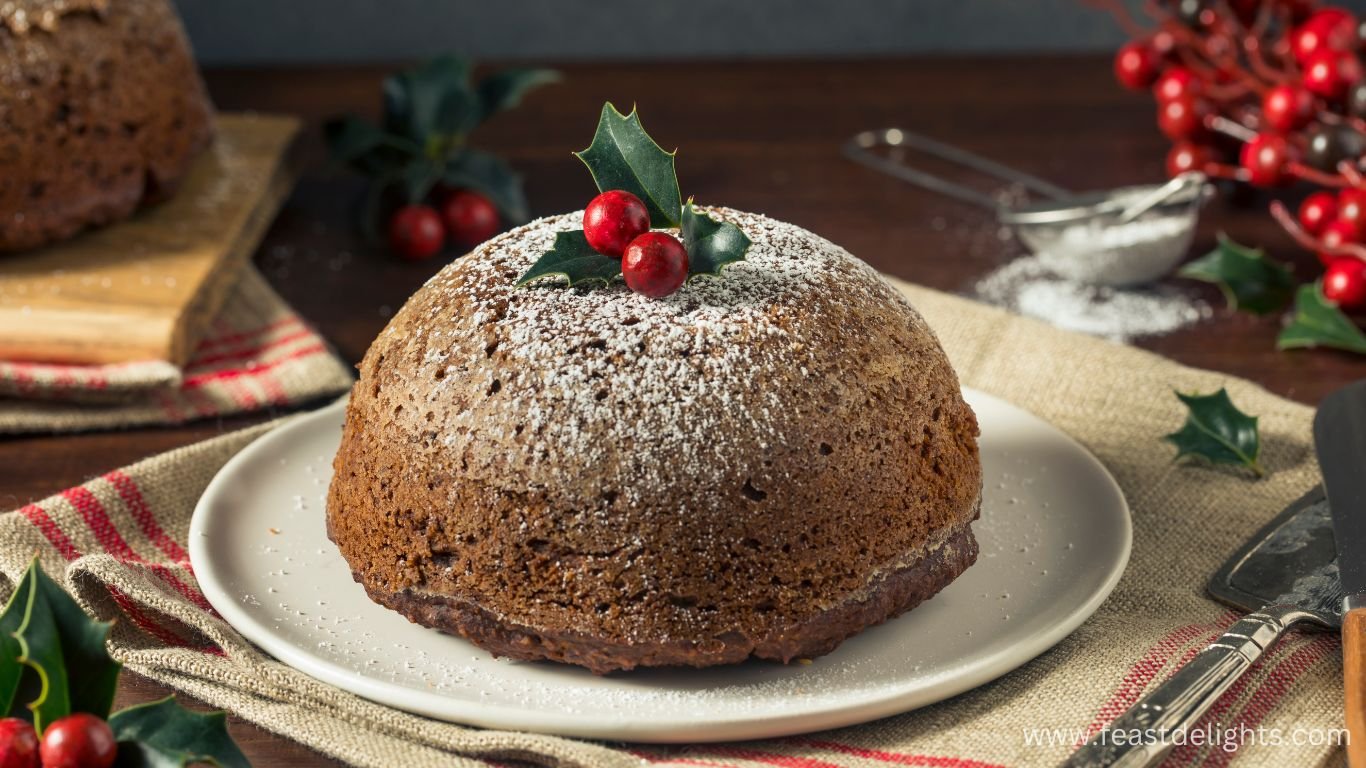
Recipe card
Baked Prune and Apricot Christmas Pudding Cake
Soak fruit for at least 120 minutes in the refrigerator; allow about 60 minutes or longer for cooling. Baking takes 65–80 minutes.
Equipment: Mixing bowls, scale, measuring spoons, sieve, whisk, spatula, 20 cm (8 inch) round cake tin, parchment, skewer and cooling rack
Ingredients
Tea-soaked fruit
Wet ingredients
Dry ingredients
To finish
Instructions
Soak and drain the dried fruit
Chop the pitted prunes and apricots into bite-sized pieces. Cover with the 240 ml strong cold tea in a bowl and refrigerate for at least 2 hours. Drain through a sieve and measure out 60 ml of the soaking liquid for the batter. Let excess tea drip away; do not add all the soaking liquid.
Prepare the tin and wet ingredients
Preheat a conventional oven to 160°C (320°F). Grease and line the base and sides of a 20 cm (8 inch) round cake tin with parchment. Whisk the melted, slightly cooled butter with brown sugar, honey, egg and the reserved 60 ml tea until evenly combined.
Fold in flour, spices and fruit
In a separate bowl whisk the flour, baking soda, cinnamon and nutmeg. Fold into the wet mixture until only a few flour streaks remain, then fold in the drained fruit just until evenly distributed. Scrape the bottom of the bowl to avoid dry pockets.
Bake gently until the centre sets
Transfer to the lined tin and level the top. Bake for 65–80 minutes. Start checking at 65 minutes. A skewer inserted deeply in the centre should come out without wet batter; a few moist crumbs or sticky fruit marks are fine. If the top darkens too quickly, cover loosely with foil once set and continue baking.
Cool and dust before slicing
Let the cake firm in the tin briefly, then transfer carefully to a wire rack. Cool completely, allowing about an hour or longer, before dusting with icing sugar and slicing into ten pieces.
Choose and prepare the dried fruit
Use soft pitted prunes and dried apricots. Check for any stray pits before chopping. Cut both fruits into similar small pieces so they distribute evenly through the batter and the cake is easier to slice. Strong cold tea hydrates the fruit and contributes flavour. Plain black tea works well; flavoured tea may compete with the spices.
Soak the fruit in the refrigerator for at least two hours. Drain thoroughly and measure exactly 60 ml of the liquid for the batter. Pouring in all the soaking tea can make the centre too wet to set. Honey also contributes moisture, while brown sugar provides a deeper caramel-like note. Keep the original sweetener quantities unless a reduced-sugar formula has been tested.
Mixing and baking the pudding cake
Line the base and sides of the round tin to make removal easier and reduce direct exposure of the fruit to the hot metal. Allow melted butter to cool slightly before whisking with the egg. Mix the baking soda and spices into the flour first so they are evenly dispersed. Fold rather than beat once the flour is added. The fruit should be evenly distributed without large clumps.
The relatively gentle oven helps the centre bake without excessive browning at the edges. Start checking after 65 minutes, but remember that a fruit-heavy batter can take longer than a plain sponge. If the top darkens before the middle is done, loosely cover the set surface with foil and continue baking.
Doneness and troubleshooting
A skewer inserted into the deepest part of the cake should not carry liquid batter. Sticky fruit can leave a dark smear, so test a second spot if necessary. A sunken centre may indicate that the cake was removed too soon. A very wet crumb may also result from adding too much soaking liquid or insufficiently draining the fruit. Use only the specified reserved tea.
Cool the cake fully before slicing. A warm fruit-rich crumb is softer and can tear around pieces of fruit. Use a serrated knife and gentle sawing motions. Dust with icing sugar at the last moment, because moisture from the cake can dissolve the coating.
Serving ideas and related recipes
Serve in thin slices with tea or coffee. Orange segments add a fresh contrast, while plain yoghurt or custard can be offered separately. A little grated orange zest in the batter is a possible variation; replacing part of the apricots with chopped figs or raisins also changes the flavour without introducing a new cooking method.
If you want a different festive dessert, explore our baked Christmas pudding cake with caramel cream sauce, fig and potato pudding cake or honey fruitcake with tea-soaked fruit and oats. These are distinct recipes rather than interchangeable versions of the same cake.
Making ahead and storing
Make the cake a day in advance if convenient. Cool completely before wrapping to avoid condensation, then refrigerate for up to three days. Freeze individual slices, well wrapped, for up to two months for best quality. Thaw in the refrigerator and allow to come to room temperature before serving. Refrigerate any yoghurt or custard separately. General cake storage guidance is available from King Arthur Baking.
Allergens and food safety
Contains wheat, egg and milk from the butter. Some dried apricots contain added sulphites; check the packaging. This recipe also contains honey, so it should not be given to infants younger than twelve months. Soak the dried fruit in the refrigerator, avoid tasting raw batter and bake the centre fully.
Frequently asked questions
Is this a traditional steamed plum pudding?
No. This is a baked, British-inspired fruit pudding cake, using prunes and apricots in a cake batter. Traditional Christmas puddings are commonly steamed.
Why soak the prunes and apricots in tea?
Soaking softens the dried fruit and adds tea flavour. Drain the fruit and reserve only the measured 60 ml of liquid for the batter.
Can I use other dried fruit?
You can try replacing some apricots with similarly chopped dried figs or raisins by weight. Different fruits absorb liquid differently, so check that the drained mixture is not excessively wet.
How do I know the cake is baked through?
Insert a skewer into the centre. Sticky fruit can leave a mark, but wet cake batter means it needs more baking. Test a second spot if uncertain.
Can I make it a day ahead?
Yes. Cool completely, wrap and refrigerate. Bring to room temperature before serving and dust with icing sugar just before slicing.
Why does my fruitcake crumble when sliced?
It may still be warm or the fruit may have been chopped too coarsely. Cool fully and use a sharp serrated knife, cutting gently without pressing down.
More recipes to try


Spotted a detail that needs correcting? Contact the FeastDelights editors.