Sour Cream Soup with Pickled Green Beans
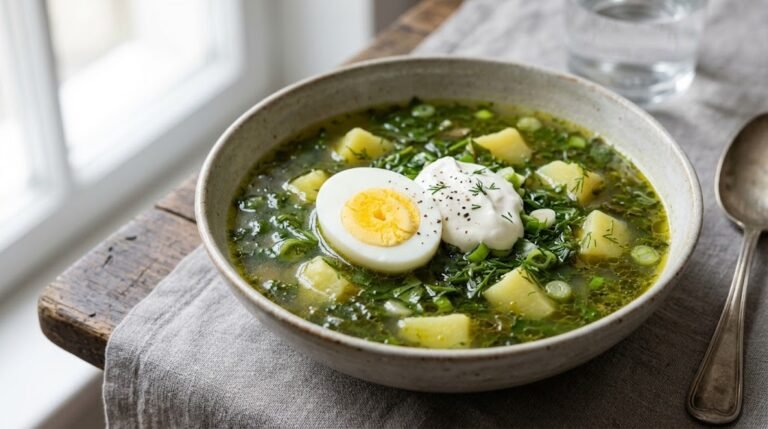
This sour cream soup with pickled green beans combines tender potatoes, carrots and onion in a tangy vegetable broth enriched with tomato paste and sour cream. The drained pickled beans bring acidity and a little bite, while tempering the cream keeps the broth smooth. This Eastern European-inspired soup makes four servings and needs about 15 minutes of preparation and 30 minutes on the stove. Serve it hot with fresh parsley or dill and a slice of rye bread for a satisfying lunch.
Sour cream soup with pickled green beans is a tangy, creamy vegetable soup with potatoes and carrots in a tomato-enriched broth. The acidity comes mainly from the pickled beans, and sour cream gives the finished soup a soft, rounded flavour. Four servings take approximately 45 minutes, with no separate stock-making or blending required.

Recipe card
Sour Cream Soup with Pickled Green Beans
Approximately 30 minutes of cooking, including bringing broth to a simmer and finishing with sour cream; allow extra time if the potatoes are not tender.
Equipment: 3–4 litre saucepan, chopping board, knife, measuring spoons, kitchen scale, colander, ladle, whisk and heatproof bowl
Ingredients
Soup base
Pickled bean addition
Finishing
Pickled bean addition
Finishing
Instructions
Soften the onion and carrots
Heat vegetable oil in a large saucepan over medium heat. Add diced onion and carrots and stir for about five minutes, until the onion is translucent and the carrots begin to soften.
Add potatoes, tomato and broth
Stir in diced potatoes and tomato paste. Cook for one minute, stirring so the paste does not scorch. Pour in the vegetable broth and add black pepper.
Simmer until potatoes are tender
Bring to a boil, then reduce to a gentle simmer for 15–20 minutes. Check that a fork slides easily into the potatoes before adding the acidic beans.
Warm the pickled beans
Drain and cut the pickled green beans into bite-sized pieces. Stir them into the pot with the optional minced garlic and simmer for three minutes.
Temper the sour cream and finish
Put the sour cream in a heatproof bowl. Gradually whisk in a ladle of hot broth. Remove the saucepan from direct heat and stir the warmed cream mixture into the soup. Heat gently if needed without a rolling boil. Add parsley and taste before seasoning with salt.
Which pickled beans to use
Choose pickled green beans rather than dried kidney beans, canned baked beans or sweet bean salad. The recipe calls for 250 g after draining. Commercially prepared pickles are a convenient choice; use home-preserved beans only if you know they were safely prepared and stored. Do not use jars with questionable seals or signs of spoilage. Cut the beans into spoon-sized pieces and keep the brine separate.
Vegetable broth is the base, so taste it before adding extra salt. Tomato paste contributes colour and concentrated savoury flavour without the volume of fresh tomatoes. Full-fat sour cream is preferable because it generally tolerates warming better than a low-fat version.
Cook the potatoes before adding the pickles
Soften diced onion and carrot in oil first. Stir in tomato paste for a short time to bring out its flavour, then add the broth. Dice the potatoes into similarly sized pieces so they cook evenly. Simmer gently until they are easily pierced with a fork. Acid can slow potato softening, which is why the pickled green beans are added near the end rather than at the beginning.
The beans are already preserved and do not need a long simmer. Three minutes in the hot broth warms them through while preserving some texture. Minced garlic can be added at this stage for a more prominent garlic flavour.
How to prevent sour cream from curdling
Do not add cold sour cream straight into vigorously boiling soup. Put it in a separate bowl and whisk in hot broth gradually. This brings the cream closer to the temperature of the soup. Take the saucepan off direct heat, stir in the warmed mixture and serve hot. If it needs warming, do so gently without vigorous boiling during this initial preparation.
If the finished soup looks grainy, the cream may have separated. It is a texture problem, not a reliable indication of spoilage or safety. Stir well and avoid unnecessarily blending all the vegetables, which changes the intended chunky texture. If the soup tastes too sharp, a little extra broth can soften the acidity. If it tastes flat, check the salt before adjusting anything else.
Substitutions and allergens
Fresh beans can be used, but they should be cooked with the potatoes and the finished soup will lack its pickled flavour. Chopped dill offers an alternative to parsley, and a little sweet paprika works with tomato paste. Full-fat plain yoghurt can replace sour cream, though it may split more easily. The original recipe contains milk from sour cream; check broth and pickle labels for other allergens. A plant-based cream alternative must be checked for its own allergens and suitability for hot soup.
What to serve alongside
A slice of homemade rye and wheat bread is a good accompaniment. For another vegetable soup with Eastern European flavours, try vegetarian beetroot borscht. If you enjoy sour pickle-based soups and eat meat, compare beef rassolnik with rice and pickled cucumbers, a different preparation.
Make ahead and reheat safely
For advance preparation, cook the vegetables and pickled beans, refrigerate the base promptly and add sour cream after reheating. Refrigerate any finished leftovers within two hours and use within three days. Reheat to 74°C (165°F), stirring thoroughly; the cream may separate when reheated to a rolling boil. Safe reheating takes priority over a perfectly smooth texture. Freeze the base without cream for better quality, since potatoes and dairy can change texture after thawing. See FoodSafety.gov for the leftover temperature guidance.
Editorial note: the original ingredient proportions are unchanged. The cooking estimate now includes the time needed to heat the broth and finish the soup.
Frequently asked questions
Can I use fresh green beans instead of pickled ones?
Yes, but the soup will lose its distinctive pickled tang. Add trimmed fresh beans with the potatoes and cook until tender; adjust acidity at the end if desired.
Should I add the pickle brine?
Drain the beans for the listed recipe. Taste the finished soup first; some brines are too salty or acidic to use in quantity.
Why did the sour cream separate?
A sudden temperature change or vigorous boiling can make the cream separate. Temper it gradually and stir it in off direct heat.
Can I use yoghurt?
Full-fat plain yoghurt is an alternative, but it may be tangier and more prone to splitting. Temper it and add it off the heat.
Why add pickled beans after the potatoes?
Acidic ingredients can slow the softening of potatoes. Cook the potatoes until tender before adding the pickled beans.
Can I freeze the soup?
For best texture, freeze the cooked vegetable base before adding sour cream. Thaw in the refrigerator, reheat thoroughly and finish with freshly tempered cream.
More recipes to try





Spotted a detail that needs correcting? Contact the FeastDelights editors.