Pavlova with Whipped Cream and Fresh Fruit
Pavlova is a meringue dessert with a crisp, delicate shell and a soft marshmallow-like centre, finished with whipped cream and fresh fruit. This version uses four egg whites, fine sugar, cornstarch and vinegar, shaped into a 20 cm round and baked slowly. Strawberries, kiwi and peaches balance the sweet meringue with fresh acidity and juiciness. Allow about three hours and fifty minutes, including gradual cooling in the oven. Add the cold whipped cream and well-drained fruit just before serving eight portions.
Pavlova with cream and fresh fruit is a light-textured dessert with a crisp meringue exterior and a soft, marshmallow-like middle. This recipe makes an approximately 20 cm (8 inch) round for eight servings. It uses four egg whites, 200 g sugar, cornstarch, vinegar, vanilla, whipped cream and fruit. Allow about 3 hours 50 minutes, including two hours of gradual cooling.
What makes pavlova different from meringue cookies?
A pavlova is a larger meringue shaped to retain a soft centre, while small meringue cookies are usually dried until crisp throughout. The dessert is associated with both Australia and New Zealand, and its origins have long been debated. Te Ara, the Encyclopedia of New Zealand, describes this shared culinary tradition. This recipe uses a fresh mixed-fruit topping rather than claiming a single authentic topping.
Ingredients and preparation
Separate the eggs carefully while cold, using a small bowl for each white before transferring it to the mixing bowl. Even a little yolk can impair foaming. Let whites lose their chill briefly before whipping; pasteurised shell eggs are a useful precaution, particularly for people at greater foodborne illness risk. Use a clean, dry metal or glass bowl and beaters. Save the yolks for a cooked custard and refrigerate them promptly.
Fine granulated sugar dissolves more readily than coarse crystals. Weigh the 200 g rather than reducing it arbitrarily: sugar helps support the foam and affects the crisp shell. Cornstarch (cornflour in some countries) and white vinegar help the meringue structure and texture. Baking powder is unnecessary for this corrected foam-based formula. Use cold heavy cream suitable for whipping and choose ripe but firm fruit that can be sliced without releasing excessive juice.
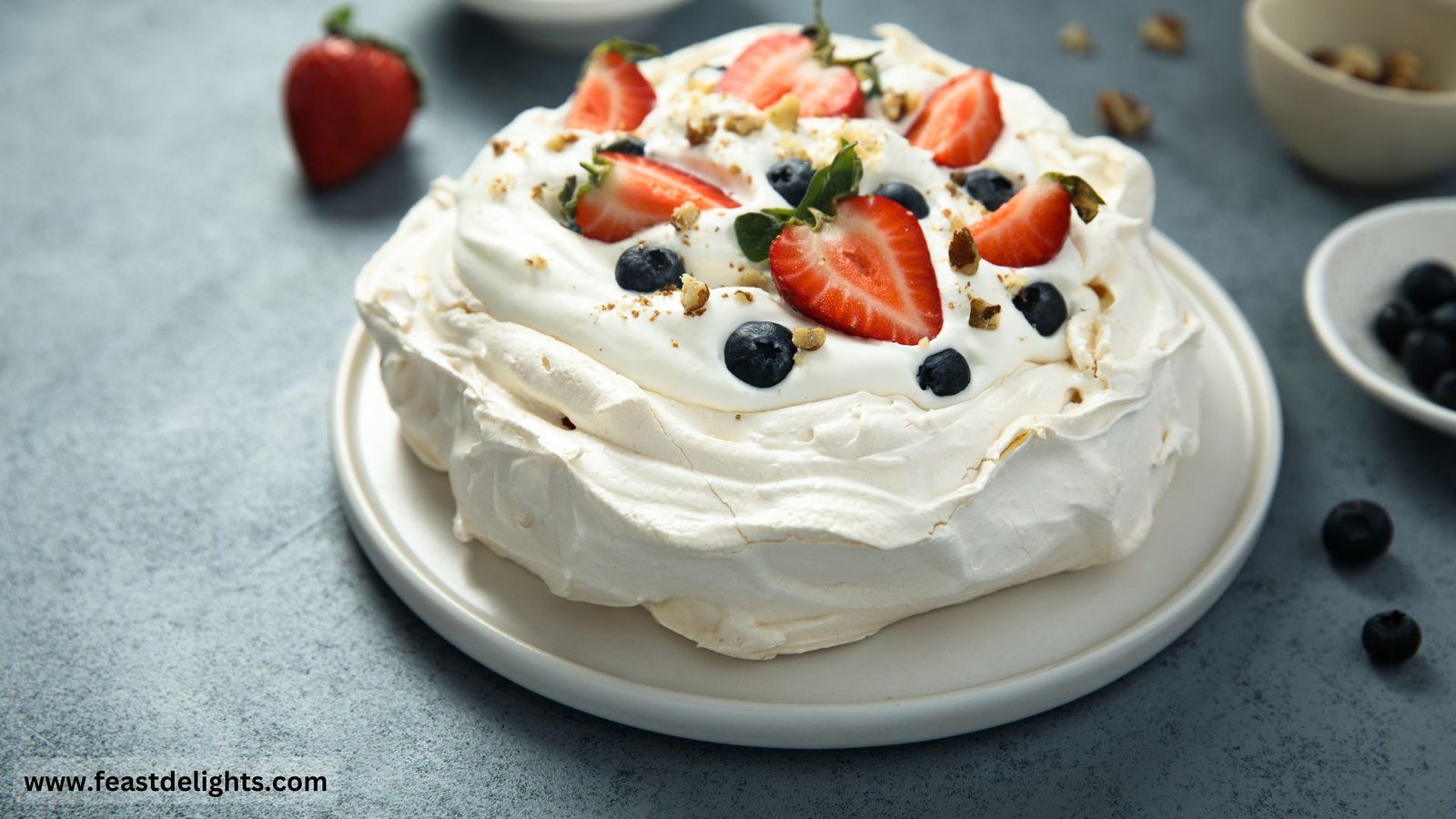
Recipe card
Pavlova with Whipped Cream and Fresh Fruit
Bake for 90 minutes and allow about 2 hours to cool completely in the switched-off oven. Cooling may take longer depending on oven insulation. Overnight cooling is possible before topping.
Equipment: Kitchen scale, electric mixer, grease-free metal or glass bowl, fine sieve, flexible spatula, parchment-lined baking tray, pencil, 20 cm circle guide, cooling oven and serving plate.
Ingredients
Meringue shell
Topping
Instructions
Prepare the oven and tray
Preheat the oven to 120°C (about 250°F). Line a tray with parchment and draw a 20 cm circle on the reverse side.
Whip egg whites and sugar
Beat whites in a clean, grease-free bowl until soft peaks form. Add sugar a spoonful at a time, beating until stiff, glossy and mostly smooth.
Finish the meringue
Sift cornstarch over the foam, add vinegar and vanilla, and fold gently until uniform.
Shape, bake and cool
Shape within the marked circle with a shallow hollow. Bake 90 minutes until the shell is dry and set and the centre cooked but soft. Turn the oven off and cool completely inside with the door closed, about 2 hours or longer.
Top just before serving
Whip cold cream to soft peaks. Spoon onto the cooled shell and add washed, dried and sliced fruit. Serve promptly and refrigerate leftovers.
Whip a smooth, glossy meringue
Beat the whites until soft peaks form, then add the fine sugar one spoonful at a time while mixing. Wait until each addition is mostly incorporated before adding the next. Continue to stiff, glossy peaks. A tiny dab rubbed between clean fingertips should feel mostly smooth rather than gritty; discard the dab. Stop before the foam becomes dry and clumpy. Sift the cornstarch over the meringue, add vinegar and vanilla, and fold gently until incorporated. Do not taste uncooked meringue.
Shape, bake and cool gradually
Draw a 20 cm circle on parchment, then turn the marked side downward. Spoon the meringue into the circle and shape a shallow hollow with raised edges to hold the cream. Avoid making the centre extremely thick. Bake at 120°C (about 250°F) for 90 minutes. The shell should become dry and set, with only light colour. The centre is intended to remain soft but should be cooked, not raw liquid egg. For a conservative egg-safety check, the centre should reach 71°C (160°F) if measured; a fine probe may leave a small mark. Turn off the oven and leave the door closed until the pavlova is completely cool, approximately two hours or longer. Sudden temperature changes can cause substantial cracks. Small cracks are normal.
Adding cream and fruit
Whip cold cream until it holds soft peaks. Wash fruit under running water, dry it and remove stems or stones. Slice larger fruit just before topping. Place the cooled shell on a serving plate, spoon cream into the hollow and arrange fruit over it. Avoid adding large amounts of juice. Cream and juicy fruit soften the shell over time, so assemble shortly before serving.
Troubleshooting
Meringue will not hold peaks: Check for yolk or grease and use a clean bowl. Sugar weeps from the shell: Add sugar gradually and allow it to dissolve; humid air can also soften the surface. Large cracks: Avoid opening the oven during baking and cool gradually. Brown shell: Check oven calibration and position the tray away from intense upper heat. Soft shell: Humidity or an incomplete drying period may be responsible. Give the baked shell a full cooling period before judging the texture.
Variations and allergens
Use a mixture of strawberries, kiwi and peach as suggested, or replace part with passion fruit or berries while keeping the total fruit weight similar. The recipe contains egg and milk; check cornstarch and flavourings for allergen cross-contact. A vegan aquafaba version needs its own recipe and is not a simple direct substitution. Lactose-free whipping cream may work if suitable for whipping, but it still contains milk proteins.
Make ahead and storage
Make the shell a day ahead if needed. Store completely cooled, untopped meringue in an airtight container in a cool dry place for up to two days. Keep cream and prepared fruit refrigerated separately. Once assembled, refrigerate leftovers at 4°C (40°F) or below within two hours, or one hour above 32°C (90°F); use within one day for best texture. The shell will gradually soften. Do not freeze the cream-topped dessert if crispness matters.
Related egg-white desserts
Try crisp meringue cookies for smaller individual sweets, angel food cake for a light sponge, or chocolate and pistachio meringue acorns for a decorative variation.
Frequently asked questions
Can I make the shell the night before?
Yes. Cool fully in the switched-off oven, then keep the untopped shell airtight in a dry place.
Why is pavlova soft inside?
Its larger shape and baking method leave a cooked, marshmallow-like centre rather than a completely dry interior.
Can I use a fan oven?
Use about 100°C (210°F) as a starting point for a fan-assisted oven; check its manual and the shell's doneness.
Why did my pavlova crack?
Sudden temperature changes, foam instability and uneven drying can cause cracking. Small cracks are normal.
Can I use frozen fruit?
Thaw it in the refrigerator and drain well. Fresh fruit generally keeps the shell crisp for longer.
Can I reduce the sugar?
Not substantially without changing the meringue structure. Use tart fruit and unsweetened whipped cream to balance sweetness.
More recipes to try

Cream Cheese Chocolate Truffles Rolled in Cocoa

Cream Cheese Cheesecake Danish with Lemon and Vanilla

Fresh Fruit Salad with Orange Honey Dressing

Ptichye Moloko Bird’s Milk Mousse with Chocolate Glaze
Bird’s Milk Jello with Creamy Mousse and Raspberry Jelly
Cream Horn Trubochki with Vanilla Cream Filling
Spotted a detail that needs correcting? Contact the FeastDelights editors.