Classic Angel Food Cake with Whipped Egg Whites
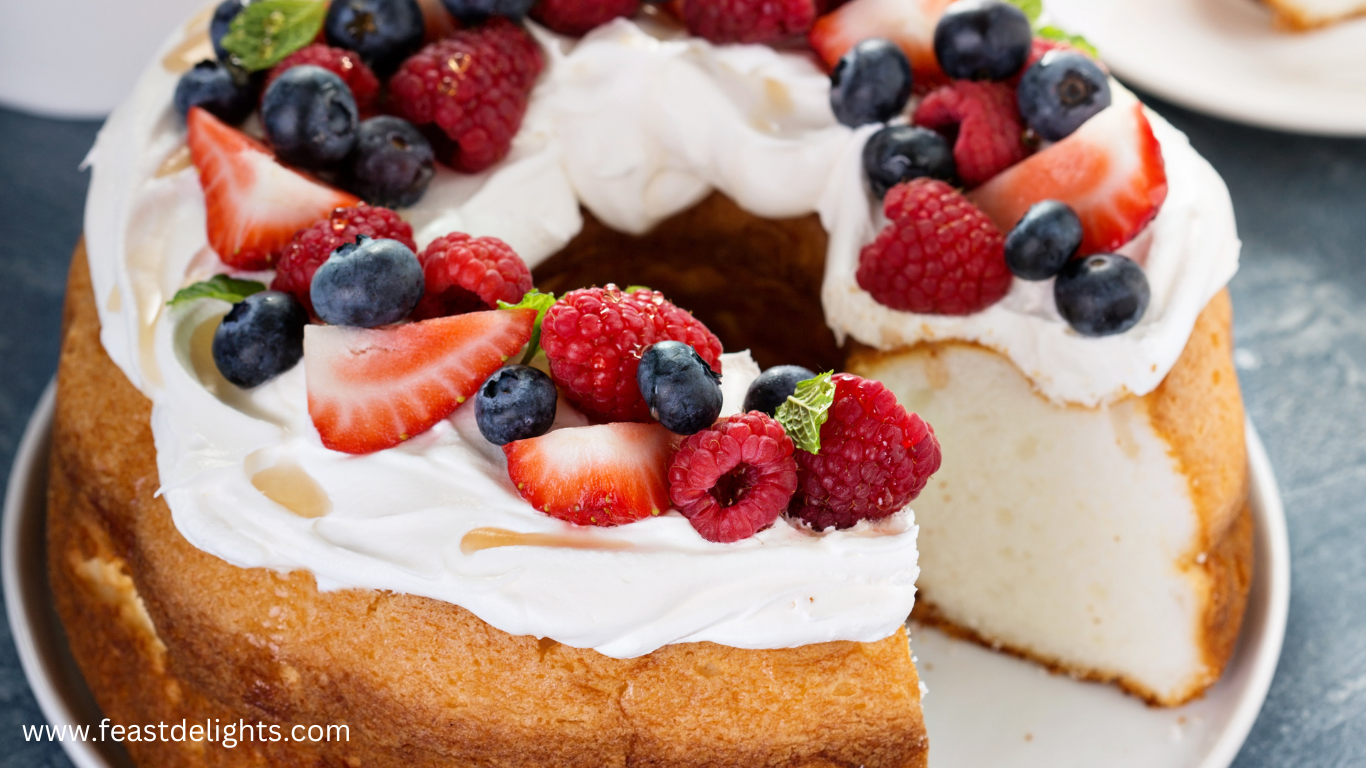
Classic angel food cake is a tall, airy sponge made by whipping egg whites with fine sugar and gently folding in cake flour. This American-style cake uses no added butter or oil, and its delicate structure depends on the egg foam. Bake it in an ungreased 25 cm (10 inch) tube pan, then cool it upside down so it retains its height. Allow about three hours and seven minutes, including cooling. Serve ten to twelve portions with berries or a little whipped cream if desired.
Classic angel food cake is an American sponge with a light, springy crumb made from twelve whipped egg whites, superfine sugar and cake flour. There is no added butter or oil in the batter. This recipe serves ten to twelve people and takes approximately 3 hours 7 minutes, including two hours of inverted cooling. Bake at 165°C (325°F) in a 25 cm (10 inch) ungreased tube pan.
Why the egg foam matters
The cake rises as the air trapped in the whipped whites expands during baking. Even a small amount of yolk or grease can interfere with whipping. Separate cold eggs individually into a small bowl, then transfer each clean white to the main mixing bowl. Let the whites lose their chill briefly before whipping; do not leave them out for prolonged periods. Refrigerate the unused yolks promptly for another recipe.
Caster or superfine sugar dissolves more readily than coarse sugar. Divide the measured 300 g into 100 g to sift with the flour and 200 g to add to the whites. Cake flour has less protein than bread flour and helps produce a tender crumb. Cream of tartar helps stabilise the egg foam. Vanilla is the main flavouring, and the almond extract is optional. Do not add melted butter or the large quantity of cornstarch mentioned in the older source formula: those changes would produce a different cake. The existing corrected proportions are retained.
The correct pan and preparation
Use a plain metal angel food or tube pan, ideally one with a removable base and raised cooling feet. Do not grease, flour or line it. The batter needs to grip the bare walls while it rises. A nonstick Bundt pan is not a suitable direct replacement. Check that the hot pan can be safely inverted on its feet or on a stable, heatproof support before you start. Set the oven rack so the rising cake has enough overhead space.
Recipe card
Classic Angel Food Cake with Whipped Egg Whites
Bake for 35–45 minutes; 42 minutes is the estimate used for total time. Cool inverted for about 2 hours or until completely cold.
Equipment: Kitchen scale, electric mixer with whisk, grease-free metal or glass mixing bowl, fine sieve, flexible spatula, uncoated 25 cm (10 inch) tube pan, stable heatproof inversion support, thin flexible knife and serrated knife.
Ingredients
Cake batter
Instructions
Prepare the oven and pan
Preheat to 165°C (325°F). Use a clean, ungreased and unlined 25 cm (10 inch) metal tube pan. Check that it can be safely inverted.
Sift flour and sugar
Sift the cake flour with 100 g of the measured sugar three times to remove lumps and aerate.
Whip the egg whites
In a grease-free bowl, beat whites, cream of tartar and salt until foamy. Add the remaining 200 g sugar gradually, beating to glossy medium-stiff peaks. Beat in vanilla and optional almond extract.
Fold in the flour
Sift the flour mixture over the foam in four additions, folding gently after each until no dry streaks remain. Do not stir vigorously.
Fill the tube pan
Spoon batter into the ungreased pan and pass a thin knife through it once to release large pockets. Smooth the top lightly.
Bake until set
Bake 35–45 minutes until golden and springy, with no wet batter on a skewer. Avoid opening the oven during the first 30 minutes.
Invert and cool completely
Using oven gloves, immediately invert the pan on its feet or a stable heatproof support. Cool completely, about 2 hours, before loosening the sides and centre tube with a thin knife. Slice gently.
How to recognise the right egg-white consistency
Start beating the whites until foamy with cream of tartar and salt, then add sugar gradually while beating. The foam should look glossy and smooth, holding a peak that is mostly upright with a slight bend at the tip. Stop before it becomes dry, grainy or clumpy. Fold the sifted flour mixture into the foam a little at a time with gentle lifting motions, scraping the bottom so no flour pockets remain. Avoid stirring hard or leaving the completed batter standing on the counter.
Baking and inverted cooling
Transfer the batter gently to the pan. A single careful pass with a thin knife helps break unusually large bubbles. Bake without opening the oven for the first 30 minutes. Look for an evenly golden top, a centre that springs back when touched gently and a skewer without wet batter. Immediately invert the pan on a stable heatproof support, using oven gloves. Let the sponge cool completely before running a thin knife around the outer wall and centre tube. Cooling upright can compress the delicate structure; the King Arthur Baking comparison illustrates why this technique matters.
Troubleshooting
Whites will not whip: Check the bowl and beaters for grease or yolk. Dense streaks: Sift flour thoroughly and fold in small additions until evenly incorporated. Cake shrinks: Check for underbaking, excessive deflation during folding or premature removal from the pan. Dry or rubbery crumb: Avoid overbaking and overwhipping the whites. A small amount of settling is normal, but substantial collapse suggests a technique problem.
Serving, variations and allergens
Use a serrated knife with a gentle sawing action. Serve plain with strawberries or citrus, or add whipped cream just before serving. A little finely grated lemon zest can complement vanilla. This cake contains wheat and egg. Omitting almond extract changes the flavour but does not establish nut-free status; check all ingredient labels and shared equipment. For gluten-free baking, use a separately developed angel food cake formula rather than assuming any flour blend will work.
Make ahead and storage
Bake ahead and let the plain cake cool fully. Keep it covered at room temperature for up to two days, or freeze individual wrapped slices for up to two months for best quality. Thaw while wrapped to reduce drying. Keep whipped cream or other perishable toppings refrigerated separately and add them just before serving. Do not taste uncooked egg and flour batter.
More light cakes and desserts
For another egg-foam dessert, explore pavlova with cream and fruit. A genoise sponge cake uses whole eggs and butter, while a blackberry lemon cake roll offers a different way to serve a delicate sponge.
Frequently asked questions
Can I use carton egg whites?
Some pasteurised carton whites are not recommended for whipping. Check the package and use fresh separated whites for this formula if unsure.
Why must the pan be ungreased?
The batter needs to grip the metal walls while rising and cooling.
Can I use a nonstick Bundt pan?
No direct substitution is recommended. Its coating and shape make rising and inverted cooling less reliable.
Can I use regular granulated sugar?
Superfine sugar is preferable because it dissolves more easily. You can pulse granulated sugar in a clean food processor until finer, then weigh it.
Why invert the cake?
The hot structure is delicate. Suspending it upside down helps prevent compression as it cools.
What can I do with leftover yolks?
Refrigerate them promptly and use in a cooked recipe such as custard within the recommended safe storage period.
More recipes to try

Cream Cheese Chocolate Truffles Rolled in Cocoa

Cream Cheese Cheesecake Danish with Lemon and Vanilla

Fresh Fruit Salad with Orange Honey Dressing

Ptichye Moloko Bird’s Milk Mousse with Chocolate Glaze
Bird’s Milk Jello with Creamy Mousse and Raspberry Jelly
Cream Horn Trubochki with Vanilla Cream Filling
Spotted a detail that needs correcting? Contact the FeastDelights editors.