Crisp Meringue Cookies with Egg Whites
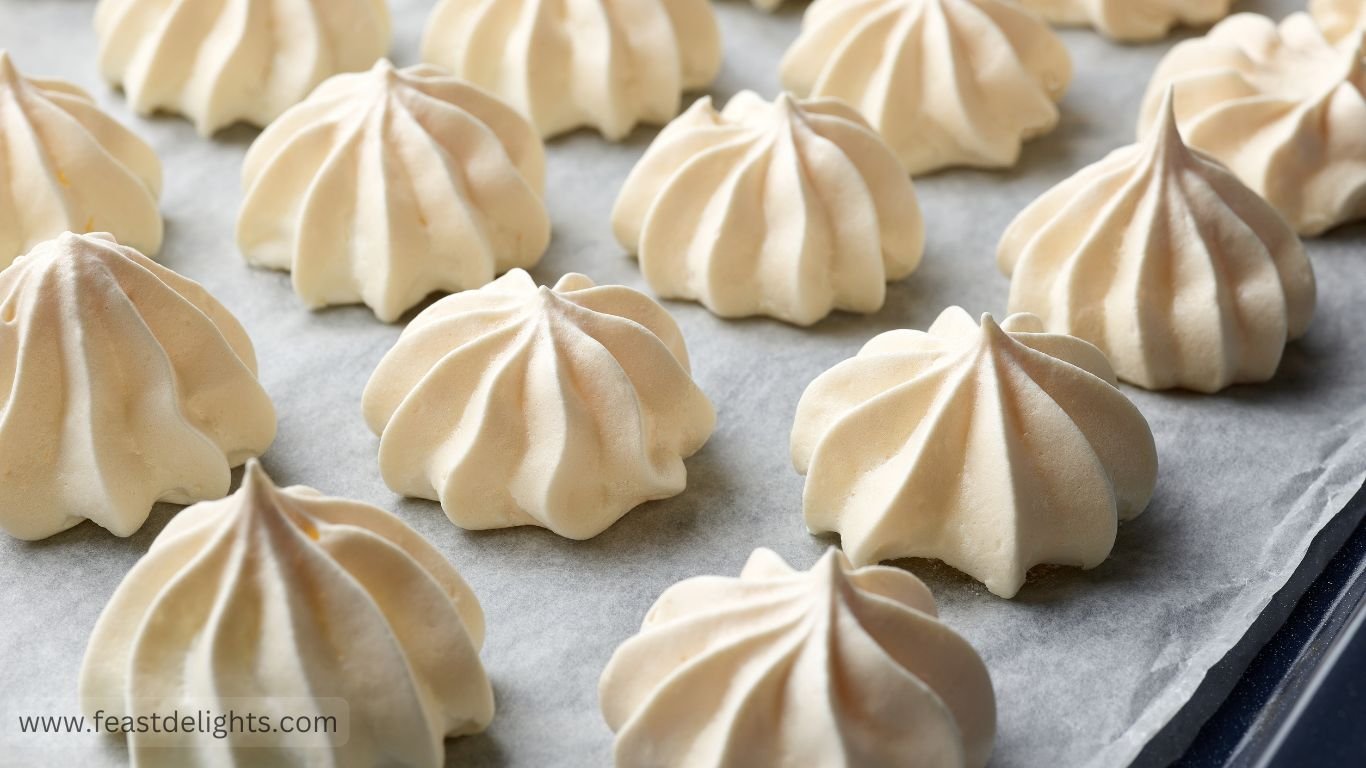
These crisp meringue cookies are small, airy sweets made from four whipped egg whites, fine sugar, vinegar and optional vanilla. They are baked gently at a low temperature, then left in the switched-off oven to dry and cool without browning. Pipe little kisses or spoon the foam into even mounds for approximately thirty cookies. Allow about two hours and fifty minutes, including cooling, and a little longer if the centres remain sticky. Store the finished cookies airtight to preserve their delicate crunch.
Crisp meringue cookies are small baked egg-white sweets with a delicate, airy texture and a crunch that dissolves in the mouth. This recipe makes about thirty small cookies from four egg whites and 200 g fine sugar, with a little vinegar, salt and optional vanilla. Plan on about 2 hours 50 minutes, including drying and cooling. Bake at 100°C (approximately 210°F).
Why these cookies stay light and crisp
The cookies contain no flour or added butter. Whipping egg whites traps air, sugar helps stabilise the foam and low oven heat sets and dries the small shapes. Unlike a large pavlova, which is deliberately soft inside, these cookies should dry through to a crisp centre. The size of each mound, oven accuracy and humidity affect how long this takes.
Choosing and preparing the ingredients
Separate the eggs carefully while cold, transferring each white through a separate small bowl to avoid contaminating the batch with yolk. Let the whites lose their refrigerator chill briefly before whipping. Refrigerate leftover yolks promptly for another cooked dish. Pasteurised shell eggs are a prudent choice, especially for people at greater foodborne illness risk. If using carton whites, check that the product is suitable for whipping.
Caster sugar is simply fine granulated sugar. It dissolves more readily than coarse crystals and helps produce a smooth surface. Weigh 200 g; reducing sugar substantially changes the foam structure. White vinegar adds acidity and helps support the foam. Vanilla is optional. Use a clean, dry metal or glass bowl, since grease and yolk interfere with whipping.
Recipe card
Crisp Meringue Cookies with Egg Whites
Bake about 90 minutes and cool in the switched-off oven for at least 60 minutes. Larger cookies or humid conditions may require a longer drying period.
Equipment: Kitchen scale, electric mixer, grease-free metal or glass mixing bowl, two baking trays, parchment, piping bag with plain or star tip (optional), spoons and airtight container.
Ingredients
Meringue
Instructions
Prepare the oven and trays
Preheat the oven to 100°C (210°F). Line two baking trays with parchment.
Whip egg whites
In a clean, grease-free bowl, beat egg whites and salt until foamy and soft peaks form.
Add sugar gradually
Add fine sugar one spoonful at a time while beating. Continue until the foam is glossy, holds stiff peaks and the sugar is mostly dissolved.
Finish the meringue
Beat in white vinegar and optional vanilla briefly, just until incorporated.
Pipe and bake
Pipe or spoon about 30 small, even mounds onto the trays. Bake for approximately 90 minutes until the outside is firm, dry and pale.
Cool and check crispness
Turn off the oven and leave cookies inside with the door closed for at least 1 hour. Check a fully cooled cookie for a dry, crisp centre; extend low-temperature drying if needed. Store airtight once completely cool.
How to whip the meringue
Beat whites and salt until foamy and soft peaks form. Add the sugar one spoonful at a time while the mixer runs. Continue until the meringue is thick, glossy and holds upright peaks. Check a tiny dab between clean fingertips; it should feel mostly smooth rather than distinctly gritty. Discard the sample and do not taste uncooked meringue. Beat in vinegar and optional vanilla briefly, then shape immediately. For more technique detail, see King Arthur Baking’s guide to meringue.
Shaping and baking
Line two baking trays with parchment and preheat the oven. Pipe the mixture into approximately thirty small, similarly sized mounds, roughly 3–4 cm across as a starting point, or use two spoons. Leave a little space between them. Large shapes dry more slowly. Position the trays so air can circulate; if your oven cannot fit both without crowding, plan the batch accordingly rather than holding whipped meringue for hours.
Bake at 100°C (210°F) for approximately 90 minutes. The cookies should be firm, dry to the touch and pale rather than browned. Turn off the oven and leave the door closed for at least one hour to cool gradually. Test one cooled cookie by breaking it: the centre should be dry and crisp rather than raw or sticky. If necessary, return the batch to the low oven to finish drying, then cool again. The stated time is an estimate, not a guarantee of dryness.
Troubleshooting
Whites will not whip: Check for traces of grease or yolk. Gritty foam: Add sugar more slowly and allow it to dissolve. Sticky cookies: Humidity or insufficient drying may soften the shell; return otherwise sound cookies to a low oven and cool before sealing. Brown tips: Check oven calibration and reduce excessive heat. Cracks: Sudden temperature changes or overly high heat can contribute; cool gradually. Small cracks need not affect flavour.
Variations, serving and allergens
Use vanilla or leave the meringue plain. A small amount of finely grated lemon zest can be added gently after whipping, but avoid substantial liquid or oily flavourings that might weaken the foam. Serve with berries, tea or coffee, or crumble over a dessert just before eating. The base recipe contains egg. Check flavourings and shared equipment for other allergens. Chocolate or cream fillings add separate ingredients and change the storage requirements.
Make ahead and storage
Whip and bake the mixture on the same day; do not make raw meringue hours in advance. Fully dried cookies can be made ahead and stored airtight in a cool dry place for up to one week. For longer storage, freeze in a rigid airtight container to protect the fragile shapes, then thaw sealed. Humidity is the main enemy of crispness, so avoid storing them beside soft cookies or adding moist fillings until serving. Keep perishable fillings refrigerated separately.
Related meringue recipes
Try pavlova with whipped cream and fruit for a soft-centred dessert, chocolate and cocoa meringue mushrooms for decorative shapes, or meringue acorns with pistachios for a different finish.
Frequently asked questions
Can I make meringue cookies without a piping bag?
Yes. Use two spoons to make evenly sized small mounds on parchment.
Can I use ordinary granulated sugar?
Fine or caster sugar dissolves more readily. Pulse ordinary sugar in a clean food processor if needed, then weigh it.
Why are my meringues sticky?
Humidity and incomplete drying can cause stickiness. Finish drying in a low oven and cool completely before airtight storage.
Can I make bigger meringues?
Yes, but larger shapes require longer drying and may remain chewy if baked for the same time.
Can I make these a day ahead?
Yes. Bake and dry completely, cool and store airtight without fillings.
Are they the same as pavlova?
No. These small cookies are intended to be crisp throughout; pavlova has a larger, softer centre.
More recipes to try






Spotted a detail that needs correcting? Contact the FeastDelights editors.