Honey and Kefir Kovrizhka Cake with Jam
This kovrizhka-style cake combines kefir, honey, butter and a few spoonfuls of thick jam with a lightly spiced flour batter. The kefir contributes a gentle tang, while honey and jam lend sweetness and help keep the crumb soft. Bake the cake in a shallow tin until the centre is set, then cool before cutting into ten pieces. Allow about 75 minutes through initial cooling, plus further cooling as needed. It is a simple Eastern European-inspired tea cake rather than a layered honey torte.
Kovrizhka is a family of honey or spice cakes rather than one fixed formula. This version keeps the original kefir, honey and jam batter and is baked as a single sheet, not assembled from thin layers.
Honey and kefir kovrizhka at a glance
Plan for ten pieces from a 20 × 30 cm (8 × 12 inch) shallow tin. Bake at 180°C (350°F) for approximately 30–40 minutes, then allow at least 15 minutes cooling before lifting the cake; cool fully for clean slices. This tin size is an editorial starting point rather than a kitchen-tested dimension.
Ingredients and measurements
Use two level US cups of plain flour (approximately 240 g at 120 g per cup) and one cup granulated sugar (approximately 200 g). Measure two tablespoons honey (about 42 g), one US cup plain kefir (240 ml), two large eggs, one teaspoon each baking soda and baking powder, and 100 g butter (3.5 oz). Add two to three tablespoons thick jam, a pinch of salt and ground cinnamon and vanilla to taste. As a starting point, try half a teaspoon cinnamon and one teaspoon vanilla extract; these amounts are suggestions, not original fixed quantities.
Choose plain unsweetened kefir. Its acidity helps activate baking soda; baking powder contributes additional lift. Use a thick jam that holds on a spoon rather than a syrupy preserve. Smooth plum or apricot jam gives a relatively even crumb; a berry jam contributes fruit pieces. Avoid adding more jam to compensate for low honey flavour because extra liquid and sugar may alter the set.
Recipe card
Honey and Kefir Kovrizhka Cake with Jam
20 minutes preparation + up to 40 minutes baking + 15 minutes initial cooling = 75 minutes; further cooling is additional. Suggested tin dimensions, spice amounts and bake time require kitchen review.
Equipment: 20 × 30 cm (8 × 12 inch) baking tin, baking paper, mixing bowls, saucepan, whisk, spatula, scale, measuring cups, skewer and rack.
Ingredients
Cake batter
Instructions
Prepare the oven
Preheat conventional oven to 180°C (350°F). Line a 20 × 30 cm shallow tin. Whisk flour, baking powder, baking soda, salt and cinnamon together.
Mix the wet ingredients
Melt butter with honey over low heat and cool until lukewarm. Whisk eggs and sugar, then add kefir, cooled honey butter, jam and vanilla.
Combine
Fold dry ingredients into wet ingredients just until no dry streaks remain. Spread evenly in the prepared tin immediately.
Bake and cool
Bake 30–40 minutes or until a skewer in the centre comes out without wet batter. Cool in the tin 15 minutes, then cool fully before slicing into ten pieces.
Mixing the cake batter
Line the tin and preheat the oven before mixing. Melt butter and honey over low heat, then let the mixture cool until just lukewarm. Hot butter can start cooking the eggs. Whisk eggs and sugar until combined and slightly foamy, then add kefir, cooled honey butter and jam. If the jam has large fruit pieces, break them up with a fork first.
Whisk flour, baking soda, baking powder, salt and cinnamon together so the leaveners are distributed evenly. Fold into the wet mixture until no pockets of flour remain. Add vanilla if using. Do not continue beating once the flour is hydrated. Transfer to the prepared tin promptly; leaving the batter to stand can allow some of the soda’s early gas to escape.
Baking and doneness
Spread evenly and bake on the middle shelf of the preheated conventional oven. Start checking at 30 minutes. Honey and jam encourage browning, so a golden surface does not necessarily mean the centre has set. Insert a skewer in the centre: it should come out without wet batter. A few moist crumbs are acceptable. If the top darkens early, cover loosely with foil and continue until the centre is set. Let the cake cool in the tin for 15 minutes, lift onto a rack if sturdy enough and cool fully before cutting.
Troubleshooting
Soapy or bitter taste: level the baking soda and mix it evenly. Gummy centre: check the middle for wet batter and avoid thin jam or additional liquid. Dense crumb: use active leaveners and avoid beating the flour into the batter. Dry edges: check early if using a dark or wide tin.
Variations and serving
Try thick plum, apricot or cherry jam in the same quantity. A pinch of ground ginger can complement the cinnamon. Plain cultured buttermilk is a possible kefir alternative, although batter thickness and acidity may differ; keep the original kefir for the most faithful version. Serve plain with tea, coffee or fresh fruit. For a different tea cake try raisin and sour cream cake or vanilla sour cream loaf. The pitted cherry refrigerator jam can be served alongside; its softer set may not suit the batter directly.
Make ahead, storage and allergens
Bake ahead rather than holding mixed batter overnight. Contains wheat, milk and eggs. Honey is not suitable for infants under 12 months; check jam and flavouring labels for allergens.
Cool completely and cover. Keep the unfrosted cake in a cool dry room for up to 2 days, or refrigerate up to 4 days. Freeze wrapped pieces for up to 2 months for best quality; thaw covered in the refrigerator.
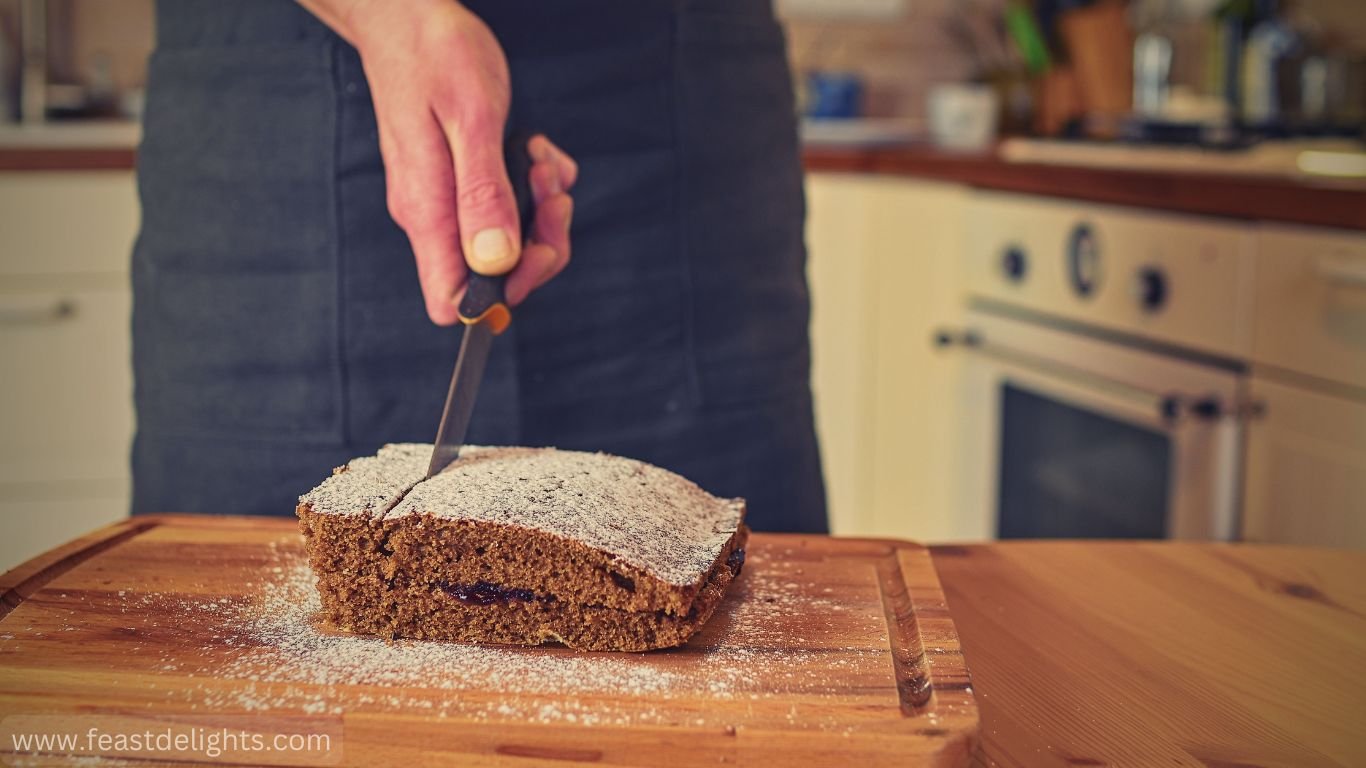
Cut the cooled cake into squares and serve with tea or coffee. The honey and spice flavour suits a plain finish without heavy frosting.
Frequently asked questions
Is kovrizhka the same as layered honey cake?
No. This version is a single honey and spice sheet cake, whereas layered honey cakes are assembled with multiple layers and filling.
Can I use drinking yoghurt instead of kefir?
A plain unsweetened cultured product with similar thickness may work, but acidity and batter texture vary; the original kefir is preferred.
Why use both baking soda and baking powder?
Kefir provides acid for the soda, while baking powder supplies additional leavening. Keep the measured amounts.
What kind of jam is best?
Choose thick jam that holds on a spoon. Thin syrupy preserves can make the centre too wet.
Why did the centre sink?
Underbaking or excess liquid can prevent the centre from setting. Check with a skewer and keep the jam quantity within the stated range.
More recipes to try






Spotted a detail that needs correcting? Contact the FeastDelights editors.