Soft Raisin and Sour Cream Cake with Vanilla
Softened butter, sugar and eggs form the base of this raisin loaf cake, with sour cream adding a little tang and moisture. The raisins are briefly soaked, dried and folded into the batter so they stay plump without making wet pockets. A dusting of icing sugar finishes the golden loaf. This recipe makes ten slices and takes about 85 minutes through initial cooling, plus time on a rack. Serve with tea or coffee, or bake it a day ahead for easy slicing.
This is a butter-based raisin cake, distinct from a whipped-egg sour cream loaf. Creaming softened butter with sugar introduces air, while sour cream keeps the batter rich. Prepare the raisins before mixing so they are dry when folded in.
Raisin and sour cream cake at a glance
Use a 23 × 13 cm (9 × 5 inch) loaf tin and plan for ten slices. The raisins soak during preparation, then the loaf bakes for 45–55 minutes at 180°C (350°F). Allow 10 minutes in the tin and further cooling on a rack before cutting.
Choosing and measuring ingredients
Use 250 g plain flour (about 2 cups plus 1 tablespoon at 120 g per cup), 150 g softened butter (5.3 oz), 150 g sugar (¾ US cup), three large eggs and 100 g sour cream (3.5 oz). Choose unsalted butter to control salt. It should yield to a finger but not look oily or melted. Bring the eggs and sour cream out briefly while preparing the tin so the batter is less likely to split.
Weigh 100 g raisins (3.5 oz); regular dark raisins or golden raisins both work. Add 1 teaspoon baking powder, 1 teaspoon vanilla sugar, a pinch of fine salt and icing sugar for dusting. For consistent baking, weigh flour and fruit rather than relying on packed cups.
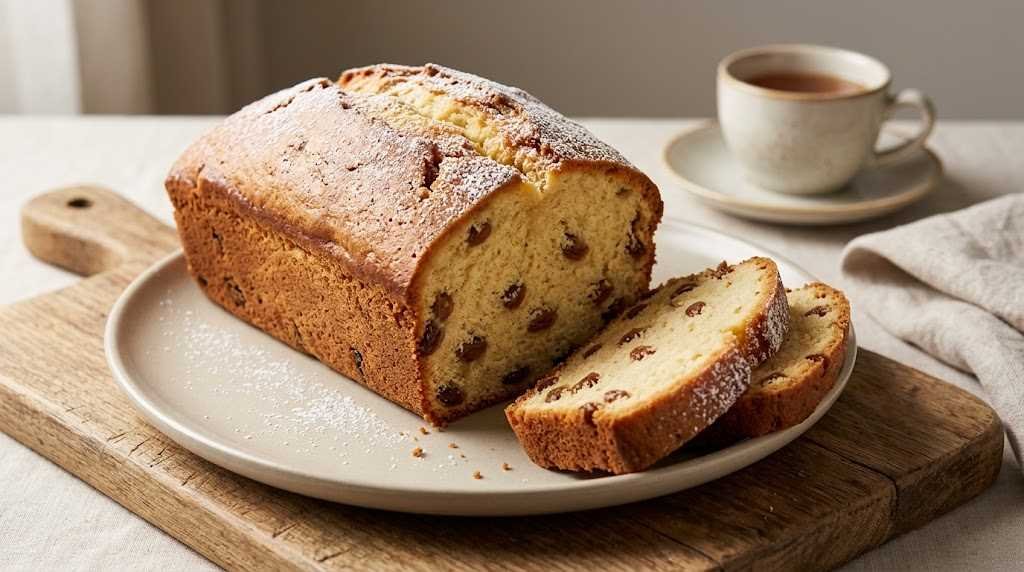
Recipe card
Soft Raisin and Sour Cream Cake with Vanilla
20 minutes active prep including overlapping raisin soaking + up to 55 minutes baking + 10 minutes in tin. Rack cooling is additional; tin size and timing require kitchen review.
Equipment: 23 × 13 cm loaf tin, baking paper, scale, mixer, bowls, sieve, spatula, skewer and cooling rack.
Ingredients
Cake batter
Pan or finish
Instructions
Prepare the fruit and pan
Preheat conventional oven to 180°C (350°F). Grease and line a 23 × 13 cm loaf tin. Soak raisins in warm water 10 minutes, drain and dry well; toss with a little measured flour.
Cream the butter
Cream softened butter, sugar and vanilla sugar until pale and fluffy. Beat in eggs individually.
Finish the batter
Mix in sour cream. Whisk remaining flour with baking powder and salt. Fold into wet mixture just until combined, then fold in raisins.
Bake
Spread batter in the tin and bake 45–55 minutes, until golden and a skewer in the centre comes out without wet batter.
Cool and serve
Cool 10 minutes in the tin, transfer to a rack and cool completely before dusting with icing sugar.
Preparing raisins and creaming butter
Soak the fruit in warm water for 10 minutes, then drain and blot thoroughly. Reserve a little of the measured flour to coat the dry raisins. This reduces surface stickiness, but a batter that is too thin can still allow fruit to sink. Avoid adding soaking water to the batter.
Beat the butter, sugar and vanilla sugar until lighter in colour and fluffy. Add eggs individually, mixing until incorporated before adding another. If the mixture starts to look curdled, add a spoonful of the measured flour rather than beating indefinitely. Mix in sour cream, then gently fold in the remaining flour, baking powder and salt. Fold raisins through last, distributing them evenly without crushing them.
Baking and cooling
Transfer to the greased, lined tin and smooth the top. Bake on the centre shelf of a preheated conventional oven at 180°C (350°F). Check at 45 minutes; a skewer in the deepest centre must come out without wet batter. Avoid mistaking a moist raisin on the skewer for raw batter: test a second spot. If the top is darkening too fast, loosely cover with foil. Cool in the tin for 10 minutes before lifting onto a rack. Dust with icing sugar only after complete cooling.
Troubleshooting
Fruit sinks: dry the raisins, fold them in at the end and do not thin the batter. Greasy crumb: use softened rather than melted butter. Dry edges: check the bake early, especially with a dark tin. Crumbly slices: wait until the cake is fully cool and use a serrated knife.
Substitutions and serving
Replace dark raisins with golden raisins by weight. Finely grated orange zest complements dried fruit. Cranberries make a tarter adaptation; use the same weight and dry well after soaking if needed. Avoid adding fresh juicy fruit without adjusting the batter. Try the related plain vanilla sour cream loaf for a cake without dried fruit or the honey and kefir cake for a spiced alternative.
Storage and allergens
Make the loaf a day ahead if convenient; it slices more neatly after cooling. Contains wheat, egg and milk. Some dried fruit contains sulphites, so check its packaging.
Wrap the completely cooled cake. Keep in a cool dry room for up to 2 days if unfrosted, or refrigerate up to 3 days in warm conditions. Freeze wrapped slices for up to 2 months for quality.
Let the cooled loaf settle before cutting. Dust lightly with icing sugar just before bringing it to the table.
Frequently asked questions
Can I skip soaking the raisins?
If they are already soft, you can use them dry. Very dry raisins benefit from soaking and thorough blotting.
Why coat the fruit in flour?
A light coating helps reduce surface stickiness and disperse the fruit. Use flour from the measured amount.
Can I substitute golden raisins?
Yes, use the same weight.
Why did the butter mixture split?
Cold eggs or adding them too quickly can cause curdling. Mix in a spoonful of the measured flour if needed.
Why does the cake need to cool before icing sugar?
A warm surface dissolves icing sugar and the crumb may tear when sliced.
More recipes to try






Spotted a detail that needs correcting? Contact the FeastDelights editors.