Megrelian Khachapuri with Imeretian and Sulguni Cheese
Megrelian khachapuri is a Georgian cheese bread with melted cheese inside a soft round of dough and a second layer of cheese baked on top. This version combines kefir, yeast and egg in the dough, with grated Imeretian cheese and sulguni for a rich filling. Seal each round carefully before flattening, then bake until the crust is golden and the topping bubbles. It makes two breads in about two hours and twenty minutes, including rising and resting, if both bake together.
Megrelian khachapuri is a round Georgian cheese bread distinguished by cheese both inside the dough and on top. This version uses a kefir-enriched yeast dough and a combination of Imeretian cheese and sulguni. It makes two generously filled breads with a golden crust and melted, slightly salty centre. Allow approximately 2 hours 20 minutes if both rounds fit in the oven together, including yeast activation, rising and resting.
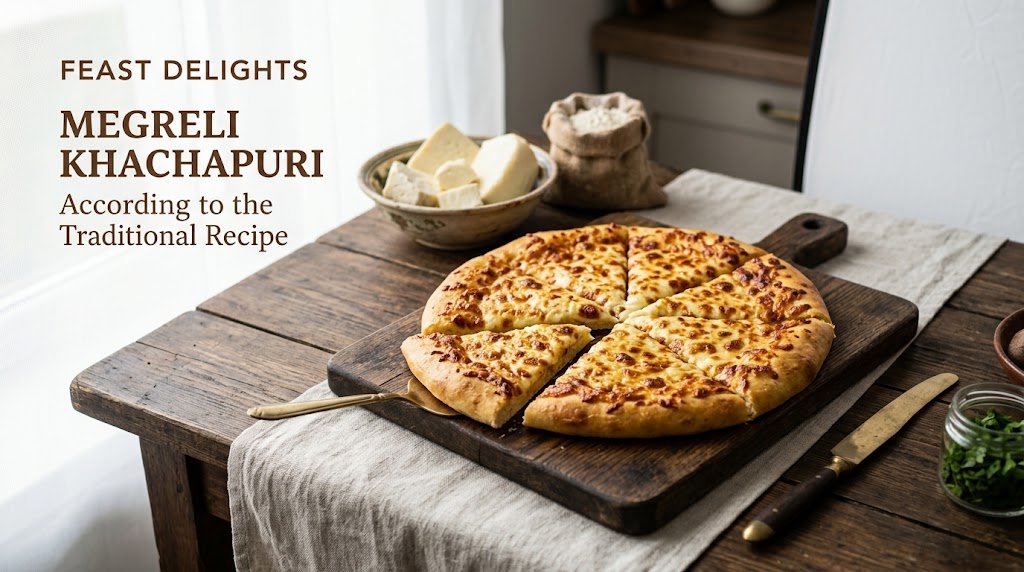
Recipe card
Megrelian Khachapuri with Imeretian and Sulguni Cheese
Includes 10 minutes yeast activation, about 60 minutes rising and 10 minutes resting. Baking time assumes both breads fit in the oven together; allow another 20–25 minutes for a second batch if needed.
Equipment: Digital scale, mixing bowl, grater, rolling pin, lined baking trays, pastry brush
Ingredients
Dough
Cheese filling and topping
Finishing
Instructions
Activate yeast in kefir
Warm kefir gently until lukewarm. Stir in sugar and dry yeast and leave 10 minutes.
Knead and rise the dough
Add egg and salt, then gradually incorporate flour. Knead until soft and smooth. Cover and let rise about 1 hour, or until visibly puffy.
Grate and divide cheese
Mix grated Imeretian cheese and sulguni. Reserve roughly one quarter for the tops and divide the rest equally between the two breads.
Fill and shape two rounds
Divide dough into two portions. Flatten each, enclose the cheese filling, pinch the edges closed and gently flatten seam-side down on lined trays.
Bake, brush and rest
Scatter reserved cheese over tops. Bake in a preheated conventional oven at 220°C (425°F) for 20–25 minutes until crust is golden and cheese bubbles. Brush with butter and rest 10 minutes before cutting.
What makes Megrelian khachapuri distinctive?
Khachapuri takes several regional forms in Georgia. Samegrelo is particularly associated with breads containing cheese inside and on the surface. The Georgia Travel guide to khachapuri describes the pairing of fresh cheese and sulguni. This home-style formula uses kefir, egg and dry yeast; it preserves the two-cheese character without claiming to represent every traditional dough.
Choosing the dough and cheese ingredients
Use 500 g (1.1 lb) plain or all-purpose flour and 250 ml (about one US cup plus two teaspoons) plain kefir. Warm the kefir gently until lukewarm, not hot, before stirring in sugar and dry yeast. The egg contributes moisture and richness. Add the flour gradually because kefir thickness and flour absorption vary. The dough should be soft and workable rather than stiff.
The filling and topping use 500 g (1.1 lb) Imeretian cheese and 300 g (10.6 oz) sulguni. Imeretian cheese is a fresh brined cheese, while sulguni offers an elastic, melting texture. If the cheese releases a lot of liquid, drain it before grating. Reserve roughly one quarter of the combined cheese for the topping, dividing the remainder between the two rounds. This allocation is a practical editorial estimate; the original recipe does not specify the exact division. Use the 50 g (1.8 oz) butter for brushing the baked breads.
Mix, knead and allow the dough to rise
Combine lukewarm kefir, sugar and yeast and leave for ten minutes. A little bubbling is useful, although foam varies by yeast type. Add the egg and salt, then work in the flour. Knead until the dough becomes smooth and elastic, keeping extra flour to a minimum. Cover the bowl and allow about one hour in a comfortably warm room, or until visibly puffy. Yeast activity depends on temperature; allow additional time in a cool kitchen rather than shaping dense, unrisen dough.
Shape the filled rounds without tearing
Grate and mix the cheeses while the dough rises. Divide the dough into two equal portions. Flatten one portion into a circle on a lightly floured work surface, place half the filling in the centre, and gather the edges over it. Pinch the seam firmly closed. Turn seam-side down and flatten gently from the centre towards the edges, taking care not to force cheese through the dough. Repeat with the second portion. Place both on lined baking trays and scatter the reserved cheese over the tops.
Bake in a fully preheated conventional oven at 220°C (425°F) for about 20–25 minutes, until the crust is golden underneath and around the edges and the surface cheese is melted and bubbling. Check both rounds; bake separately if they cannot fit without crowding. Brush with the measured butter after baking and rest for about ten minutes before slicing.
Troubleshooting and substitutions
Dough tears: Let it relax briefly and flatten more gently. Cheese leaks: Pinch the seam firmly and keep the filling away from the edge while sealing. Wet base: Drain excess whey from the cheese and preheat the oven thoroughly. Dense bread: Check yeast freshness and allow a complete rise. If Georgian cheeses are unavailable, use low-moisture mozzarella blended with a salty crumbly cheese such as feta. This is a substitute, not an exact reproduction. Taste the cheese for saltiness; choose pasteurised dairy and vegetarian-rennet cheeses if appropriate. This recipe contains wheat, milk and egg.
Serving and storage
Serve warm, sliced into wedges, alongside Georgian-style cabbage salad or beef kharcho soup. For a different Georgian bread, try Adjarian khachapuri with cheese and egg. Refrigerate leftover cheese bread in shallow covered containers within 2 hours (1 hour above 32°C/90°F) at 4°C (40°F) or below. Use within 3 days. Freeze cooled portions for up to 2 months for best quality; thaw in the refrigerator and reheat to 74°C (165°F). Follow official food handling guidance.
Frequently asked questions
What distinguishes Megrelian khachapuri?
It has cheese inside the round dough and an additional cheese topping.
Can I use mozzarella instead of sulguni?
Low-moisture mozzarella blended with a salty cheese is an accessible substitute, although flavour and texture differ.
Why does the dough tear when filled?
It may be too stiff or stretched too quickly. Let it relax briefly and flatten gently.
How much cheese goes on top?
This version recommends reserving roughly one quarter of the grated mixture for the topping, with the remainder divided between the two fillings.
Can I bake one bread at a time?
Yes. Add about 20–25 minutes to the total cooking time for the second bread.
Can I freeze baked khachapuri?
Yes. Cool promptly, freeze wrapped portions and thaw in the refrigerator before reheating.
More recipes to try



Spotted a detail that needs correcting? Contact the FeastDelights editors.