Georgian Beef Kharcho Soup with Walnuts and Tkemali
This Georgian beef kharcho soup combines fork-tender beef chuck, short-grain rice and finely ground walnuts in a rich tomato and sour plum broth. Tkemali gives the soup its distinctive tang, while khmeli-suneli, coriander and garlic add warm aromatic notes. Simmer the beef until tender before adding rice, then finish with the walnut and spice mixture. The recipe makes eight bowls and takes about three hours and fifteen minutes, including resting. Serve hot with fresh herbs if desired and crusty bread.
Beef kharcho soup is a Georgian dish with tender simmered beef, rice, finely ground walnuts, sour plum sauce and fragrant spices. This version combines tkemali with tomato paste for a broth that is rich, gently tart and savoury rather than simply hot. It makes eight bowls from 500 g of beef and 2.5 litres of water. Allow about 3 hours 15 minutes, including a ten-minute rest. The beef simmer is the longest stage; the rice goes in only after the meat is tender.
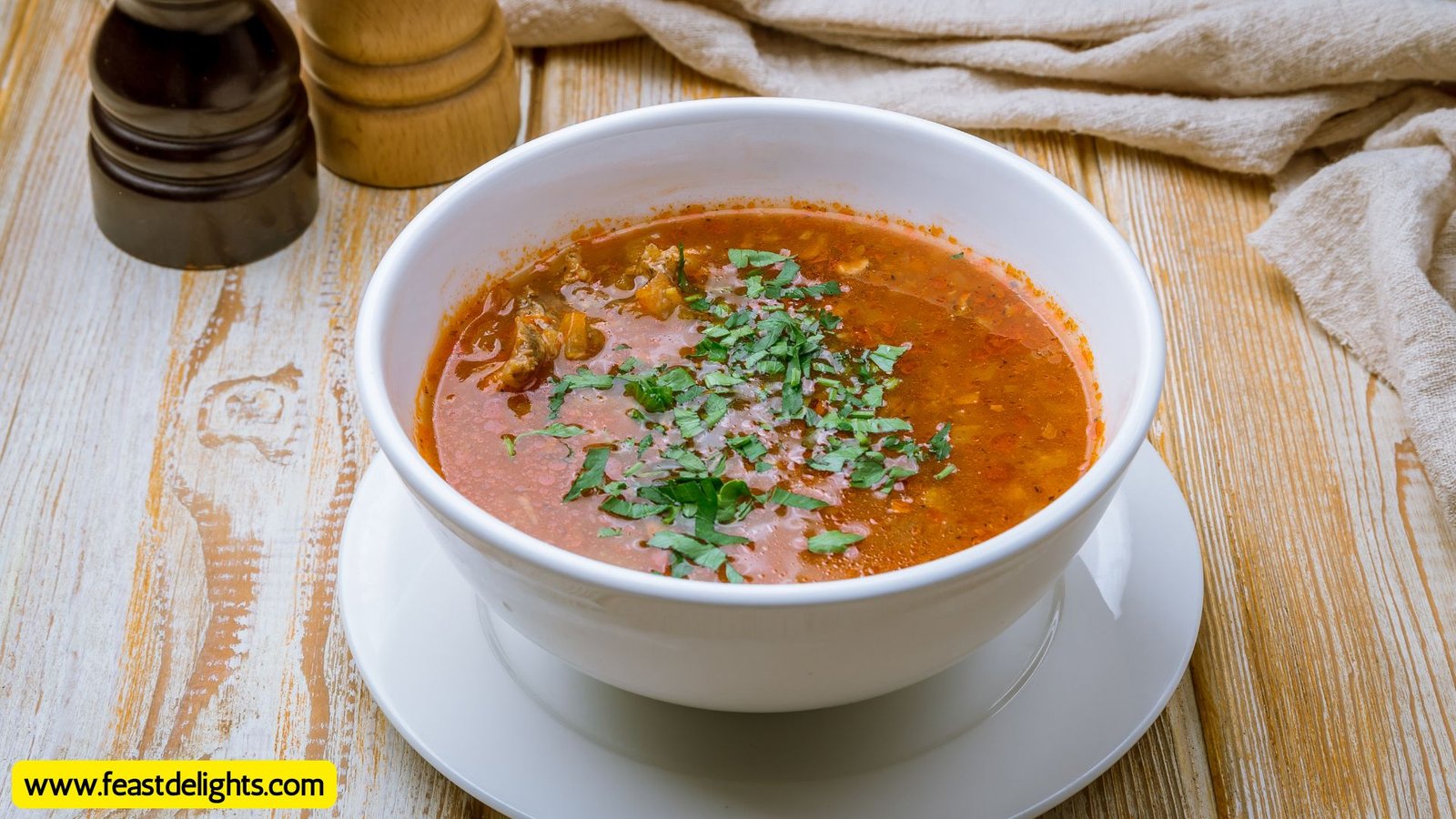
Recipe card
Georgian Beef Kharcho Soup with Walnuts and Tkemali
Beef takes 90–120 minutes; allow about 20 minutes for rice and final seasonings with overlapping stages, plus extra time for bringing water to a simmer and handling beef. Total is a planning estimate.
Equipment: Large stockpot with lid, skillet, knife, cutting board, colander, food processor or mortar, slotted spoon, ladle
Ingredients
Instructions
Simmer beef until fork-tender
Place beef chuck in 2.5 litres water in a large stockpot. Bring to a simmer, skim foam and cook gently for 90–120 minutes, until fork-tender. Lift out, cut into bite-sized pieces and return to broth.
Rinse rice and start cooking
Rinse the short-grain rice and add to simmering broth. Cook about 10 minutes before adding the remaining seasoning mixture; rice will finish cooking during the next stage.
Fry onion and tomato paste
While rice starts cooking, heat vegetable oil in a skillet over medium heat. Fry chopped onions until golden, then stir in tomato paste and cook for 2 minutes. Add to the soup.
Add walnuts and sour plum seasoning
Grind walnuts finely. Add walnuts, tkemali, khmeli-suneli, coriander, bay leaf, salt and pepper. Simmer about 10 minutes, stirring occasionally, until rice is tender but distinct.
Finish with garlic and rest
Stir in minced garlic and simmer 2 minutes. Remove bay leaf, adjust seasoning to taste and rest off heat for 10 minutes before serving.
What distinguishes Georgian kharcho?
Kharcho is a family of Georgian meat dishes with regional differences. The soup version commonly combines beef, rice, a sour plum component and walnuts, although proportions and seasonings vary. Tkemali, a tart Georgian plum sauce, contributes acidity that balances the rich meat and nuts. Another traditional souring ingredient is tklapi, a dried fruit sheet made from sour plums in this context. This recipe uses ready-made tkemali and tomato paste for accessibility rather than claiming to reproduce every regional tradition. For further context, see this Georgian kharcho overview.
Choosing the beef, rice and walnuts
Use 500 g (about 1.1 lb) beef chuck, a cut with connective tissue that softens during a long moist simmer. Brisket is another option, but its cooking time depends on thickness. A lean steak cut is less suited to this method and may become dry. The 2.5 litres of water (about 10½ US cups) give the meat room to simmer. Use a large stockpot, and keep the water at a gentle simmer rather than a violent boil. Skim foam from the surface during the early cooking stage. Add a little hot water only if evaporation exposes the meat.
Short-grain rice supplies body. Rinse the measured 100 g (3.5 oz) until the runoff is less cloudy. This removes some loose surface starch but will not make the rice behave like long-grain rice. Cook it only when the beef is ready. The grains should be soft enough to eat but not disintegrating into the broth. Walnuts add richness and texture. Grind the 100 g (3.5 oz) finely using a food processor or mortar, stopping before the nuts turn into oily butter. A fine grind disperses more evenly than large pieces.
Where the sour and aromatic flavours come from
Tkemali comes in different varieties and levels of acidity, garlic and salt. Start with the measured two tablespoons and taste after the soup has simmered; add extra at the table if needed. Tomato paste adds colour and savoury depth. Fry it briefly with golden onions until it darkens slightly, but do not let it burn. Khmeli-suneli is a Georgian herb and spice blend, not a single spice; its composition varies by maker. The separate ground coriander reinforces the aromatic character. Garlic added near the end retains more of its fragrance than garlic simmered for two hours.
Planning the cooking sequence
Simmer the beef gently for 90–120 minutes or until a fork slides into it easily. Timing is only a guide: tougher pieces may require longer. Lift the meat out, cut into bite-sized pieces when safe to handle, then return it to the broth. Prepare the onion and tomato mixture while the rice cooks. Add the mixture after about ten minutes of rice cooking, then the walnuts and seasonings. Simmer for another ten minutes, checking rice tenderness. This overlaps the final rice cooking with the seasoning stage rather than boiling the rice for an unnecessary extra half hour.
Stir from the bottom occasionally after adding ground walnuts, as the solids can settle and catch. Add the chopped garlic for the final two minutes. Remove the bay leaf. The soup should have tender beef and a lightly thickened broth, with rice still identifiable. Rest off the heat for ten minutes before serving. If the meat is still tough when you are ready to add rice, continue simmering the beef alone.
Troubleshooting the broth
Tough beef: Continue gentle simmering before adding rice. Rice becomes mushy: Add it later and check tenderness earlier. Soup is too thick: Stir in hot water or unsalted broth a little at a time. Soup is too sour: Dilute with unsalted broth and adjust salt; more sugar is not usually necessary. Flat flavour: Taste the salt and plum sauce balance before adding more spices. Grainy walnuts: Grind them finer next time; simmering does not dissolve coarse nut pieces.
Substitutions and allergens
If tkemali is unavailable, an unsweetened tart plum purée or a comparably sour plum sauce can work, but sweetness and acidity vary. Add cautiously rather than substituting a sugary dessert sauce. If khmeli-suneli cannot be found, coriander and a mild dried herb blend can approximate some aromatic notes, but the result will differ. Adjust the walnut quantity only if intentionally changing the thickness. Walnuts are a tree-nut allergen and are central to this version. Check packaged tkemali and spices for other allergens and cross-contact.
Serving and make-ahead ideas
Serve hot with optional fresh coriander leaves and bread. Offer extra tkemali or fresh chilli separately. For a Georgian meal, consider Megrelian khachapuri or Georgian-style cabbage salad. For another beef dish, see chashushuli beef and tomato stew. You can simmer beef and prepare the broth a day ahead, chill promptly, then bring it back to a simmer before adding rice and the remaining ingredients. This helps preserve rice texture.
Storage and reheating
Divide leftovers into shallow containers and refrigerate at 4°C (40°F) or below within 2 hours, or 1 hour above 32°C (90°F). Use within 3 days. Reheat to 74°C (165°F), stirring and bringing the soup to a rolling boil. Freeze portions without rice when possible; thaw in the refrigerator. Rice absorbs broth during storage, so add a little water when reheating. Do not leave a large pot of soup on the counter to cool for hours. See official food handling guidance. For the best texture when freezing, prepare the seasoned beef broth separately and cook fresh rice when reheating.
Frequently asked questions
What is tkemali?
Tkemali is a tart Georgian plum sauce that balances the richness of meat and walnuts in this soup.
Can I substitute brisket for beef chuck?
Yes. Simmer until fork-tender rather than relying on the exact timing for chuck.
Why is rice added near the end?
Rice cooks much faster than beef. Adding it after the meat is tender avoids overcooked grains.
Do the walnuts need to be toasted?
No. Finely grind the raw walnuts for this version; toasted nuts would add a different flavour.
Is kharcho always spicy?
Heat varies by recipe and spice blend. This version emphasises sour plum, garlic and aromatics; offer chilli separately if desired.
Can I prepare the broth ahead?
Yes. Cool promptly, refrigerate and bring back to a simmer before adding the rice and final seasonings.
Why does leftover kharcho thicken?
Rice continues absorbing liquid as it stands. Thin with a little water or unsalted broth when reheating.
More recipes to try






Spotted a detail that needs correcting? Contact the FeastDelights editors.