Homemade Tomato Ketchup Recipe for the Refrigerator
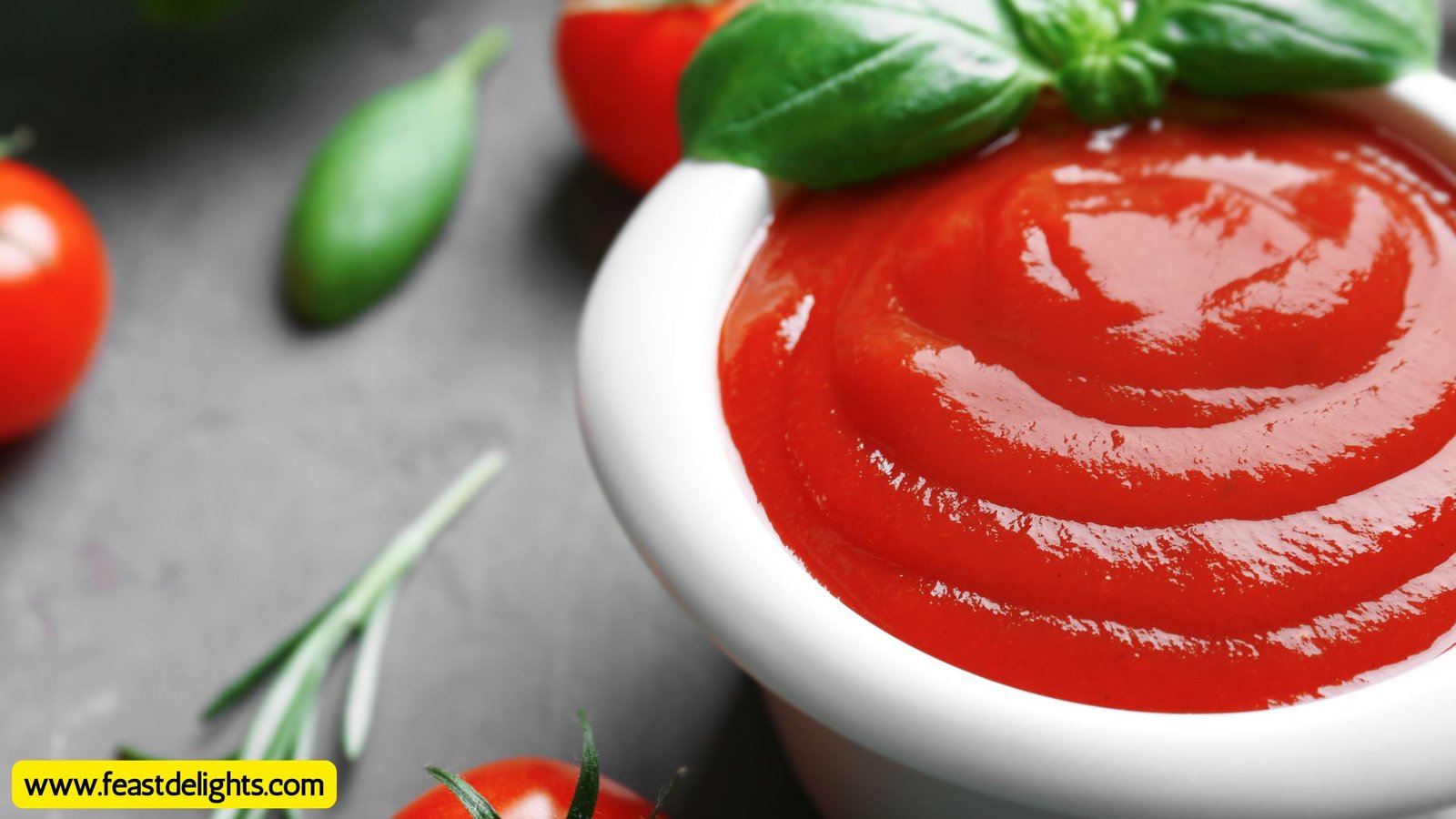
Homemade tomato ketchup has a smooth, spoonable texture and a sweet-tart tomato flavour, with garlic, bay, paprika and coriander for a gentle savoury finish. Fresh ripe tomatoes and tomato paste cook down together before blending and straining. This recipe makes approximately 500 ml (about 2 US cups) in around an hour, depending on how juicy the tomatoes are. It is a small-batch refrigerator condiment, not a tested canning formula. Freeze any surplus rather than storing sealed jars in the pantry.
This ketchup starts with a kilogram of fresh tomatoes rather than a bottle of passata. Tomato paste gives the sauce body while the fresh fruit reduces; a little sugar balances the acidity and vinegar brightens the finish. The original quantities are retained. The final consistency matters more than an exact simmer time because tomatoes vary in water content.
Choose tomatoes for a thicker ketchup
Use ripe, sound tomatoes with no mould. Plum tomatoes generally contain less watery seed gel than slicing tomatoes, although either works if reduced sufficiently. Wash under running water, remove the stems and chop into similar pieces. A kilogram is about 2.2 lb. The 100 g tomato paste (3.5 oz) should be plain concentrated tomato, not a seasoned pasta sauce. Tomato paste helps the sauce cling to a spoon without starch.
Two tablespoons of sugar give a modest sweetness, while fine salt and garlic sharpen the tomato flavour. Keep the bay leaves whole so they can be removed before blending. Ground coriander and paprika are background flavours rather than dominant spices. Use the listed tablespoon of cider or wine vinegar for flavour; the amount is not a validated preservation treatment.
Equipment and consistency
A wide, non-reactive heavy saucepan promotes evaporation. Have a wooden spoon, immersion blender, fine sieve and clean shallow storage containers ready. A narrower pot may require longer reduction. When the tomatoes soften, stir more frequently to prevent concentrated paste sticking to the base. Blend off the heat; avoid sealing steaming liquid in a countertop blender. If using a countertop model, follow its instructions for hot liquids and work in small batches.
Recipe card
Recipe card
Homemade Tomato Ketchup Recipe for the Refrigerator
Allow additional simmering time for very juicy tomatoes; cooling and refrigeration follow cooking.
Equipment: Wide heavy non-reactive saucepan, scale, measuring spoons, wooden spoon, immersion blender, fine sieve, shallow storage containers.
Ingredients
Tomato base
Seasoning
Instructions
Soften the tomatoes
Wash and chop the tomatoes. Combine with tomato paste in a wide saucepan over medium heat. Bring to a gentle simmer and cook uncovered 20–30 minutes, stirring occasionally, until the pieces collapse.
Add the seasoning
Stir in sugar, salt, minced garlic, bay leaves, pepper, paprika and coriander. Simmer gently for 10 minutes, stirring more often as the sauce thickens.
Blend and strain
Remove both bay leaves. Take the pan off the heat and carefully blend with an immersion blender. Press through a fine sieve to remove seeds and skins.
Reduce with vinegar
Return the strained sauce to the pan, add vinegar and simmer uncovered for 5–10 minutes or longer as needed. Stir frequently until a cooled spoonful coats a spoon without watery separation.
Cool and refrigerate
Divide into clean shallow heat-safe containers and refrigerate promptly, within 2 hours (1 hour above 32°C/90°F). Keep at 4°C (40°F) or below and use within 3–4 days; freeze extra portions. Do not store in the pantry.
How to tell when ketchup is thick enough
The sauce should coat the back of a spoon without watery liquid pooling around it. Drag a spoon across the base of the saucepan: a brief visible trail is a useful sign of reduction. Cool a small spoonful on a plate before deciding whether more simmering is needed; ketchup thickens as it cools. Straining removes most seeds and skin fragments. Press gently with the back of a spoon without forcing coarse pieces through.
Troubleshooting and variations
Too thin: simmer uncovered over low heat, stirring regularly. Extra time is preferable to adding flour. Too thick: stir in a little water and return to a simmer. Too sweet: taste a cooled spoonful and adjust with a small splash of vinegar if desired. Burnt flavour: do not scrape scorched paste into the sauce; transfer the unburnt portion if possible. A pinch of hot paprika can give a spicy version, or use smoked paprika for a different aroma. For fruit sweetness rather than extra sugar, see the separate apple-tomato ketchup formula.
Serving and storage
Serve chilled with skillet cheeseburgers, crispy corn dogs, roasted potatoes or grilled sandwiches. Spoon out only what you need with a clean utensil. Check the paste and vinegar labels for declared allergens or sulphites.
Refrigerate in clean shallow covered containers within 2 hours of cooking (1 hour above 32°C/90°F), at 4°C (40°F) or colder. Use within 3–4 days as a conservative cooked-food limit. Freeze small portions for up to 2 months for quality; thaw in the refrigerator. This formula is not validated for shelf-stable canning. The short refrigerator window replaces the previous one-week recommendation because this specific batch has no validated shelf-life measurement. Do not rely on the vacuum formed by a cooling lid or the presence of vinegar as proof of shelf stability. For pantry storage, use a separate tested canning recipe from a food-preservation authority.
Frequently asked questions
Can I use plum tomatoes?
Yes. They often reduce faster because they are less watery, but judge the thickness rather than the clock.
Why is my ketchup watery?
The tomatoes may contain extra water. Simmer uncovered until a cooled spoonful holds its consistency.
Do I have to strain it?
Straining makes the ketchup smoother. If you prefer a rustic texture, blend well and accept some seeds and skin.
Can I use white vinegar instead?
For this refrigerated sauce, plain food-grade white vinegar gives a sharper flavour. This substitution does not make the sauce safe for canning.
Can I freeze the ketchup?
Yes. Freeze cooled portions in freezer-safe containers with expansion space, thaw in the refrigerator and stir well.
Can I store sealed jars in the cupboard?
No. This is not a validated canning recipe, even if a lid seals as the sauce cools. Refrigerate or freeze it.
More recipes to try






Spotted a detail that needs correcting? Contact the FeastDelights editors.