Refrigerator Apple-Tomato Ketchup
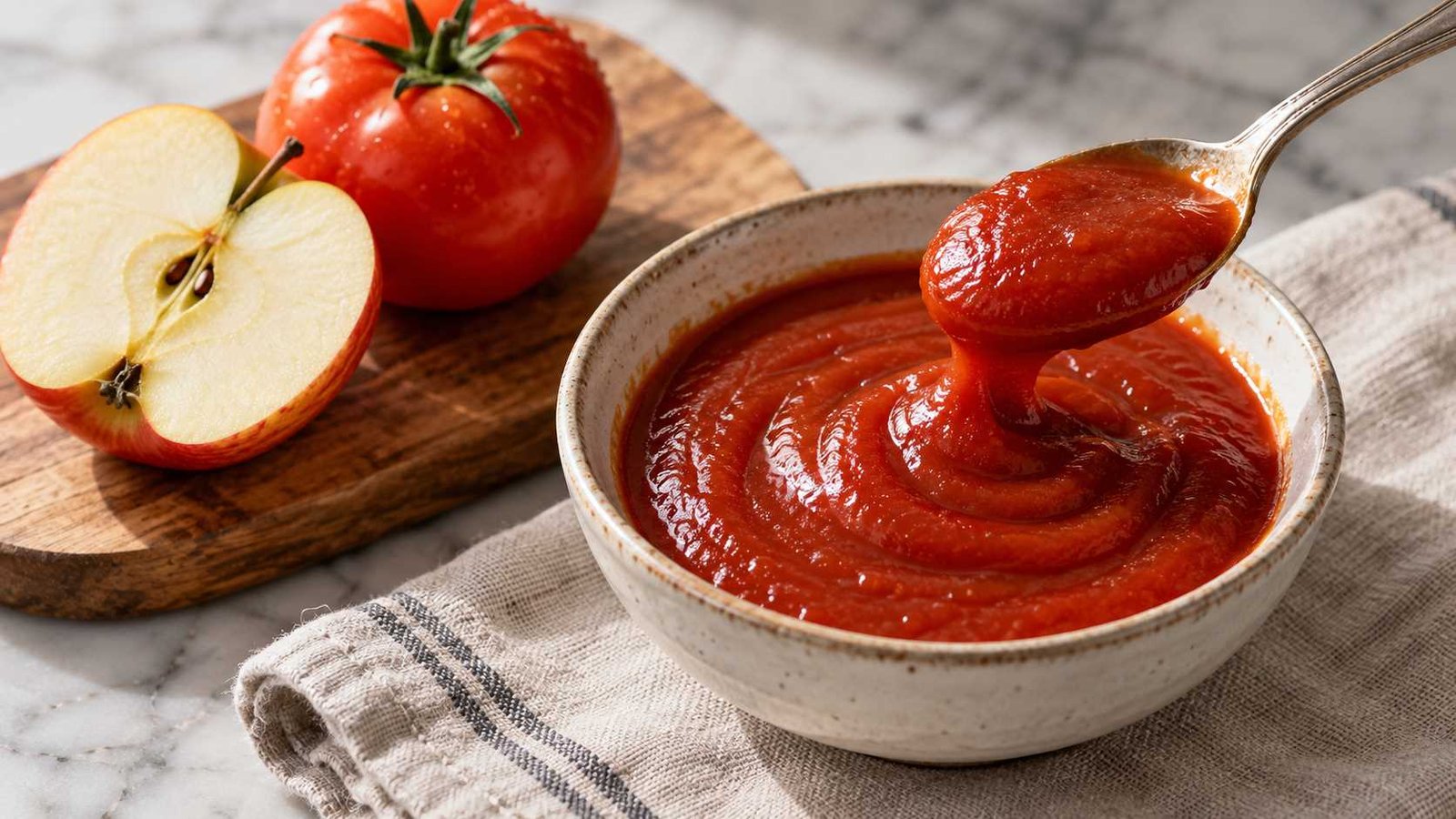
This refrigerator apple-tomato ketchup is a thick, fruity sauce with more apple than tomato, plus sweet pepper, onion, garlic and cinnamon. The produce is cooked until soft, blended smooth and reduced before a small cornstarch slurry finishes the texture. Expect about 1.5 litres, depending on the apples and evaporation. Allow roughly 1½ hours to prepare and cook, with chilling time if you prefer it cold. Spoon it beside potatoes, burgers or roast meat, and keep it refrigerated for short-term use rather than storing sealed jars in a cupboard.
Apple-tomato ketchup has a softer, fruitier character than a tomato-only sauce. This version uses twice as much apple as tomato by weight, with two sweet peppers, onion, garlic and a little cinnamon. The apples give body as well as flavour, while vinegar supplies a sharp edge to balance the sugar. Cook the produce until it is genuinely soft before blending; a blender cannot turn firm apple pieces into the same silky sauce. Reduce the purée before adding the cornstarch, then stop cooking once it has thickened. The recipe yields about 1.5 litres and is intended for the refrigerator. Make a smaller batch if you will not use that much within a few days.
Keep the apple-forward proportions
Weigh 1 kg apples after peeling and coring, about 2 lb 3 oz. Use sound, ripe apples with a flavour you like; avoid bruised or mouldy fruit. The 500 g tomatoes, about 1 lb 2 oz, support the apples rather than dominate them. This is deliberately different from the site’s tomato-only refrigerator ketchup.
Core and seed two sweet peppers, chop one onion and mince three garlic cloves. Similar-sized pieces soften more evenly. A sweet, firm apple makes a milder sauce than a very tart cooking apple, but the amount of liquid and reduction time will vary with the fruit.
Keep 150 g sugar, about ¾ US cup, 1 level tablespoon fine salt and 1 teaspoon ground cinnamon ready. Cinnamon is a noticeable part of this version; do not replace it with an unrelated spice blend. Taste a cooled spoonful at the end rather than trying to judge sweetness from a boiling sauce.
Vinegar, starch and safe blending
The stated vinegar is 100 ml of food-grade 9% vinegar, not cleaning vinegar or concentrated essence. If only labelled 5% vinegar is available, 180 ml supplies approximately the same amount of acid for flavour, but introduces an extra 80 ml water. Reduce the sauce before thickening to account for that extra liquid. This conversion does not establish a safe canning recipe.
Mix the tablespoon of cornstarch with the separate 2 tablespoons cold water only when you are ready to finish the sauce, and stir it again just before pouring. Cornstarch settles quickly. Extra water needed to stop the raw produce catching is separate from the slurry water.
Use a broad, heavy saucepan and a long spoon. An immersion blender can blend in the pan if its head stays fully submerged and you switch it off before lifting it. For a jug blender, cool the mixture to the temperature allowed by its manufacturer, work in small batches and follow its hot-liquid instructions. Never seal hot sauce in a blender cup that is not designed for it.
Recipe card
Refrigerator Apple-Tomato Ketchup
About 90 minutes preparation/cooking plus roughly 2 hours chilling for a cold condiment. Sauce can be served warm; reduction and chilling depend on produce and container depth.
Equipment: Heavy wide saucepan, chopping board and knife, measuring tools, long spoon, immersion blender or heat-rated jug blender, optional sieve and splatter screen, shallow covered storage containers
Ingredients
Produce
Seasoning
Cornstarch slurry
Produce
Instructions
Soften the chopped produce
Put 1 kg peeled, cored chopped apples, 500 g chopped tomatoes, 2 seeded chopped peppers and 1 chopped onion in a heavy saucepan. Add 2–3 tablespoons water if needed to start cooking. Cover and simmer over low to medium-low heat for about 20–30 minutes, stirring occasionally, until the apples and vegetables crush easily. Add only small splashes of water if the base catches.
Blend carefully
Remove from the heat. Blend until smooth with an immersion blender kept submerged, or cool as required by your jug blender instructions and blend in small batches. Return the purée to the pan. Pass through a sieve at this stage if a very smooth sauce is preferred.
Season and reduce
Add 3 minced garlic cloves, 150 g sugar, 100 ml food-grade 9% vinegar, 1 level tablespoon fine salt and 1 teaspoon ground cinnamon. Simmer uncovered over medium-low heat for about 25–30 minutes, stirring across the base regularly, until thick and spoon-coating. Juicy produce may need longer.
Finish with a cold slurry
Stir 1 tablespoon cornstarch with 2 tablespoons cold water until smooth. Stir again, then pour gradually into the hot sauce while stirring gently. Bring to a bubbling boil and stir for about 1 minute until thickened. Remove from the heat rather than boiling the starch for another 10 minutes.
Serve or chill promptly
Taste a safely cooled spoonful. Serve a portion warm if desired, or divide the sauce into shallow clean containers and refrigerate promptly at 4°C/40°F or below. Allow around 2 hours if serving thoroughly chilled, depending on container depth. Use within 3 days. This is not a pantry-canning recipe.
Reduce first, then thicken briefly
The apples should crush easily against the side of the pan before blending. If they remain firm, continue the initial covered simmer and add a small splash of water only if the base is catching. A rough purée at this point will still have bits after the final reduction.
Once seasoned, simmer the purée uncovered over a modest heat. Stir across the base regularly and watch for hot splashes. A splatter screen helps without trapping all the steam. The sauce should already have a ketchup-like body before the starch goes in; the slurry is a finish, not a substitute for evaporating a pot of excess water.
The previous method gave a 10-minute cook after the cornstarch. This version brings the finished mixture to a bubbling boil while stirring for about 1 minute, then removes it from the heat. Argo’s cornstarch guidance explains that extended cooking can weaken a thickened sauce. The result firms further as it cools.
Troubleshooting the texture
Too thin before the slurry: continue reducing the purée slowly. Tomato juiciness, apple variety and pot width change the time. Do not add repeated spoonfuls of dry cornstarch to compensate.
Lumps after thickening: the slurry may not have been mixed or was added too quickly. A fine sieve can remove small lumps. Avoid vigorous prolonged blending after the starch has cooked.
Too thick once cold: loosen only the portion you are about to serve with a little water. Do not keep topping up the stored container. If making the recipe again, reduce a little less before adding the same measured slurry.
Too sweet or too sharp: the apples affect the balance. Adjust a small serving first rather than changing the entire batch blindly. Any flavour adjustment remains a refrigerator sauce, with the same short storage period.
Serving and useful variations
Use a spoonful as a dip for roasted potatoes with garlic and rosemary, or spread thinly on a burger bun. It also suits a cooked egg breakfast or roast chicken. The cinnamon makes it a different choice from a smoky barbecue sauce, so start with a small amount.
For a snack plate, offer a separate bowl alongside sausages in puff pastry. Put out only what will be eaten and keep the rest cold. Do not return a used dipping bowl to the main container.
For a smoother finish, push the cooked purée through a sieve before the final reduction. A small pinch of chilli is an optional addition for heat. Do not add oil, dairy or fresh herbs to the stored batch and assume the original storage guidance still applies.
Make ahead, freezing and storage
For a make-ahead batch, cook the sauce completely, divide into small shallow containers and refrigerate promptly at 4°C/40°F or below. Use within 3 days. The shorter storage advice is intentional: this particular sauce has no verified shelf-life test, and vinegar alone does not justify treating it like commercial ketchup.
Do not leave it at room temperature for more than 2 hours, or 1 hour above 32°C/90°F. Do not rely on a vacuum-sealed lid, hot filling or turning jars upside down for preservation. No boiling-water canning process is provided for this formula.
For freezing, reserve a portion of the reduced sauce before adding cornstarch. Cool and freeze in meal-sized containers for up to 2 months for quality, leaving expansion space. Thaw in the refrigerator and thicken the portion when reheating, using a proportionate share of the slurry. Ordinary cornstarch-thickened sauce can separate after freezing, so freezing the unthickened base gives a more predictable texture.
If serving stored sauce warm, reheat a small portion to 74°C/165°F throughout while stirring, then allow it to cool to an eating temperature. Do not repeatedly heat and chill the whole batch. For a cold condiment, serve directly from the refrigerator with a clean spoon.
Allergens and nutrition
The listed ingredients contain no milk, eggs or nuts, but apples and other produce can still cause individual allergies. Check vinegar and starch labels for relevant allergens and cross-contact information. Use labelled gluten-free products when required. Nutrition is left blank because the finished volume, serving size and amount of sugar from the apples have not been calculated for this batch.
Let the fruit and vegetables soften fully, reduce the purée before thickening and taste once it has cooled. Keep small portions ready in the refrigerator and freeze an unthickened portion if planning further ahead.
Frequently asked questions
Will this taste like ordinary tomato ketchup?
No. The 2:1 apple-to-tomato ratio gives it a fruitier body and cinnamon adds warmth. Use the separate tomato ketchup recipe for a more tomato-led condiment.
Can I leave apple skins on?
Peeled apples are specified for a smooth texture. Skins can leave flecks and require extra sieving, so peeling is the more predictable choice for this batch.
Can I omit the cornstarch?
You can reserve an unthickened portion and reduce it to a texture you like, but the final yield may be lower. Do not treat the change as permission to can or extend storage.
Can I halve the batch?
Yes. Halve every ingredient, including the vinegar and slurry. Use a smaller pan and judge softness and reduction rather than halving the cooking time automatically.
Can I use 5% vinegar?
For a flavour-only alternative, use 180 ml labelled 5% vinegar in place of 100 ml of 9% vinegar. The extra liquid needs more reduction before the starch. The sauce still requires short-term refrigeration.
Is it safe to keep a sealed jar in the cupboard?
No. This recipe has no validated canning process or shelf-life test. Keep it refrigerated or freeze the unthickened base.
Does filling a new jar restart the storage time?
No. Count the 3 days from cooking, and do not mix a fresh batch into an older one.
What if frozen thickened sauce separates?
Ordinary cornstarch can lose its texture after freezing. It may be stirred back together, but the smoother make-ahead option is to freeze the base before adding starch.
More recipes to try




Spotted a detail that needs correcting? Contact the FeastDelights editors.