Grilled Salmon with Garlic and Lemon Butter
Grilled salmon with lemon butter combines crisp-edged, skin-on fillets with a fresh garlic, lemon and herb butter that melts over the hot fish. The grill gives the salmon a lightly smoky flavour without needing a sugary marinade. Four fillets take about 25 minutes to prepare and cook, depending on their thickness and the grill. Start skin-side down and use a thermometer to avoid dry fish. Mix the butter separately and spoon it over the cooked salmon just before serving with potatoes, rice or grilled vegetables.
Grilled salmon with lemon butter is a quick main course with lightly smoky fish and a bright, savoury finish. This recipe serves four in approximately 25 minutes using skin-on fillets of about 170 g (6 oz) each. The butter is added after grilling, which prevents the garlic and herbs from scorching over direct heat.
Choosing the fish and making the butter
Choose fillets of similar thickness so they finish at roughly the same time. Skin provides a barrier between the flesh and the hot grate; it also helps keep the fillet together. Check for pin bones before cooking. Use unsalted softened butter so you can control the seasoning. Grate only the yellow lemon zest, avoiding the bitter white pith, and add the measured juice gradually. Parsley gives a mild herbal flavour; coriander or dill will change the character of the butter.
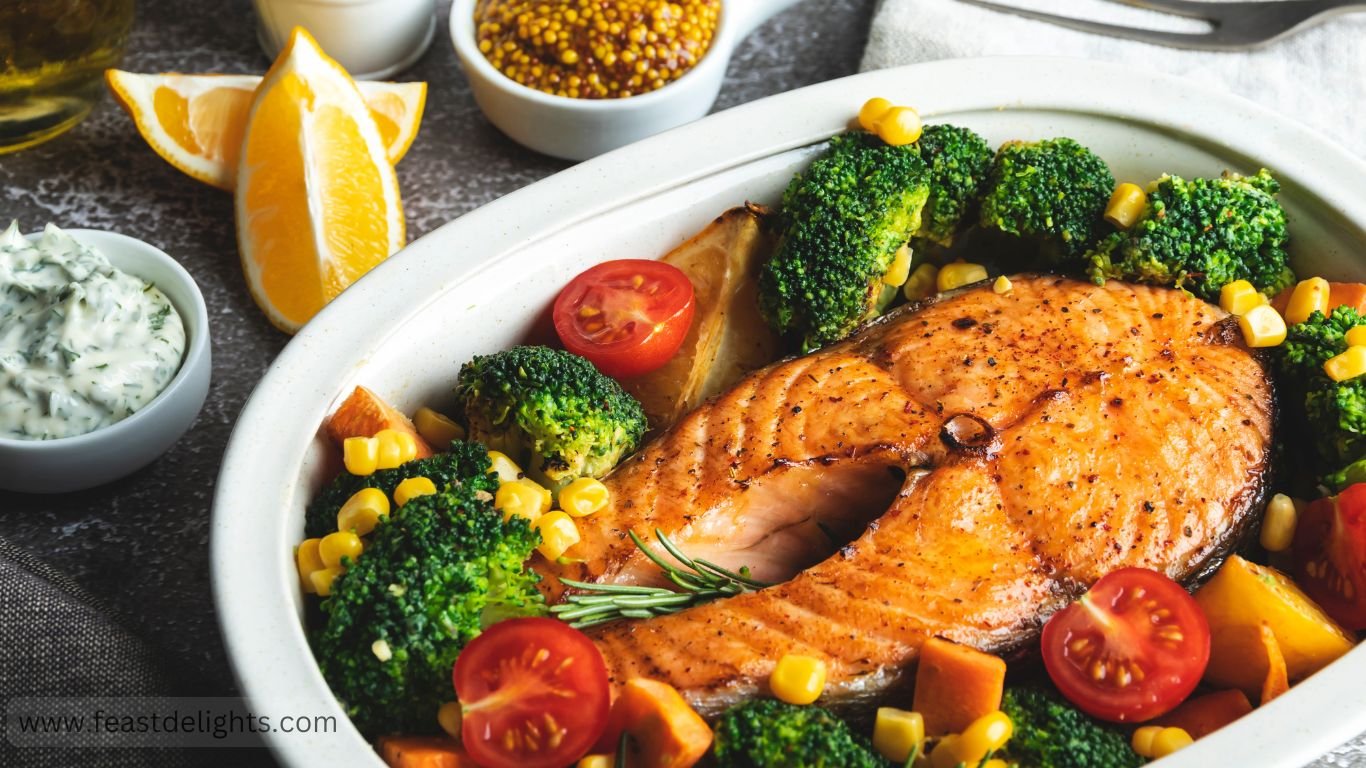
Recipe card
Grilled Salmon with Garlic and Lemon Butter
Preheat during preparation. Grill about 6–8 minutes skin-side down, then 1–2 minutes on the other side if needed; thicker fillets may take longer.
Equipment: Outdoor grill with lid or grill pan, grill brush suitable for the grate, fish spatula, tongs, small bowl, citrus zester, instant-read thermometer, separate raw and cooked fish plates
Ingredients
Salmon
Lemon garlic butter
Instructions
Mix the lemon garlic butter
Mash softened butter with lemon zest, 1 tablespoon lemon juice, minced garlic, herbs and a pinch of the measured salt. Set aside on a clean plate away from raw fish.
Dry and season the salmon
Pat salmon dry with paper towels and discard towels. Check for pin bones. Brush lightly with some of the oil and season the flesh with remaining salt and pepper. Keep chilled until the grill is ready.
Preheat and clean the grill
Preheat the grill to medium-high, roughly 200–230°C (400–450°F) with the lid closed. Clean the grates with a suitable brush and check for loose bristles. Lightly oil the grates using the remaining oil on a paper towel held with long tongs, avoiding flames.
Grill skin-side down
Place the fish skin-side down over the heated grate, leaving space between fillets. Close the lid and cook 6–8 minutes, checking earlier for thin pieces. If flare-ups occur, move the fish to a cooler area.
8 minCheck the centre and finish cooking
When the skin releases easily, turn carefully with a fish spatula if needed and cook another 1–2 minutes. Insert a clean thermometer sideways into the thickest part; cook until it reaches 63°C (145°F). The flesh should be opaque and separate into moist flakes. Adjust timing for thickness.
2 minAdd butter and serve
Transfer to a clean serving plate, skin-side down. Divide lemon butter among the hot fillets and serve immediately. Do not reuse utensils or plates that touched raw fish without washing.
How to grill salmon without sticking
Start with a clean, preheated grate and dry the fillets. Lightly oil the skin rather than drenching the fish. Place skin-side down and leave it alone for several minutes. If the skin resists when you try to lift it, give it a little longer, unless it is burning. Use a broad fish spatula to support the entire fillet. If the grill develops flare-ups, move the fish to a cooler section rather than letting flames lick the flesh.
How to tell when salmon is done
Thickness, grill design and starting temperature affect cooking time. Insert a thermometer horizontally into the thickest part of the fillet. Cook to 63°C (145°F), in line with FoodSafety.gov guidance. Opaque flesh that separates readily into flakes is an additional cue. Avoid repeatedly cutting the fillets open, which can release juices. Transfer to a clean platter and add the butter immediately.
Troubleshooting and substitutions
If the outside browns before the centre is ready, move the salmon away from direct heat and close the lid. If butter separates slightly when lemon juice is added, mash it again until combined. Use a little olive oil with lemon and herbs instead for a dairy-free finish. Trout is a useful alternative, but thinner fillets may cook faster.
Serving ideas
Pair with garlic and rosemary roasted potatoes or roasted vegetables. For a sweeter grilled fish variation, try maple mustard salmon.
Storage and allergens
Keep raw fish chilled and separate from ready-to-eat ingredients. Refrigerate cooked leftovers within two hours, or one hour above 32°C (90°F), and use within two days. Serve safely stored fish cold or reheat to 74°C (165°F). Freeze for up to two months for quality. Contains fish and milk. Check ingredient labels for additional allergens.
Frequently asked questions
Can I grill salmon without turning it?
Yes. With a covered grill, skin-side-down cooking can be enough. Check the thickest part reaches 63°C (145°F) before removing.
Why does salmon stick to the grill?
Wet skin, dirty grates or moving the fish too soon can cause sticking. Dry and lightly oil the fish and wait for the skin to release.
Can I use a grill pan indoors?
Yes. Heat it over medium-high heat, lightly oil it and cook skin-side down first. Use ventilation and adjust heat and time as needed.
Can I make the lemon butter ahead?
Yes. Refrigerate covered for up to two days and soften briefly before serving. Keep it separate from raw fish.
Can I grill frozen salmon?
For this method thaw it in the refrigerator first. Follow package instructions for vacuum-packed fish, including removal from packaging before thawing when directed.
How do I avoid dry salmon?
Use a thermometer, check thin fillets earlier and stop cooking when the centre reaches 63°C (145°F).
More recipes to try






Spotted a detail that needs correcting? Contact the FeastDelights editors.