Sautéed Garlic Scapes with Olive Oil and Lemon
Sautéed garlic scapes are a quick vegetable side with a mellow garlic flavour, tender green stems and a little crunch. A short sauté in olive oil followed by a splash of water softens the thicker pieces without making them limp. Fresh lemon juice and black pepper brighten the finish. This recipe makes four side portions in about 20 minutes, including trimming. Choose young, flexible scapes and remove woody ends before cooking; serve warm with grains, eggs, potatoes or roasted vegetables.
Garlic scapes are the edible flowering stalks of hardneck garlic. Sautéed garlic scapes taste gentler than raw garlic cloves and cook to a texture similar to green beans when harvested young. This recipe uses 400 g trimmed scapes, olive oil, lemon and a little water to make four side servings in 20 minutes. The steam-sauté method is particularly useful when stems vary slightly in thickness.
Choose and trim the garlic scapes
Look for green stems that bend readily and are still curled. Older, straightened stalks may become fibrous. University of Illinois Extension describes young scapes as tender edible flower stalks. Rinse them well under running water and dry them before adding to oil. Trim the bottom where it feels woody; the developing flower head is edible but can be removed if tough. Cut the remaining tender stems into roughly 5 cm (2-inch) lengths so they cook evenly. Measure 400 g after trimming.
How to sauté garlic scapes
Use a wide skillet with a lid, preferably around 28 cm (11 inches). Olive oil should shimmer but not smoke. Toss the stems frequently for the first four minutes so they develop a few pale golden spots. Add the measured water carefully, cover and steam for another three to five minutes. Test a thick stem with a fork: it should bend or yield easily while retaining a little bite. Uncover to evaporate any remaining water before seasoning. Add lemon juice off the heat to preserve its fresh flavour.
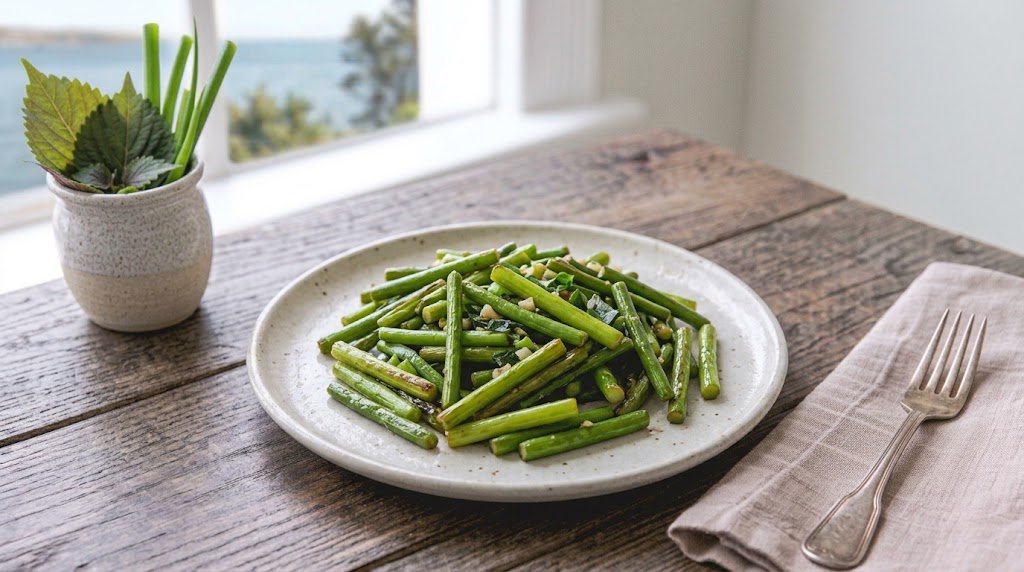
Recipe card
Sautéed Garlic Scapes with Olive Oil and Lemon
Equipment: Kitchen scale, knife, chopping board, colander, 28 cm skillet with lid, spatula and measuring spoons.
Ingredients
Scapes and cooking liquid
Finish
Instructions
Trim and cut the scapes
Rinse under running water and dry. Cut away tough ends and fibrous flower tips if necessary. Weigh 400 g trimmed stems and cut into 5 cm (2-inch) lengths.
Sauté over medium heat
Heat olive oil in a wide skillet over medium heat until shimmering, not smoking. Add scapes and toss for about 4 minutes, until bright green with a few golden spots.
Steam until crisp-tender
Carefully add water, cover and cook 3–5 minutes. Test a thick stem with a fork; it should yield with a slight bite. Add a little more water and cook briefly if needed.
Finish with lemon
Uncover and cook off remaining water. Remove from heat and toss with salt, black pepper and lemon juice. Taste and serve warm.
Keep the stems tender without overcooking
If stems are tough after the stated time, add another small splash of water and cover for a minute or two. Very woody scapes may remain fibrous even with longer cooking, so trim them more generously next time. If the pan is crowded, cook in two batches rather than increasing the heat. If the stems turn dull and limp, shorten the covered stage on your next attempt. A little surface browning is desirable, but burnt garlic tastes bitter.
Serving and substitutions
Serve warm alongside roast potatoes, eggs, rice or grilled vegetables. A squeeze of lemon balances rich dishes. Try a little chilli flake or chopped parsley at the end, or replace lemon juice with a small splash of cider vinegar for a different tang. Asparagus or green beans can be cooked in a similar way, but neither reproduces the garlic flavour and the timings may differ. The measured ingredients contain no obvious major allergens; check any added condiments for your own dietary needs.
For a vegetable meal, pair the scapes with roasted eggplant and tomato spread or roasted vegetables with squash and peppers. Buckwheat and whole-wheat bread is another simple accompaniment.
Make ahead and storage
Wash and trim the stems shortly before cooking or keep prepared stems covered in the refrigerator. Sauté just before serving for the brightest texture. Refrigerate cooked leftovers in a shallow covered container within two hours, or one hour above 32°C (90°F), and use within three days at 4°C (40°F) or colder. Reheat to 74°C (165°F) with a little water if needed. Freezing cooked scapes is possible, but they will be softer after thawing; use them in a soup or stir-fry rather than as a crisp side. Do not treat garlic cooked in oil as a shelf-stable preserve.
Frequently asked questions
Are garlic scapes the same as green garlic?
No. Scapes are the flowering stalks, while green garlic is the young plant harvested before its bulb matures.
Can I eat the flower tip?
Young tips are edible, but they may become fibrous. Trim any tough parts.
Can garlic scapes be eaten raw?
Young tender scapes are edible raw, with a stronger garlic taste. Rinse thoroughly first.
Why are my scapes stringy?
They may have been harvested too late. Trim woody sections and allow slightly more covered cooking time for the tender stems.
Can I use butter instead of olive oil?
Yes; use a similar amount over medium heat and avoid scorching. Butter adds milk as an allergen.
Can I double the recipe?
Yes, but use a larger skillet or cook in batches to avoid overcrowding.
More recipes to try






Spotted a detail that needs correcting? Contact the FeastDelights editors.