Roasted Eggplant Roe with Tomato and Garlic
Roasted eggplant roe, also known as vegetable caviar or ikra, is a savoury spread made with soft roasted eggplant, tomatoes, onion and garlic. The vegetables are mashed and reduced in a skillet until thick enough to spoon onto toast, with lemon juice and fresh herbs added for brightness. This Eastern European-inspired version makes six side portions in about 80 minutes. Serve warm straight from the pan or chill for a cold appetiser. Despite its name, it contains no fish roe and is not a shelf-stable canning recipe.
Roasted eggplant roe is a thick Eastern European-inspired vegetable spread, sometimes called ikra or vegetable caviar. Whole roasted eggplants provide a tender base, while tomato, golden onion, garlic and lemon give the spread savoury and tangy notes. This version serves six as a side or appetiser in about 80 minutes and can be enjoyed warm without an additional chilling period.
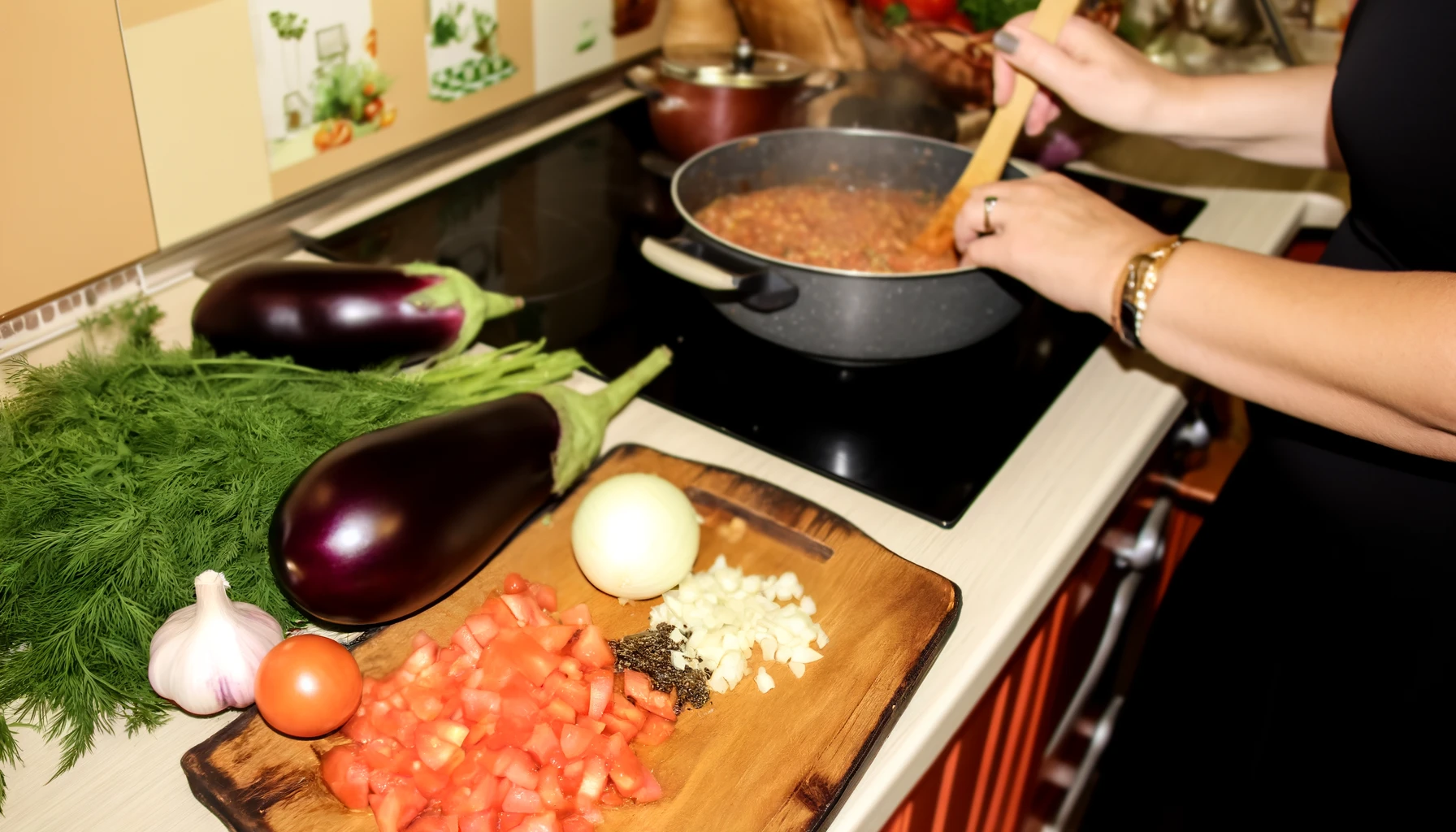
Recipe card
Roasted Eggplant Roe with Tomato and Garlic
Equipment: Oven, rimmed baking tray, fork, tongs, knife, chopping board, large skillet, spoon and spatula.
Ingredients
Vegetable spread
Finishing
Instructions
Roast whole eggplants until soft
Preheat the oven to 220°C (425°F). Wash and dry the eggplants, prick each several times with a fork and place on a rimmed tray. Roast for 35–45 minutes, turning once with tongs, until the skins wrinkle and the flesh yields easily when pierced.
Cook the onion and tomato base
While eggplants roast, heat the oil in a large skillet over medium heat. Cook diced onion for about 8 minutes, stirring until golden. Add tomatoes and simmer until they soften and their liquid begins to reduce.
Scoop and mash the eggplant
Let the eggplants cool just enough to handle safely. Split them open and scoop the flesh into the tomato base, discarding the skins. Add minced garlic, salt and pepper. Mash gently with a spatula.
Reduce until thick
Simmer uncovered over medium-low heat for 15–20 minutes, stirring regularly and more often as the mixture thickens. It is ready when a spoon drawn across the skillet briefly leaves a clear trail. Stir in the lemon juice and taste for seasoning.
Finish with herbs and serve
Remove from the heat and fold in chopped parsley or dill. Serve warm, or divide into shallow containers and refrigerate promptly for a chilled spread.
Choose eggplant and tomatoes
Medium eggplants with firm, glossy skins are easier to roast evenly than very large ones. Use ripe tomatoes for a flavourful base. If the tomatoes are particularly juicy, the skillet reduction may take longer. A neutral oil lets the roasted vegetable flavour stand out. Dill or parsley both work, but dill gives a more distinctive herbal note.
Roasting whole eggplants
Prick the skins before placing the eggplants on a rimmed tray. Roast until the skins wrinkle and the centre is completely soft, not merely browned outside. Larger fruit may need several extra minutes. Let the eggplants cool briefly before splitting; hot steam can escape when you cut them. Scoop out the soft flesh rather than using the tougher skins.
Reducing the spread
Cook the onion while the eggplant roasts to save time. Let it become golden before adding the tomatoes, then simmer until they are pulpy. Add eggplant flesh, garlic and seasoning and mash to the texture you prefer. Keep the skillet uncovered so moisture escapes. The longer 15–20 minute reduction gives this version a thick, spoonable texture suitable for warm toast. Stir frequently toward the end because concentrated vegetables can catch on the pan.
The spread is ready when a spatula briefly exposes the skillet bottom and no large pool of liquid remains. If it dries too far, add a tablespoon of water and stir. Lemon juice balances the sweetness of the onion; add it after the reduction rather than using it as a substitute for safe storage.
Serving and related recipes
Spread over toasted bread, spoon beside roasted potatoes or add to an appetiser platter. For a warm flatbread accompaniment, try soft skillet pita. For a chilled, drained version of a similar spread, see roasted eggplant caviar. The classic baba ganoush with tahini offers a different creamy eggplant preparation.
Storage and preservation
This recipe is not suitable for pantry canning. Lemon juice alone does not establish safe acidity throughout a vegetable spread. Divide leftovers into shallow containers and refrigerate within two hours, or one hour above 32°C (90°F), at 4°C (40°F) or colder. Use within three to four days or freeze for up to two months for best quality. Thaw in the refrigerator and serve cold or reheat to 74°C (165°F). Stir after thawing if liquid separates. See USDA leftover guidance.
No major common allergens are intentionally added in the spread; check the oil and accompaniments for individual dietary needs. Bread may contain wheat.
Frequently asked questions
Why is it called eggplant roe?
The name translates the vegetable caviar or ikra style of spread. This recipe contains no fish eggs.
Can I leave the eggplant skin in?
The roasted skins can be tough, so scoop out the flesh for this version.
Why is the spread watery?
Eggplant and tomatoes vary in moisture. Simmer uncovered a little longer, stirring frequently to prevent scorching.
Can I blend the spread?
Yes. Allow it to cool enough for safe blending and pulse to your preferred texture. A spatula gives a rustic result.
Can I serve it warm?
Yes. This recipe is designed for warm or chilled serving; the spread thickens slightly as it cools.
Can I seal jars for winter storage?
No. This is not a tested canning formula. Refrigerate promptly or freeze portions instead.
More recipes to try






Spotted a detail that needs correcting? Contact the FeastDelights editors.