Baked Vanilla Flan with Caramel Sauce
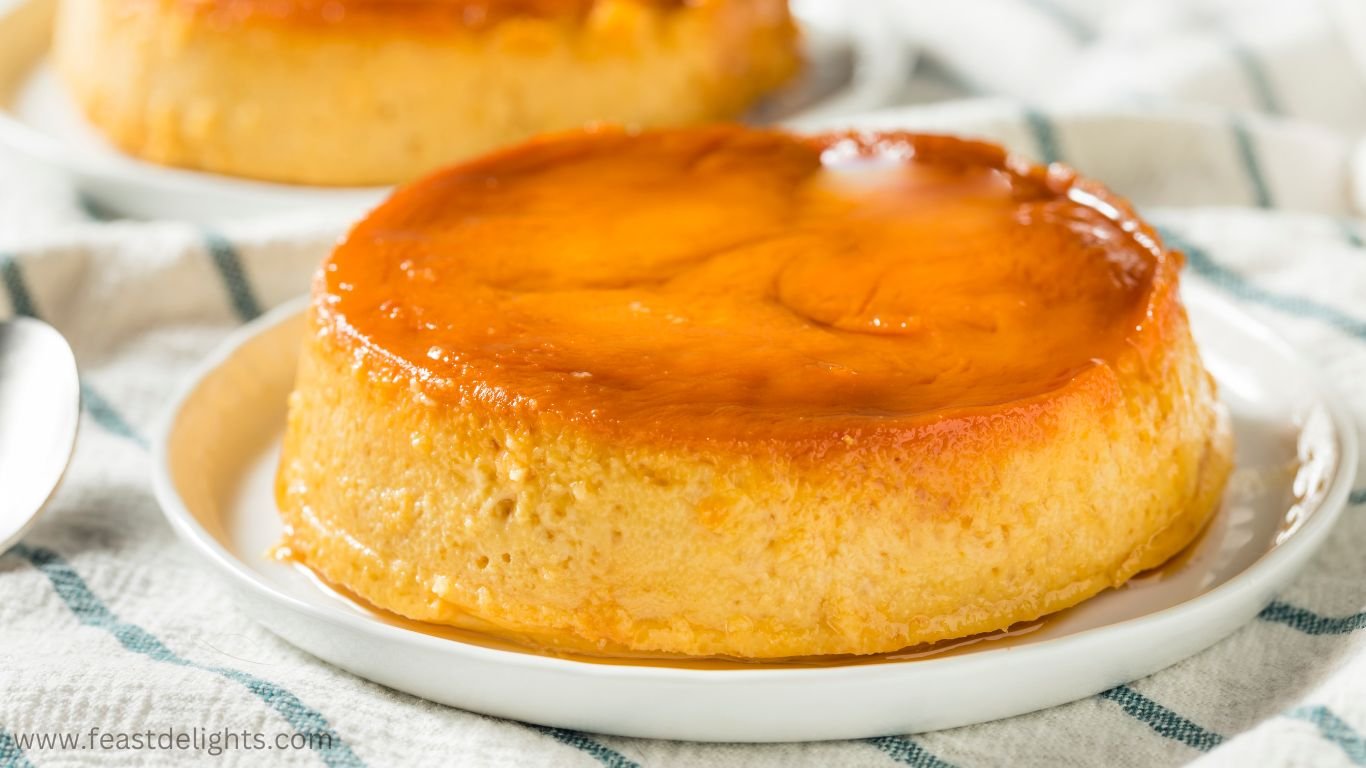
This vanilla flan is a smooth baked milk-and-egg custard with a glossy caramel sauce that forms when the dessert is turned out. Unlike individual caramel custards, this Spanish-inspired version cooks in one approximately one-litre mould and serves six. A gentle water bath protects the custard from harsh oven heat, while straining helps produce a smooth texture. Make the flan in advance and chill it for at least four hours before unmoulding. Serve cold, with the caramel flowing naturally over the sides.
A whole baked flan needs just milk, eggs, sugar, vanilla and a little salt. The caramel is cooked separately from the custard, and the water bath makes the oven heat gentler. The dessert is served chilled, not reheated. This version makes six servings in an approximately 1-litre mould. Allow about 20 minutes preparation, up to 70 minutes cooking including caramel, and at least four hours chilling after brief cooling.
Choosing the custard ingredients
Whole milk gives a smooth, lighter custard than condensed-milk versions. Eggs set the mixture as it heats, and vanilla supplies the main flavour. Measure the two sugar quantities separately: the larger portion forms caramel, while the smaller one sweetens the custard. There is no gelatin or flour in this recipe. Use an oven-safe solid mould rather than a springform pan that may leak into the water bath.
Recipe card
Baked Vanilla Flan with Caramel Sauce
20 minutes prep, up to 70 minutes for caramel and baking, about 30 minutes cooling and at least 4 hours chilling. Overnight chilling is optional; baking time varies with mould depth.
Equipment: Small saucepan, approximately 1-litre oven-safe flan mould, mixing bowl, whisk, fine sieve, roasting pan, thermometer, kettle, oven gloves, wire rack, rimmed serving plate
Ingredients
Caramel
Vanilla custard
Instructions
Cook the amber caramel
Preheat conventional oven to 160°C (325°F). Set a dry, oven-safe approximately 1-litre mould on a heatproof surface. Combine 150 g sugar and 2 tablespoons water in a small saucepan. Heat gently until dissolved, then cook without stirring, swirling the pan gently if needed, until amber. Remove promptly from heat and carefully pour into the mould. Tilt with oven gloves to coat the base. Never touch or taste hot caramel; do not add water to the hot syrup.
Warm milk and whisk eggs
Warm milk in a saucepan until steaming, not boiling. In a bowl gently whisk eggs with 90 g sugar, vanilla and salt just until combined, avoiding excessive foam.
Temper and strain the custard
Gradually whisk warm milk into eggs in a thin stream. Strain the custard into the caramel-lined mould through a fine sieve. Skim foam if necessary. The hardened caramel layer will soften during baking and chilling.
Bake gently in a water bath
Set the mould in a deep roasting pan on a stable oven rack. Carefully add hot water to the outer pan to come about halfway up the mould, without splashing into the custard. Bake about 45–60 minutes or longer if needed until edges are set, the centre trembles gently as one mass rather than flowing, and the centre reaches at least 71°C (160°F). Avoid baking until rigid.
Cool, chill and unmould
Remove the mould from the hot water bath carefully using dry oven gloves, avoiding spills. Cool on a rack briefly, then refrigerate within 2 hours of baking. Chill at least 4 hours, preferably overnight for easier unmoulding. Run a thin knife around the edge, briefly dip the mould base in warm water if needed, dry it, cover with a rimmed plate and invert. Serve cold.
How to cook caramel without crystallising it
Start with sugar and water in a clean pan. Once dissolved, avoid stirring the boiling syrup; gently swirl the pan if necessary. Remove it when amber because residual heat can deepen the colour rapidly. A very dark caramel may taste burnt rather than pleasantly bitter. Work on a clear heatproof surface, keep children away and use oven gloves. The hard layer that forms in the mould is expected and will turn into sauce as the custard cooks and chills.
How to bake a smooth flan
Gradually temper the eggs with warm milk and strain the mixture. Avoid beating air into it. Place the mould in a roasting pan and carefully pour hot water into the surrounding pan, not the custard. The American Egg Board’s baked custard guidance explains how a water bath promotes even cooking. Check the centre for a gentle wobble and an internal temperature of at least 71°C (160°F), the recommended minimum for egg dishes. Remove the mould carefully so residual heat does not overcook it.
Troubleshooting
A coarse, rubbery flan usually indicates too much heat or extended baking. Bubbles can result from whisking too vigorously. If the centre is still fluid, continue baking and check again. If the chilled flan sticks, loosen the edges and briefly warm the base before inverting; do not force the custard out with a spoon.
Serving and related desserts
Serve the whole flan chilled on a rimmed plate and slice into six portions. For a smaller individual format, see caramel custard with dark caramel sauce. For different textures, try vanilla panna cotta or vanilla custard tart.
Make ahead, storage and allergens
Refrigerate at 4°C (40°F) or below within 2 hours of baking (1 hour above 32°C/90°F), covered once cool, for up to 3 days. Keep chilled until serving. Freezing is not recommended because thawing can make the custard weep or become grainy. Contains milk and eggs. The flan should remain refrigerated until serving; unlike a warm pudding, it should not be reheated. Fresh berries are optional and should be added at serving.
Allow the caramel to flow onto the plate before slicing.
Frequently asked questions
Why use a water bath?
It moderates the oven heat, helping the custard set more evenly and reducing curdling.
Why did my caramel harden in the mould?
That is normal. Moisture from the custard helps dissolve the caramel as it bakes and chills.
Why does my flan have bubbles or holes?
Over-whisking eggs or excessive heat can create air pockets and a coarse texture. Whisk gently and use the water bath.
How do I know the flan is cooked?
The edges should be set, the centre should tremble gently, and a thermometer should read at least 71°C (160°F). A liquid centre needs longer.
Can I make individual portions?
Yes, but smaller ramekins cook sooner. Use the same doneness checks and refer to our individual caramel custard method for a different format.
Why won't my flan release?
Chill thoroughly, loosen the edge and briefly warm the mould base. Use a rimmed plate to catch the caramel.
More recipes to try

Cream Cheese Chocolate Truffles Rolled in Cocoa

Cream Cheese Cheesecake Danish with Lemon and Vanilla

Fresh Fruit Salad with Orange Honey Dressing

Ptichye Moloko Bird’s Milk Mousse with Chocolate Glaze
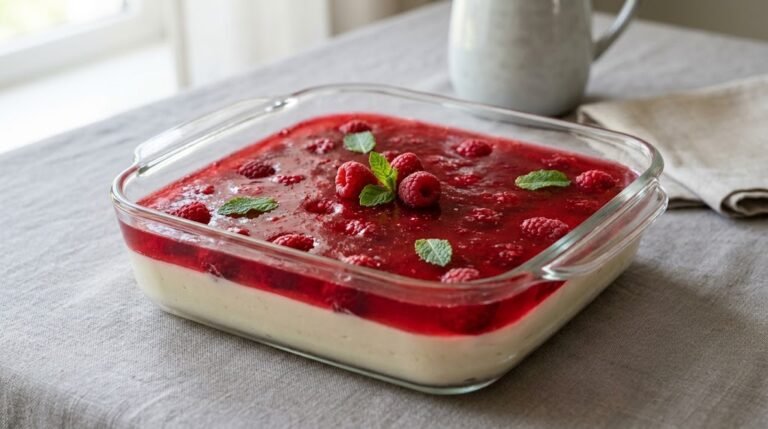
Bird’s Milk Jello with Creamy Mousse and Raspberry Jelly
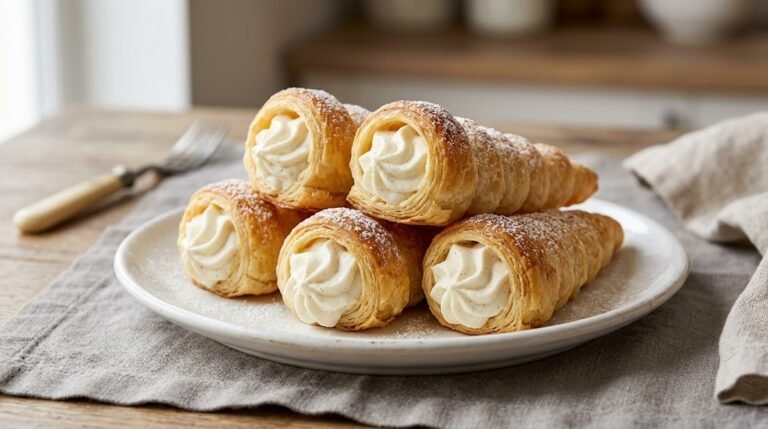
Cream Horn Trubochki with Vanilla Cream Filling
Spotted a detail that needs correcting? Contact the FeastDelights editors.