Cinnamon Apple and Walnut Strudel with Filo Pastry
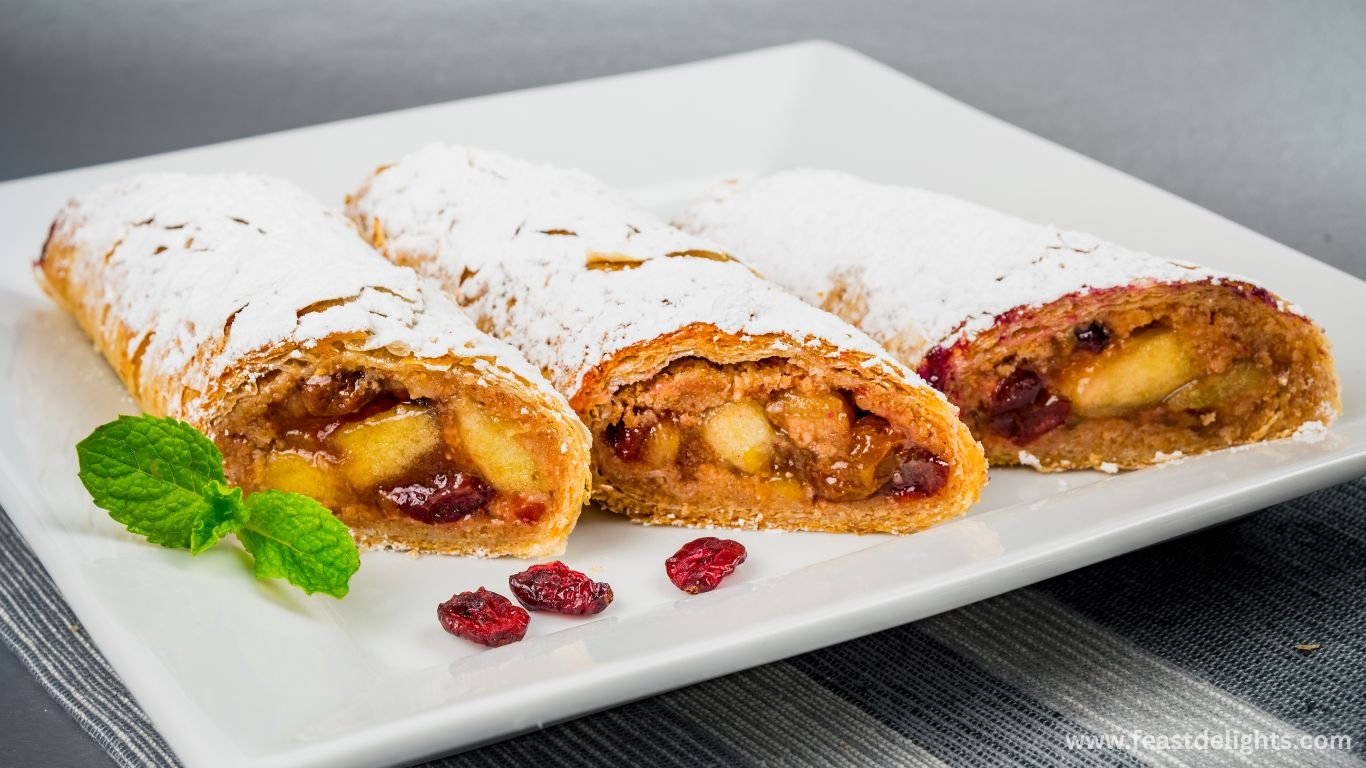
This cinnamon apple and walnut strudel wraps thinly sliced apples, warm spices, walnuts and optional raisins in twelve layers of buttered filo pastry. The crisp, delicate outside contrasts with the softened fruit filling, while a layer of fine breadcrumbs helps absorb excess juice. Using ready-made filo is a practical alternative to stretching traditional strudel dough. The recipe makes ten slices in about 80 minutes, excluding pastry thawing, and is best served warm after a short rest.
Cinnamon apple and walnut filo strudel is a fruit-filled pastry roll with a crisp golden shell and soft, spiced apples. This Central European-inspired shortcut uses twelve ready-made filo sheets instead of hand-stretched strudel dough. It makes ten slices in about 80 minutes, excluding pastry thawing. Compare our homemade apple strudel or puff pastry apple strudel for different pastry techniques.
Choose apples and manage the filling
Use six medium apples that retain some shape during baking. A tart baking apple can balance the sugar, while sweeter varieties give a milder filling. Peel and slice evenly, roughly 3–5 mm thick, so the fruit softens before the pastry becomes too dark. Apple size and juiciness vary; the original recipe specifies fruit count rather than weight, so a precise filling weight needs kitchen confirmation.
Toss the apples with sugar, cinnamon, lemon juice, vanilla sugar, ginger, chopped walnuts and optional raisins. Sugar draws juice from cut fruit, so drain any free liquid in a colander before assembly. Do not squeeze the fruit dry. Fine breadcrumbs absorb some remaining liquid at the base of the roll and help protect the pastry. Use plain crumbs without savoury seasoning.
Recipe card
Cinnamon Apple and Walnut Strudel with Filo Pastry
30 minutes preparation, 30–35 minutes baking and 15 minutes resting; follow the package thawing instructions separately.
Equipment: Knife, cutting board, vegetable peeler, mixing bowl, colander, kitchen scale, pastry brush, parchment, large rimmed baking tray, clean barely damp towel, serrated knife.
Ingredients
Pastry
Apple filling
Pastry
Apple filling
Moisture barrier
Apple filling
Finishing
Instructions
Prepare and drain the apple filling
Preheat a conventional oven to 180°C (350°F). Toss thinly sliced apples with sugar, cinnamon, lemon juice, vanilla sugar, ginger, optional raisins and walnuts. Drain excess free juice.
Butter and stack the filo
Lay filo on parchment. Keep unused sheets covered with a barely damp clean towel. Brush each of the twelve sheets lightly with melted butter as you stack them, reserving a little for the outside.
Arrange the filling
Scatter breadcrumbs along one long side leaving a 3 cm border. Arrange the drained apple mixture over the crumbs and fold the short edges inward.
Roll and seal
Use the parchment to help roll from the filled long edge. Transfer seam-side down onto a lined baking tray and brush with remaining butter.
Bake and rest
Bake for 30–35 minutes, or until the pastry is deeply golden and the apples yield to a skewer. Rest 15 minutes, dust with icing sugar and slice gently.
Layer filo without tearing it
Thaw the pastry according to its package instructions. Cold, brittle sheets can crack when unfolded, while exposed sheets dry quickly. Cover the unused sheets with a clean barely damp towel; avoid soaking the pastry. Lay the first sheet on parchment, brush lightly with melted butter and repeat with all twelve layers. Reserve a little of the measured butter to brush the finished roll. A few small tears in inner sheets are not usually a problem because the next layer covers them.
Spread breadcrumbs along one long side, leaving an approximately 3 cm border. Arrange the drained apple mixture over the crumbs in an even strip. Leave space at both ends, tuck in the short edges and use the parchment to help roll the pastry over the filling. Keep the roll snug but do not compress it so firmly that the apples tear through. Position seam-side down on a lined tray. If your sheets are unusually small, the original single-roll assembly may need to be adjusted in a kitchen test.
Bake, rest and slice
Bake in a preheated conventional oven at 180°C (350°F) for 30–35 minutes as a starting estimate. Look for a deeply golden surface and a crisp underside. A thin skewer should pass through the fruit without meeting hard apple pieces. If the top darkens before the fruit softens, shield it loosely with foil and continue baking. Rest 15 minutes before cutting so steam can escape. Dust with icing sugar just before serving, using a serrated knife and gentle sawing motion.
Variations, serving and leftovers
Omit raisins if preferred or use a few thin pear slices in place of some apples; pears may release additional juice. Serve warm with vanilla ice cream or plain yoghurt. For other apple desserts, try apple turnovers with cinnamon and honey. Assemble shortly before baking for the crispest pastry. Refrigerate leftovers promptly and reheat in the oven rather than relying on a microwave for crispness. This recipe contains wheat, milk and walnuts; check the filo, breadcrumbs and dried fruit labels for other allergens.
Frequently asked questions
Why is my strudel soggy underneath?
Excess apple juice can soften the base. Drain the filling, use the measured breadcrumbs and bake until the underside is crisp.
Can I use puff pastry instead of filo?
It makes a different pastry with thicker layers and different handling. Use a dedicated puff pastry strudel recipe.
Why do filo sheets crack?
They may be insufficiently thawed or exposed to air too long. Follow the package instructions and keep unused sheets covered.
Can I leave out the walnuts?
Yes, the texture will be less crunchy. Check other ingredients for nut cross-contact if relevant.
Can I assemble the roll ahead?
Prepare the filling and thaw the pastry separately; assemble shortly before baking to limit sogginess.
More recipes to try






Spotted a detail that needs correcting? Contact the FeastDelights editors.