Homemade Apple Strudel with Raisins and Walnuts
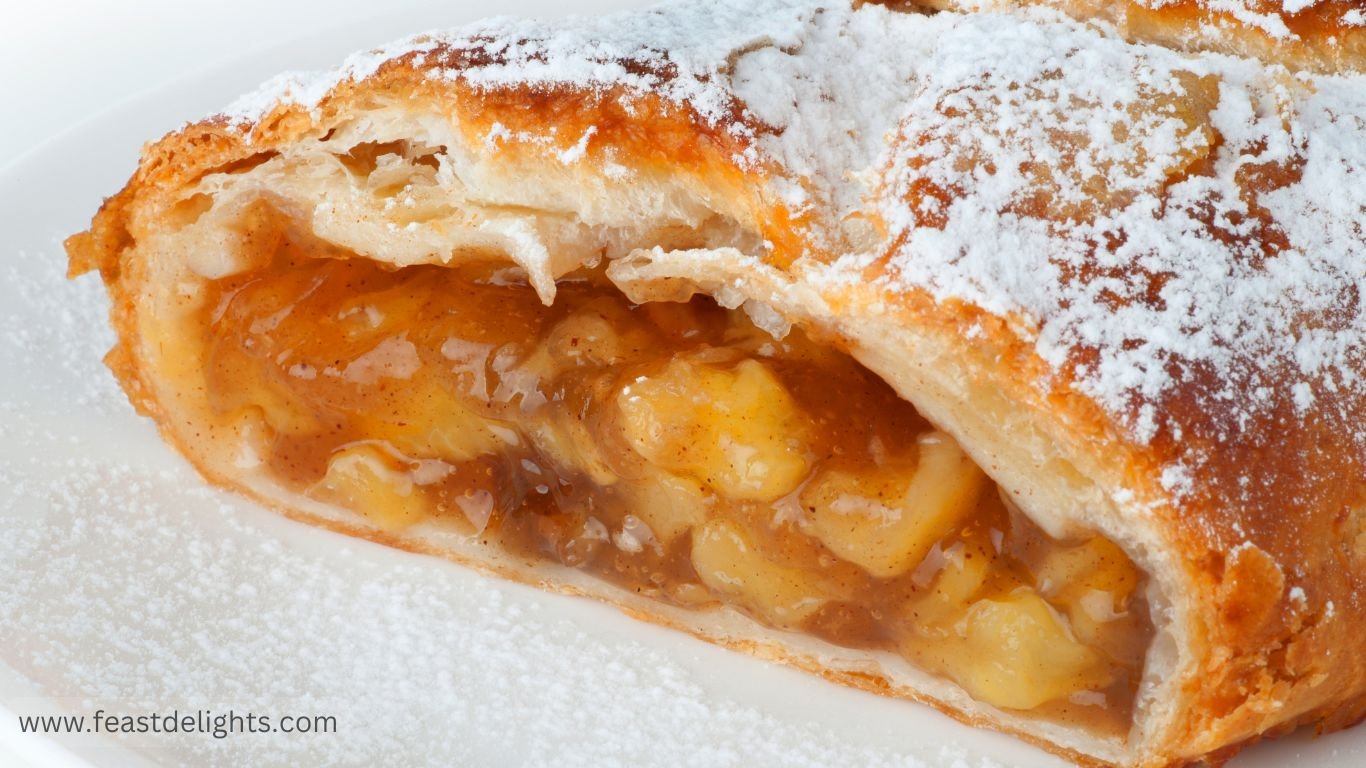
This homemade apple strudel encloses thinly sliced tart apples, raisins and chopped walnuts in a delicate hand-stretched pastry. The filling becomes tender and fragrant with cinnamon while the butter-brushed layers bake into a crisp golden shell. Breadcrumbs absorb some of the fruit juices and help keep the base dry. The recipe makes eight slices from one large roll, with a resting period that helps the dough stretch without tearing. Serve it slightly warm, dusted with icing sugar, or accompany it with vanilla ice cream.
Homemade apple strudel is a rolled pastry with thin, crisp layers surrounding soft cinnamon apples. This Central European-inspired version uses hand-stretched dough, raisins and walnuts rather than a purchased pastry sheet. It yields eight slices and takes about 1 hour 55 minutes, plus 15 minutes of cooling. The technique is more important than a perfect shape: keep the dough supple, the filling reasonably dry and the roll intact.
Choosing the apples and making the pastry
Firm, slightly tart apples balance the sugar and hold their shape during baking. Slice them evenly instead of chopping into large cubes; thin slices fit neatly into the pastry and soften at a similar rate. Raisins absorb some moisture as they cook, while chopped walnuts give contrast to the soft fruit. Dry breadcrumbs form a barrier between the filling and pastry. Use unseasoned crumbs rather than savoury seasoned ones.
The pastry is made from flour, egg, warm water, oil and a little salt. Add the water gradually, because flour absorption and egg size vary. Knead until smooth and elastic; a rough dough is more likely to tear. Keep it covered during its rest. A large cloth, pastry brush and baking tray are more useful here than a specialist pastry machine.
Recipe card
Homemade Apple Strudel with Raisins and Walnuts
Prepare and drain the apples while the dough rests; the 30-minute resting time is included conservatively in the total. Allow an additional 15 minutes after baking before slicing.
Equipment: Kitchen scale, bowl, rolling pin, large clean cotton tea towel, peeler, knife, pastry brush, parchment-lined baking tray, serrated knife
Ingredients
Pastry dough
Apple filling
Assembly and finishing
Instructions
Knead and rest the pastry
Combine flour and salt. Add egg and oil, then gradually add the warm water until a soft dough forms. Knead 8–10 minutes until smooth and elastic. Cover well so the surface does not dry out and rest for 30 minutes at room temperature.
10 minPrepare and drain the apples
While the dough rests, peel and core apples and slice thinly, about 3 mm. Toss with sugar and cinnamon, leave 10 minutes, then drain pooled juice. Stir in chopped walnuts and raisins.
10 minStretch the dough thinly
Lay a large clean cotton cloth on the counter and dust with flour. Roll the dough into a rectangle, then slide lightly floured knuckles underneath and stretch gently from the centre toward the edges until the cloth pattern shows through. Trim thick edges if necessary; avoid pulling with fingernails.
10 minLayer the filling and roll
Brush the pastry gently with most of the melted butter, reserving some for the outside. Scatter dry breadcrumbs over the lower third, leaving a border, then spread the drained filling there. Fold the short ends in and lift the cloth to roll the pastry away from you. Do not squeeze the roll.
10 minBake until crisp and golden
Preheat a conventional oven to 180°C (350°F). Lift the roll onto a lined tray seam-side down, curving it gently if needed. Brush with reserved butter and bake 35–40 minutes, until the surface is evenly golden and dry, and apples are tender when pierced through an end.
40 minRest, slice and serve
Leave on the tray for 15 minutes so the hot filling settles. Dust with optional icing sugar and use a serrated knife to cut eight slices.
15 min
How to stretch and roll strudel dough
Start by rolling a rectangle on a lightly floured cloth. Once the dough is too wide to roll comfortably, slide both hands beneath it and let the weight of the sheet help it stretch. Move slowly from the thicker centre outward. If it resists, stop and give it a few minutes to relax rather than forcing it. Thin pastry should be almost translucent, but a small tear near an edge is not a disaster.
Brush on butter without dragging the brush across the sheet. Position the filling across the lower third and leave enough margin for folding. Raise the cloth to lift the edge over the apples, then continue lifting gently. Fold the ends to contain the filling. The cloth supports the roll without requiring you to grip the delicate pastry.
Doneness and troubleshooting
The pastry should be evenly golden and dry to the touch, not pale at the seams. Check an apple near the end with a skewer; it should offer little resistance. Give a pale strudel a few more minutes, shielding the top if necessary. Let the filling settle before slicing.
- Torn dough: patch small holes with a thin piece from the thicker edge; use more rest for resistant dough.
- Leaking filling: drain liquid before rolling and keep a clean margin around the filling.
- Soggy base: avoid wet crumbs and allow the underside to bake fully. Avoid covering warm pastry tightly.
- Tough pastry: avoid adding large amounts of flour during stretching and do not rush the resting stage.
Variations and serving
Try dried cranberries or a little lemon zest for a brighter flavour. For a faster version, follow the separate apple and walnut filo strudel or puff pastry apple strudel instead. These alternatives have different pastry textures and should not be confused with the stretched dough technique. For another apple dessert with a different crust, see the double-crust cinnamon apple pie.
Serve the strudel warm with icing sugar, vanilla ice cream or custard. Keep wet toppings separate until serving to retain the crisp layers.
Storage, reheating and allergens
Cool before covering and refrigerate within two hours, or one hour above 32°C (90°F), following FDA food storage guidance. Refrigerate for up to three days. Reheat in a 160°C (325°F) oven until hot and crisp; microwaving tends to soften the pastry. Freeze well-wrapped slices for up to a month for best quality. The recipe contains wheat (gluten), egg, milk and walnuts. A dairy-free baking fat may replace butter, but confirm labels and cross-contact; changing walnuts to other nuts does not make the dish nut-free.
Frequently asked questions
What apples work best for strudel?
Choose firm, tart apples such as Granny Smith or a local baking apple that holds its shape. Very soft apples can release more juice and collapse.
Why does my strudel dough tear?
The dough may need more rest, or the surface may have dried. Cover for another 10 minutes and stretch gently with your knuckles. Small holes can be patched with thin dough.
Can I use filo instead of homemade pastry?
Yes, but it produces a different texture. Layer several butter-brushed sheets and use the filling without soaking the pastry.
How do I avoid a soggy base?
Drain the apples, use dry breadcrumbs beneath them and bake until the underside is set. Cool on a rack once the pastry is firm enough to move.
Can I leave out the raisins?
Yes. Omit them or use dried cranberries. Do not replace them with extra juicy fresh fruit without adjusting moisture.
Can I prepare the filling ahead?
Chop the nuts and measure dry ingredients in advance. Slice and sugar the apples shortly before assembly so they do not sit in released juices.
More recipes to try

Cream Cheese Chocolate Truffles Rolled in Cocoa

Cream Cheese Cheesecake Danish with Lemon and Vanilla

Fresh Fruit Salad with Orange Honey Dressing

Ptichye Moloko Bird’s Milk Mousse with Chocolate Glaze
Bird’s Milk Jello with Creamy Mousse and Raspberry Jelly

Cream Horn Trubochki with Vanilla Cream Filling
Spotted a detail that needs correcting? Contact the FeastDelights editors.