Crisp Chebureki with Vodka Dough and Meat Filling
These chebureki pair a thin, crisp hot-water dough containing egg and vodka with a juicy minced beef or pork filling. Rest the dough before rolling, spread the meat thinly and seal each half-moon firmly so juices do not escape during frying. Cook in small batches at about 175°C, checking that the filling reaches 71°C. The recipe makes ten turnovers in about 105 minutes, including resting. Serve them warm with a fresh salad, and note that frying does not guarantee complete removal of alcohol.
These chebureki with vodka dough are thin, golden fried turnovers filled with minced beef or pork, grated onion and a little cold water or broth. Inspired by Crimean Tatar chebureki and their many regional adaptations, this version uses a hot-water dough with egg and vodka. It makes ten half-moon pastries with a crisp, blistered crust and juicy filling. Allow about 105 minutes including a 30-minute rest and batch frying.
Recipe card
Crisp Chebureki with Vodka Dough and Meat Filling
Includes 30 minutes resting and roughly 35 minutes heating oil and frying in batches. Actual cooking time depends on pan capacity and meat temperature.
Equipment: Digital scale, heatproof mixing bowl, spoon, rolling pin, fork, deep heavy frying pan, frying thermometer, food thermometer, tongs or slotted spoon, wire rack
Ingredients
Vodka dough
Meat filling
Frying
Instructions
Mix hot-water dough and rest
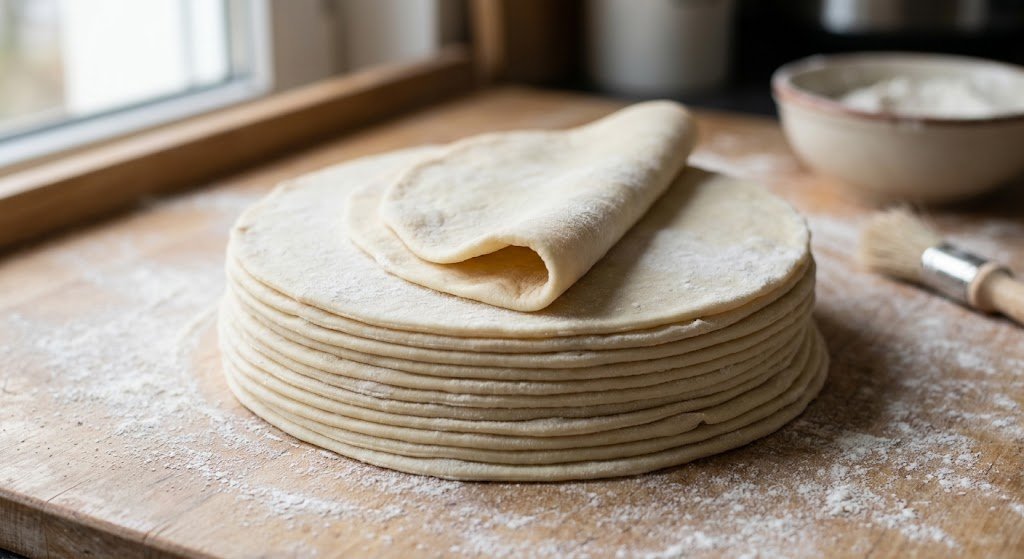
Mix flour and salt in a heatproof bowl. Stir in boiling water and oil with a spoon. Cool until comfortably warm, add egg and vodka, knead until smooth, cover and rest 30 minutes.
Prepare the meat filling
Mix ground beef or pork with grated onion, cold water or broth and pepper. Keep covered and refrigerated until shaping.
Roll, fill and seal
Divide dough into 10 portions. Roll into thin rounds. Spread an equal thin layer of filling over one half, leaving a border. Fold, press out air and seal firmly.
Fry and check temperature
Heat frying oil to about 175°C (350°F) in a deep pan no more than half full. Fry in small batches for about 4–5 minutes total, turning once, until golden. Lift out and verify filling reaches 71°C (160°F); cook longer if needed. Drain on a rack.
Ingredients for the hot-water dough
Use 500 g (17.6 oz) plain or all-purpose flour, 250 ml (about 1 US cup plus 2 teaspoons) boiling water, 50 ml (about 3 tablespoons plus 1 teaspoon) vodka, one large egg, a teaspoon of salt and two tablespoons of neutral oil. Adding boiling water to flour partially gelatinises its starch, producing a dough that can be rolled thinly. The vodka contributes liquid and may help limit gluten development compared with an equivalent amount of water, but crispness also depends on thickness, sealing and frying temperature. Alcohol is not guaranteed to disappear completely during cooking. If avoiding alcohol, choose the separate alcohol-free water-dough recipe linked below rather than assuming the fried pastry contains none.
Prepare a juicy filling without leaks
Use 400 g (14 oz) ground beef or pork, one medium finely grated onion, 75 ml (5 tablespoons) cold water or broth and half a teaspoon of black pepper. The added liquid helps keep the filling juicy, while grated onion distributes moisture and flavour evenly. Stir it in gradually, keeping the filling cohesive rather than soupy. If using broth, taste its seasoning before mixing with the raw meat; never taste uncooked filling. Keep the meat refrigerated while preparing the dough.
Mix, rest and shape the pastries
Place flour and salt in a heatproof bowl. Pour in the boiling water and oil and stir with a sturdy spoon, taking care to avoid steam and hot splashes. Allow the mixture to cool until comfortably warm before adding the egg and vodka. Keep vodka away from flames and hot oil. Knead until smooth, cover and rest for 30 minutes. Divide the dough into ten equal pieces and keep unused pieces covered.
Roll each piece into a thin round, approximately 18–20 cm (7–8 inches) across if the dough allows. Divide the filling equally among the ten rounds, spreading it thinly on one half and leaving a clean border. Fold over the dough, gently press out trapped air and seal the edge firmly with your fingers or a fork. Avoid puncturing the pastry. Wipe away any filling from the rim before sealing; meat juices can prevent the edges adhering.
Fry in small batches
Use the listed 750 ml oil as a frying medium, not as an amount consumed by the finished dish. Choose a deep, heavy pan large enough that the oil fills no more than half its capacity. Heat to about 175°C (350°F), checking with a frying thermometer. Lower one or two turnovers carefully into the oil without crowding. Fry for about four to five minutes total, turning once, until golden and the filling reaches 71°C (160°F), the safe minimum for ground beef or pork according to FoodSafety.gov. Check the thickest part of the filling with a clean thermometer after lifting a turnover onto a plate. If the temperature is low, continue cooking carefully. Do not pierce turnovers while submerged in hot oil.
Drain on a wire rack and let the oil recover its temperature before adding the next batch. Never leave frying oil unattended or add water to it. Keep a suitable lid nearby in case of an oil fire. The crust should feel crisp and the meat should be fully cooked, not simply brown on the outside.
Troubleshooting and substitutions
Pastries burst: Use a thinner layer of filling, remove trapped air and keep the sealing edge clean. Greasy crust: Avoid overcrowding and monitor the oil temperature. Crust browns too quickly: Reduce heat slightly and verify the filling temperature. Dough tears: Allow it to rest and avoid forcing it too thin. The recipe contains wheat, egg and alcohol; broth may contain additional allergens. For an alcohol-free alternative, see beef chebureki with boiling-water dough.
Serving and storage
Serve hot with fresh cucumber and dill salad. For another regional approach, see Crimean Tatar-style chebureki with water dough. Prepare the dough and filling shortly before frying; if preparing components ahead, cover and refrigerate separately. Refrigerate cooked turnovers in shallow covered containers within 2 hours (1 hour above 32°C/90°F), at 4°C (40°F) or below, and use within 3 days. Freeze cooked portions for up to 2 months for quality. Thaw in the refrigerator and reheat in an oven to 74°C (165°F). Follow FoodSafety.gov handling advice. Reheating in an oven restores crispness better than a microwave.
Frequently asked questions
Why add vodka to chebureki dough?
It may help limit gluten development compared with an equal amount of water. Thin rolling and correct frying temperature also matter.
Does all the alcohol cook off?
No. Frying does not guarantee complete removal of alcohol. Use an alcohol-free dough recipe if necessary.
How do I stop the turnovers bursting?
Keep the edges clean, avoid overfilling, press out air and seal firmly.
Can I use pork instead of beef?
Yes. Both are listed alternatives; cook either ground meat to 71°C (160°F).
Can I freeze cooked chebureki?
Yes. Cool promptly, freeze portions and reheat after refrigerator thawing.
More recipes to try





Spotted a detail that needs correcting? Contact the FeastDelights editors.