Milk Powder Gulab Jamun with Cardamom Syrup
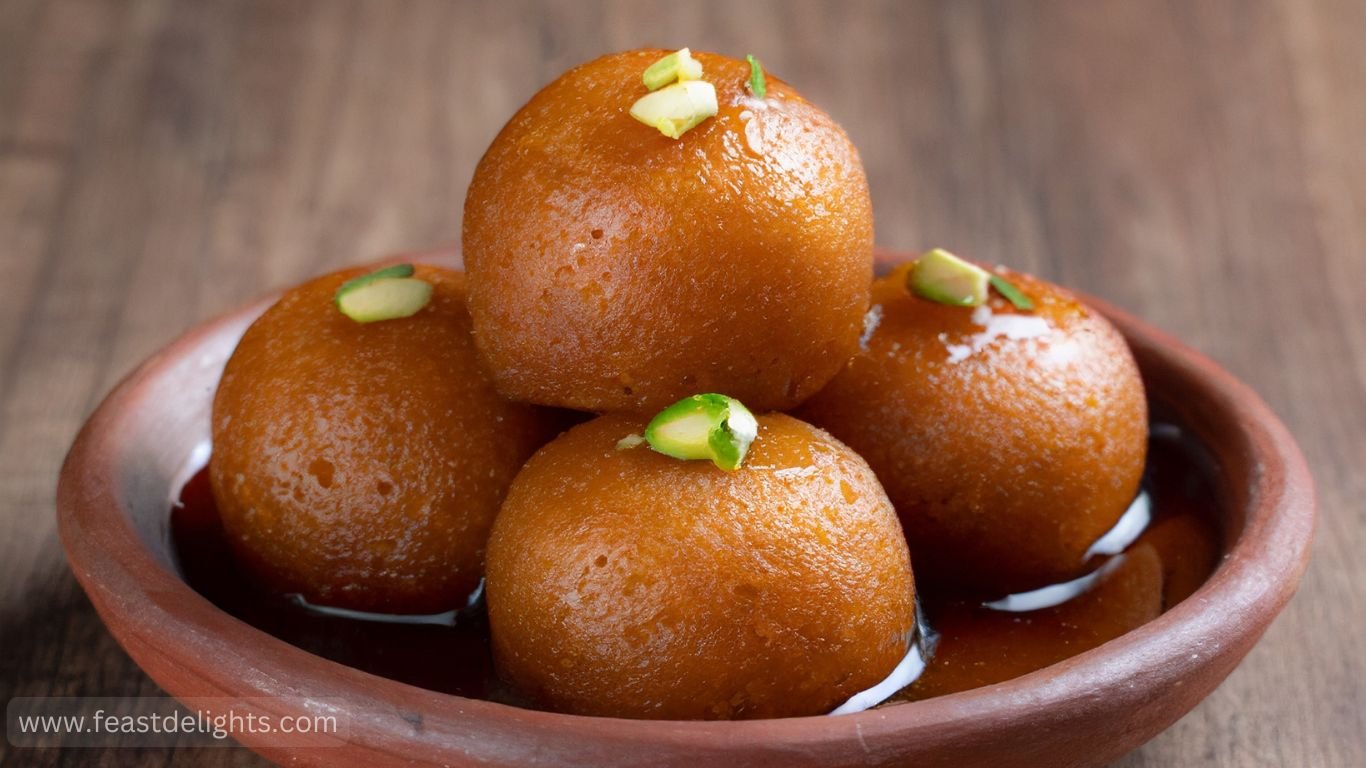
Gulab jamun are tender South Asian milk-based sweets fried until deep golden and soaked in fragrant sugar syrup. This version uses milk powder, a little plain flour and fine semolina instead of traditional khoya, making the ingredients easier to find. Green cardamom scents the syrup, with rose water as an optional finishing touch. The recipe makes 18 jamun. Fry the small balls gently so their centres cook before the surfaces darken, then allow at least an hour for them to absorb the warm syrup.
Milk powder gulab jamun are a home-style alternative to sweets made from khoya, the concentrated milk solids used in many traditional versions. The dough should be soft but shapeable, and the syrup should remain thin enough to penetrate the fried balls. Make 18 jamun in about 2 hours 10 minutes, including the soaking time. This version retains the existing proportions of milk powder, flour, semolina and milk.
Choosing the milk powder and syrup ingredients
Traditional gulab jamun are often made with khoya, but full-fat unsweetened milk powder provides a practical alternative. Plain flour and a small amount of fine semolina give structure. Milk hydrates the mixture; add it gradually because different brands of milk powder absorb different amounts. Baking soda helps the balls expand, but too much can leave an unpleasant flavour or fragile texture. Melted butter should cool before mixing.
For the syrup, use the measured sugar and water with lightly crushed green cardamom pods. The syrup needs to be fluid enough to soak into the fried dough. Optional rose water gives a floral note; add it off the heat. The milk-powder approach and gentle frying are also described in Swasthi’s milk powder gulab jamun guide, although its quantities differ from this recipe.
Recipe card
Milk Powder Gulab Jamun with Cardamom Syrup
35 minutes preparation includes the 10-minute dough rest; about 35 minutes cooking covers syrup, oil heating and batch frying. Soak at least 60 minutes; larger batches may need more time.
Equipment: Kitchen scale, mixing bowl, measuring spoons, saucepan for syrup, deep heavy frying pot with lid, frying thermometer, long-handled slotted spoon, draining rack or paper towels, shallow soaking dish
Ingredients
Milk powder dough
Cardamom syrup
Frying
Instructions
Prepare the cardamom syrup
Combine sugar, water and crushed cardamom in a saucepan. Heat gently until sugar dissolves, then simmer about 5 minutes. The syrup should be clear and lightly syrupy, not thick caramel. Remove from heat, add optional rose water and keep warm, not boiling.
Mix and rest the milk powder dough
Whisk milk powder, flour, fine semolina and baking soda in a bowl. Stir in cooled melted butter. Add milk a little at a time until a soft, slightly tacky dough forms. Rest for 10 minutes so the semolina absorbs moisture. Do not knead vigorously or taste raw dough.
Shape smooth small balls
Divide dough into 18 approximately equal portions. Lightly grease your hands and roll gently into smooth balls without cracks. If dough crumbles, work in a few drops of the measured milk; if very soft, allow a little more resting time before shaping. Avoid adding large amounts of extra flour.
Heat the frying oil safely
Use a stable deep heavy pot, filled no more than one-third with neutral oil or ghee and with ample headroom. Heat to about 150°C (300°F) with a frying thermometer. Keep a lid nearby and remain at the stove. Turn off the heat if the oil smokes.
Fry slowly until cooked through
Lower a few balls gently into the oil with a long-handled spoon. Fry in small batches at around 150°C, turning gently for about 6–8 minutes until evenly deep golden. Test the first ball after draining: its centre should be cooked and tender, not raw or pasty. Adjust heat and timing before frying the rest. Drain briefly and allow oil to return to temperature between batches.
Soak in warm syrup and serve
Place warm, drained balls in warm, non-boiling syrup. Use a shallow dish so the syrup can contact the balls evenly, turning gently if needed. Soak for at least 1 hour, until tender and noticeably plumper. Serve promptly or refrigerate within the safe cooling period.
How to shape soft gulab jamun
Mix the dry ingredients first so the leavening distributes evenly. Stir in butter and milk without vigorous kneading. Rest the mixture for ten minutes before judging consistency. Semolina absorbs some moisture during that time. The dough should hold a smooth ball without dry cracks. Divide into equal small pieces, since larger balls take longer to cook at the centre. If the mixture remains crumbly, add a few drops of milk rather than forcing it together. The original formula requires a kitchen test to confirm the exact hydration and yield.
Frying at the right temperature
Milk solids and sugar brown readily, so high heat can darken the outside while leaving a raw centre. Heat the oil to about 150°C (300°F) and monitor it throughout frying. Test a single ball first, letting it cool enough to cut open. Its centre should be cooked and tender, without raw paste. Fry in batches and avoid crowding the pot. Turn the balls gently so all sides colour evenly.
Never overfill a frying pot or leave it unattended. Keep water away from hot oil and have a lid nearby. If a small pan fire occurs and it is safe to do so, slide the lid over the pan and turn off the heat. Never put water on burning oil. If the fire cannot be controlled safely, evacuate and contact emergency services. See the US Fire Administration cooking safety guidance.
Getting the syrup consistency right
Simmer the syrup only briefly. A thick syrup does not penetrate the fried sweets as readily as a lighter one. Keep it warm rather than boiling when adding the drained balls. Turn them gently so all surfaces contact the liquid. If syrup has become too thick, warm it with a little water. Allow at least an hour for absorption; the jamun should soften and become plumper, not disintegrate. Do not leave the dairy-based sweets at room temperature for prolonged soaking.
Troubleshooting
Cracks: check dough moisture and smooth shaping. Dark outside and raw middle: reduce oil heat and fry smaller balls more slowly. Hard centres: avoid excess flour and overworking the dough; check that syrup is sufficiently fluid. Broken jamun: handle gently and avoid boiling them in syrup. If the first batch is unsuccessful, adjust the technique before frying the remaining dough.
Serving and variations
Serve with a little syrup and optional chopped pistachios. For a South Asian dessert selection, pair with pistachio kulfi with cardamom and saffron. Other fragrant sweets include rosewater Turkish delight and pistachio baklava with cardamom syrup. These are distinct desserts, not substitutes for gulab jamun.
Make ahead, storage and allergens
Refrigerate jamun in their syrup in shallow covered containers at 4°C (40°F) or below within 2 hours of cooking (1 hour above 32°C/90°F), for up to 3 days. Serve chilled or reheat a portion gently in syrup to 74°C (165°F), then cool to a comfortable eating temperature. Freezing is not recommended for best texture. Contains milk and wheat (gluten); pistachio garnish adds tree nuts. Check milk powder, flavouring and frying fat labels for additional allergens. Use clean utensils to serve the syrup and chill leftovers promptly.
Serve once the syrup has softened the jamun throughout.
Frequently asked questions
Can I use skimmed milk powder?
Full-fat unsweetened milk powder is preferable for this formula. Skimmed powder can produce a drier, firmer texture and needs separate testing.
Why do gulab jamun crack?
A dry dough, uneven shaping or overly hot oil may cause cracking. Add milk gradually, roll smooth balls and fry at controlled low heat.
Why are the centres raw?
The oil may be too hot or the balls too large. Keep portions small, use a thermometer and check the first cooked ball before continuing.
Why are my jamun hard after soaking?
Overworked dough, excessive flour or overly concentrated syrup can prevent absorption. Mix gently and use warm, light syrup.
Is rose water essential?
No. Cardamom alone gives the syrup fragrance. Use only food-grade rose water and add it after removing the syrup from heat.
Can I make gulab jamun ahead?
Yes. Soak, cool and refrigerate promptly in syrup. Reheat individual portions gently if desired, rather than repeatedly warming the whole batch.
More recipes to try


Spotted a detail that needs correcting? Contact the FeastDelights editors.