Vanilla Milk Custard with Egg Yolks and Cornstarch
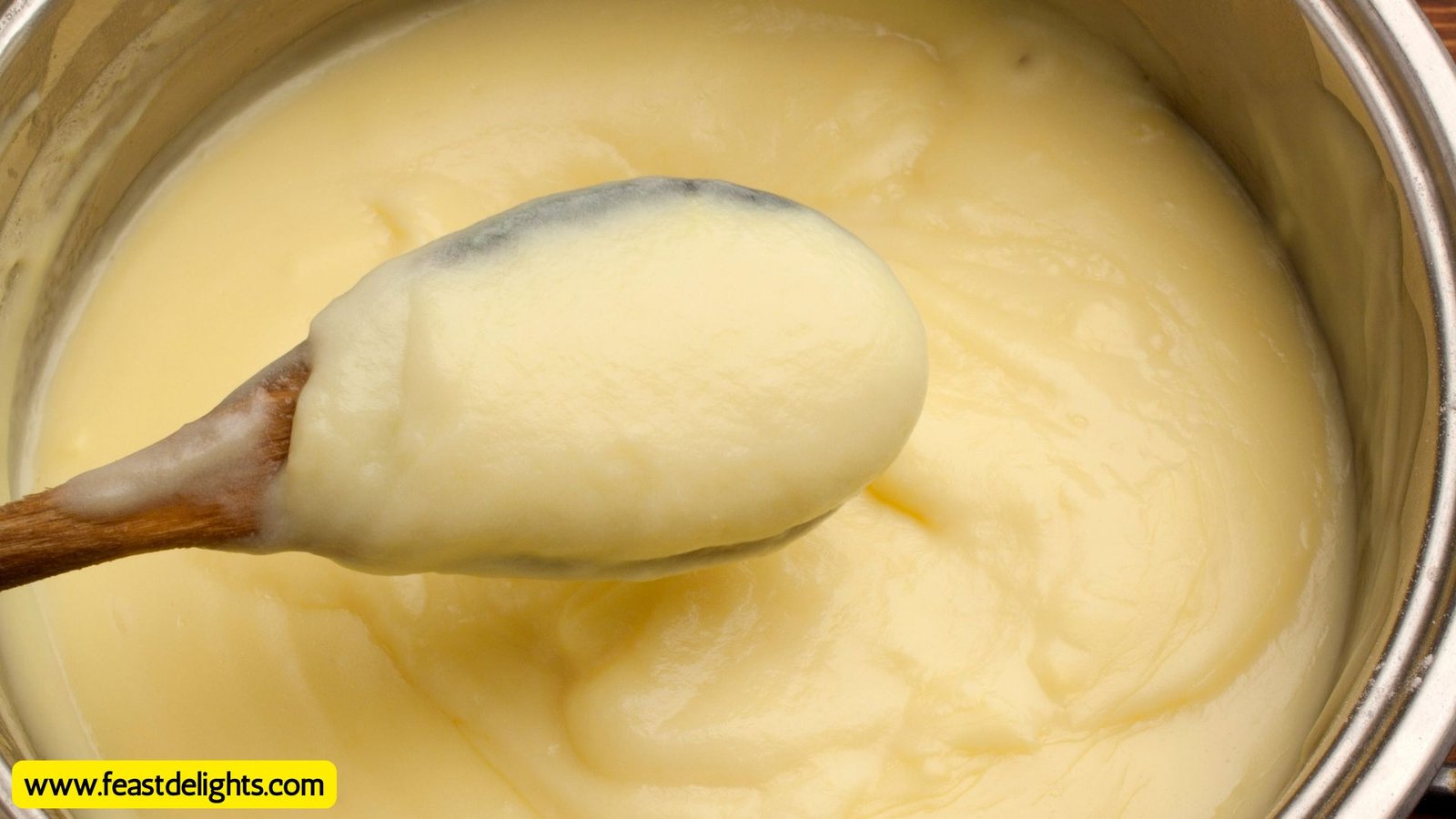
This vanilla milk custard is a smooth, thick pastry-style cream made with whole milk, three egg yolks, cornstarch, sugar and butter. The starch helps it hold its shape once chilled, making it useful for filling cakes, pastries and dessert cups rather than pouring like a thin custard sauce. Temper the yolks gradually with hot milk, then whisk over moderate heat until the mixture bubbles and thickens. Finish with vanilla and butter for a glossy texture. The recipe yields approximately 600 ml, depending on evaporation.
Vanilla milk custard with cornstarch is a thick, spoonable pastry cream rather than a thin sauce. This recipe uses 500 ml whole milk, three yolks, 40 g cornstarch and 50 g butter to produce approximately 600 ml of custard. It takes about 20 minutes of preparation and cooking, followed by approximately two hours of chilling. The finished custard should be smooth, glossy and firm enough to spread between cake layers or pipe into pastries after cooling.
This formula uses less sugar and one fewer egg yolk than our classic vanilla pastry cream. Both recipes use cornstarch and a similar cooking method; this version retains the original less-sweet formula.
Ingredients and equipment
Whole milk provides richness and the liquid needed to hydrate the starch. Reserve 100 ml cold milk to disperse the cornstarch before heating. Granulated sugar sweetens the mixture and helps the yolks combine smoothly. Cornstarch is the main thickener; weigh the 40 g instead of estimating with a heaped spoon. In some countries it is sold as cornflour, meaning the fine white starch rather than ground maize meal.
Egg yolks give colour, richness and body. Separate the eggs carefully and refrigerate unused whites for another recipe. Vanilla extract provides aroma, and unsalted butter gives a smoother, richer finish. Prepare a heavy saucepan, heatproof bowl, whisk, flexible spatula, fine sieve and shallow container for cooling. Have an ice bath ready before cooking so the hot custard does not sit out for a prolonged period.
Recipe card
Vanilla Milk Custard with Egg Yolks and Cornstarch
Cook until bubbling, then whisk 1 minute more. Allow approximately 2 hours chilling or longer if needed; cool promptly before refrigeration.
Equipment: Heavy saucepan, heatproof mixing bowl, whisk, spatula, fine sieve, shallow container and ice bath.
Ingredients
Custard
Finish
Instructions
Mix the cold starch and yolks
Whisk sugar and cornstarch together in a heatproof bowl. Add 100 ml of the cold milk and the three egg yolks; whisk until smooth with no starch lumps.
Warm the remaining milk
Heat the remaining 400 ml milk with vanilla in a heavy saucepan over medium heat until steaming and small bubbles appear around the edge. Avoid scorching or boiling it over.
Temper the yolks gradually
Slowly pour about half the hot milk into the yolk mixture in a thin stream while whisking continuously. Return the tempered mixture to the saucepan with the rest of the milk.
Cook until thick and bubbling
Cook over medium-low to medium heat, whisking continuously across the bottom and corners. Once the custard thickens and bubbles visibly throughout, continue whisking for 1 minute. It should be glossy and thick enough to leave trails from the whisk. Do not stop at the first sign of thickening.
Finish, cool and refrigerate
Remove from heat and whisk in the cubed butter. If necessary, strain through a fine sieve. Transfer to a shallow heat-safe container, cool promptly over an ice bath while stirring, then press food-safe wrap against the surface and refrigerate. Chill until fully cold and set, about 2 hours or longer depending on depth. Whisk briefly before using.
Tempering the yolks without scrambling them
Disperse the cornstarch and sugar in cold milk before whisking in yolks. Gradually adding hot milk raises the temperature of the egg mixture more evenly than pouring it all in at once. Whisk continuously and return the mixture to the pan only after the yolks have warmed. Scrape the corners of the saucepan as it cooks because custard can thicken unevenly where a whisk does not reach.
When is cornstarch custard ready?
The mixture thickens noticeably as it heats. Do not remove it as soon as whisk marks appear: continue until bubbles break through the thickened custard, then whisk for the specified additional minute. Cornstarch changes the cooking method compared with a starch-free egg custard. The mixture should look smooth and glossy rather than grainy, and the whisk should leave visible trails. Stir in butter off the heat and strain if needed. Chilling firms the texture further, so avoid adding extra starch just because the hot custard seems softer than the final filling.
Common custard problems
Lumps: Start with a smooth cold slurry, temper gradually and whisk consistently. Pass warm custard through a fine sieve if small lumps remain.
Scorched flavour: Use a heavy saucepan and moderate heat. Scrape the bottom continuously; do not scrape burned residue into otherwise smooth custard.
Thin texture: Check that the full amount of cornstarch was used and that the mixture bubbled and cooked for the additional minute. Cool completely before assessing thickness.
Skin on the surface: After rapid initial cooling, press food-safe wrap directly against the custard and refrigerate. Whisk gently before filling pastries.
Serving, substitutions and variations
Use cold custard to fill our homemade choux éclairs or a layered cake. The mille-feuille recipe illustrates a crisp pastry and cream combination; fill close to serving to reduce softening. Spoon chilled custard into dessert cups and top with fruit, or use it between sponge layers such as our Ukrainian sponge plyatsky. A little finely grated citrus zest can be infused into the milk for a different aroma. Dairy-free milk substitutes have different protein and fat contents, and may alter setting; the original formula contains milk and eggs.
Cooling, refrigeration and food safety
Transfer to a shallow clean container and cool rapidly over an ice bath, stirring to release heat. Refrigerate promptly within two hours, or one hour in very hot conditions above 32°C (90°F), at 4°C (40°F) or colder. Use within three days, consistent with conservative cooked-food storage guidance from FoodSafety.gov. Keep finished pastries cold and do not leave them at room temperature for long periods. Freezing may cause the custard to separate. The recipe contains milk and egg; check cornstarch and other packaged ingredients for cross-contact. The original proportions are unchanged; the chilling allowance has been increased to reflect the intended cold filling.
Frequently asked questions
Is this custard suitable for cake filling?
Yes. The 40 g cornstarch per 500 ml milk creates a thick custard that sets as it cools. It is not a thin pouring sauce.
Why did my custard become lumpy?
Starch may not have been dispersed in cold milk, or the yolks may have heated unevenly. Whisk continuously and strain while warm if needed.
Why is the custard still runny?
The mixture needs to bubble throughout and cook for the additional minute. Chill completely before judging its final thickness.
How do I prevent a skin?
Press food-safe wrap directly onto the surface after rapid initial cooling, then refrigerate.
Can I make it less sweet?
This formula already uses 100 g sugar, less than our richer classic pastry cream. Further changes may affect texture; adjust only in small amounts.
Can I use flour instead of cornstarch?
Not as a direct weight-for-weight substitute. Flour thickens differently and needs different cooking guidance; use a formula designed for flour.
Can I freeze this custard?
Freezing is not recommended. Starch-thickened custard can become watery or grainy when thawed.
What can I do if it becomes very firm after chilling?
Whisk gently to smooth it. If serving in dessert cups, a small amount of cold milk may loosen it, but added milk can reduce the stability of a pastry filling.
More recipes to try






Spotted a detail that needs correcting? Contact the FeastDelights editors.