Mille-Feuille with Vanilla Pastry Cream
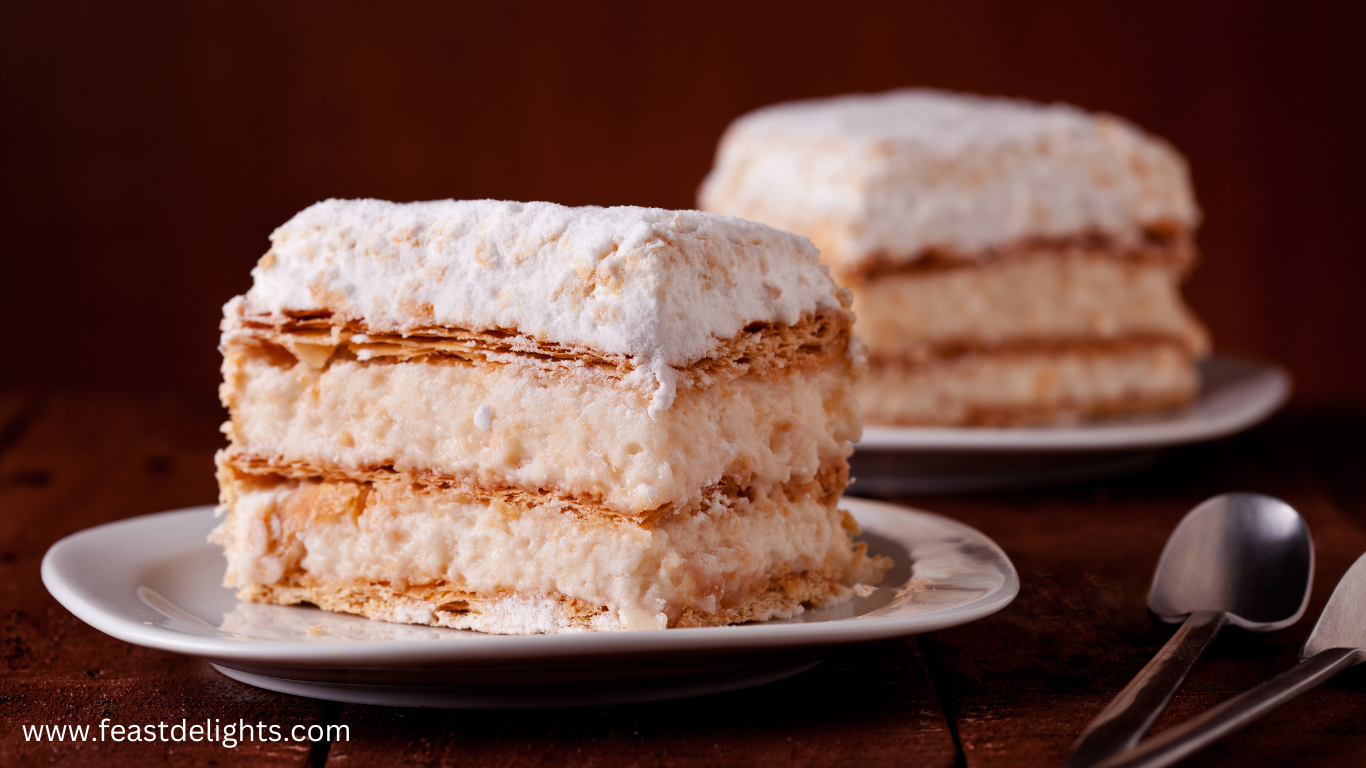
Mille-feuille combines three crisp sheets of puff pastry with two layers of smooth vanilla pastry cream. This French-inspired version uses ready-made all-butter pastry and a cooked egg-yolk custard thickened with cornstarch. Fresh strawberries and a dusting of icing sugar finish the dessert. The contrast between brittle pastry and cool, soft cream is best shortly after assembly. Make eight portions, allowing the custard to chill thoroughly and the baked pastry to cool before stacking.
The secret to clean mille-feuille layers is controlling the rise of puff pastry and cooling the custard completely before assembly. Bake the pastry between trays to make flat, crisp rectangles rather than tall puffs. Make eight portions with 500 g puff pastry and a custard based on 500 ml milk. Allow about four hours including chilling, which is essential before stacking.
Choosing the pastry and cream ingredients
All-butter puff pastry gives a rich flavour and distinct flaky layers. Thaw frozen pastry according to its instructions in the refrigerator. Keep it cold enough to handle without smearing the butter. The pastry cream is a cooked custard, not uncooked eggs mixed into butter. Egg yolks contribute richness, while cornstarch (cornflour) thickens the milk. Weigh the starch rather than guessing by volume. Butter and vanilla are added after cooking for a smooth finish.
Recipe card
Mille-Feuille with Vanilla Pastry Cream
30 minutes prep, about 35 minutes cooking including custard and pastry, 3 hours chilling/cooling; components can cool concurrently.
Equipment: Saucepan, whisk, bowl, sieve, shallow container, rolling pin, parchment, two flat baking trays, wire rack, serrated knife, thermometer
Ingredients
Pastry
Vanilla pastry cream
To finish
Instructions
Cook the vanilla pastry cream
Heat milk until steaming. Whisk yolks, sugar and cornstarch until smooth. Gradually whisk in hot milk, then return to the pan. Cook over medium heat, whisking constantly, until thick and bubbling; continue for about 1 minute and ensure the custard reaches at least 71°C (160°F).
Cool the custard promptly
Remove from heat and whisk in butter and vanilla. Strain if lumpy. Spread in a shallow clean container, cover the surface with suitable food-safe wrap, cool briefly over an ice bath if needed and refrigerate promptly until completely cold, about 3 hours.
Bake three flat pastry layers
Preheat conventional oven to 200°C (400°F). Roll thawed pastry if needed to roughly 3 mm thickness and cut three equal rectangles. Place on parchment-lined trays, prick with a fork and cover with parchment and a second flat oven-safe tray. Bake 20–25 minutes, removing the upper tray towards the end if needed for browning. Bake until golden and crisp throughout; cool on a rack.
Assemble the chilled layers
Whisk cold custard briefly until smooth. Spread half over one cooled pastry sheet, place second sheet on top and spread remaining cream. Add third sheet and dry sliced fruit. Avoid pressing hard enough to force cream out.
Dust and cut into portions
Dust with icing sugar and cut eight portions using a sharp serrated knife with a gentle sawing action. Alternatively pre-cut the top sheet into eight pieces before assembly. Serve chilled promptly.
How to cook custard and bake flat pastry
Temper the yolks by whisking in warm milk gradually. Return the mixture to the saucepan and whisk along the base and corners as it heats. Once bubbling, cook for about a minute to fully thicken the starch. Check a safe egg-dish temperature of at least 71°C (160°F) using FoodSafety.gov guidance. Spread the cooked cream in a shallow container to cool rapidly and refrigerate. A skin can form if the surface is exposed, so cover it directly with heat-suitable food wrap.
Cut three equally sized pastry rectangles. Prick the dough and use parchment and a second baking tray to restrict the rise. The pastry must be crisp and golden, not pale or damp inside. Cool it on a wire rack so steam escapes. If the sheets have uneven edges, trim carefully with a serrated knife after cooling.
Troubleshooting and clean assembly
If pastry cream looks loose, allow it to chill fully before deciding whether it has failed. If lumps appear during cooking, strain while warm. If the pastry is pale when the upper tray is lifted, continue baking uncovered briefly. Do not spread warm custard onto pastry. For cleaner portions, pipe or spread a uniform layer of cream, avoid pressing the sheets together forcefully and pre-cut the top sheet if desired.
Serving and variations
Dry washed berries thoroughly before placing them on the pastry. Raspberries give a sharper contrast to sweet custard. For a separate custard method see our vanilla pastry cream. Other pastry desserts include choux puffs with vanilla cream and French palmiers.
Make ahead, storage and allergens
Refrigerate custard promptly in a shallow covered container at 4°C (40°F) or below within 2 hours (1 hour above 32°C/90°F), for up to 2 days. Refrigerate assembled dessert for up to 1 day for best texture. Keep unfilled baked pastry airtight at room temperature for up to 1 day. Do not freeze assembled mille-feuille. Contains milk, egg and wheat (gluten). Check packaged pastry for additional allergens. Keep cream-filled portions chilled until serving.
The pastry is crispest when the layers are assembled just before eating.
Frequently asked questions
Why bake puff pastry between trays?
A second tray limits expansion so the layers remain flat enough to stack. Remove the upper tray near the end if necessary to brown the pastry.
Why is my custard lumpy?
Heat may have been uneven or the eggs heated too quickly. Temper gradually, whisk continuously and strain the hot custard.
Can I use ready-made pastry?
Yes. This recipe is designed for all-butter puff pastry, thawed according to its package.
Why is the pastry soggy?
Moisture transfers from custard and fruit. Cool the pastry fully, dry fruit and assemble shortly before serving.
Can I prepare the components ahead?
Yes. Refrigerate the cooked custard and keep cooled unfilled pastry airtight separately. Assemble on serving day.
How do I cut it without crushing it?
Use a serrated knife and light sawing strokes, or pre-cut the top sheet before stacking.
More recipes to try






Spotted a detail that needs correcting? Contact the FeastDelights editors.