Cauldron Beef Plov with Cumin, Barberries and Garlic
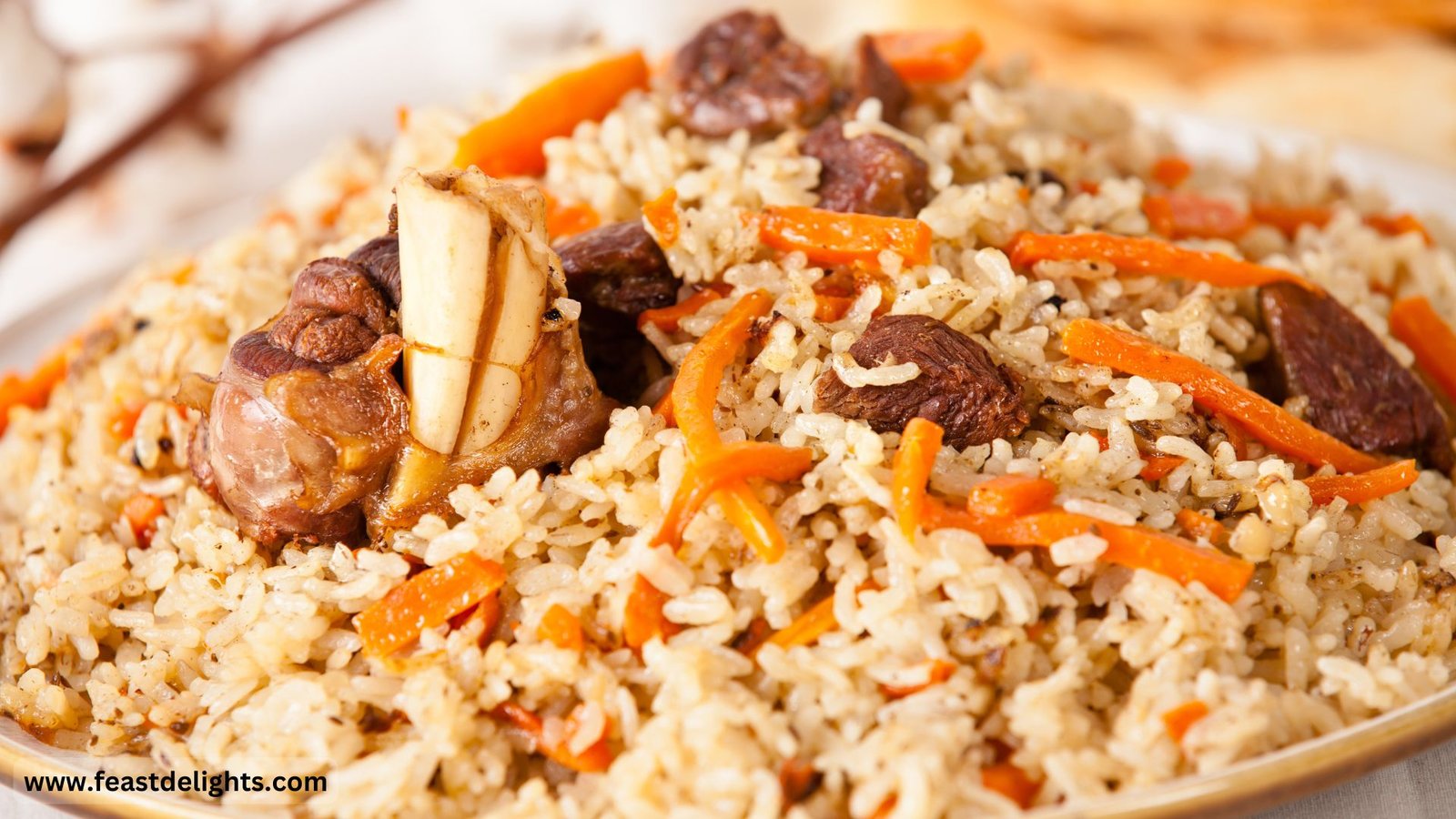
Cauldron beef plov layers long-grain rice over browned beef, carrots, onions, cumin and dried barberries. Whole garlic heads scent the pot as the rice absorbs the cooking liquid. This version serves ten and takes about 2 hours 30 minutes, depending on the meat and rice variety. Use a large heavy cauldron or Dutch oven with a close-fitting lid. Add the rice in an even layer without stirring, then cover and steam until the grains are tender. Rest before gently combining the layers.
Plov is a rice and meat dish with many Central Asian versions. This beef version uses a heavy cauldron or similar pot. The meat and vegetables form a savoury base and the rice cooks above them before the layers are gently combined at the end.
Choosing the rice and meat
Use a long-grain rice that holds its shape. Rinse and drain thoroughly so residual water does not alter the liquid ratio. Beef chuck suits simmering because connective tissue softens over time. Do not add rice while the beef is still very tough. A wider pot evaporates more liquid than a narrow one.
Recipe card
Cauldron Beef Plov with Cumin, Barberries and Garlic
Estimated times; follow the stated texture and doneness cues. Allow extra time for separate batches, a tougher meat cut or slower proofing.
Equipment: 6–8 L heavy cauldron or Dutch oven with lid, scale, knife, cutting board, sieve, spatula
Ingredients
Main ingredients
Instructions
Prepare and brown beef
Rinse 700 g rice until the water is mostly clear and drain. Heat 150 ml oil in a large heavy pot over medium-high heat. Brown 1 kg beef in batches, then return it to the pot.
Cook the vegetables
Add 300 g sliced onions and 400 g carrot matchsticks. Cook about 10 minutes, stirring until the onions soften.
Simmer the base
Add 2 tsp cumin, 1 tbsp dried barberries and 2 tsp salt with 600 ml hot water. Cover and simmer 35–45 minutes or until the beef is becoming tender; allow longer if still tough.
Layer rice and garlic
Spread drained rice over the beef without stirring. Remove loose outer skins from 2 garlic heads and nestle them in the rice. Add remaining hot water gradually until it covers the rice by about 1 cm; pot width and rice variety affect the amount.
Steam until tender
Bring to a gentle boil uncovered until visible liquid falls below the rice. Cover tightly and cook over very low heat about 25 minutes. Check that rice and beef are tender; if rice is hard, add a small splash of hot water and steam longer.
Rest and serve
Turn off heat and rest covered for 15 minutes. Lift the garlic, fluff the rice and fold the beef and carrots into it gently.
Why the layers matter
Browning builds savoury flavour and the covered simmer softens the meat before adding rice. Avoid stirring the rice into the meat prematurely. Check the top layer as the liquid falls. If the grains are tender but wet, let excess moisture evaporate briefly before resting.
Serving and troubleshooting
Barberries add a tart contrast to the rich beef. Serve with fresh vegetables or herbs, or a simple salad. If the rice is still hard, add a little hot water and allow more steaming time rather than turning up the heat. For a different meat-based dish see braised pork with vegetables.
Safe cooling of rice
Cooked rice requires particularly prompt cooling because bacterial spores may survive cooking. Follow Food Standards Agency guidance and never leave a large pot of rice cooling at room temperature. Reheat only the portion you need.
Storage and make-ahead
Divide leftovers into shallow portions and cool as quickly as possible, ideally within 1 hour. Refrigerate at 4°C/40°F or below and use within 24 hours, or freeze promptly. Thaw frozen portions in the refrigerator and reheat only once to 74°C/165°F throughout. Do not leave rice cooling in the cauldron.
Frequently asked questions
Can I use basmati?
Yes, but check its absorption and cooking time; it may need less liquid.
Can I omit barberries?
Yes, although the rice will lack their tartness.
Do I peel the garlic cloves?
Remove loose outer skin but keep the heads intact.
Why is the rice sticky?
Overstirring, excess liquid or insufficient rinsing may contribute.
Can I use a Dutch oven?
Yes, use a heavy pot with a tight lid and adjust liquid to its shape.
Can I make it ahead?
Freshly cooked is preferable; cool leftovers quickly and use within 24 hours or freeze.
More recipes to try






Spotted a detail that needs correcting? Contact the FeastDelights editors.