Homemade Cherry Vodka Liqueur with Cooked Cherry Syrup
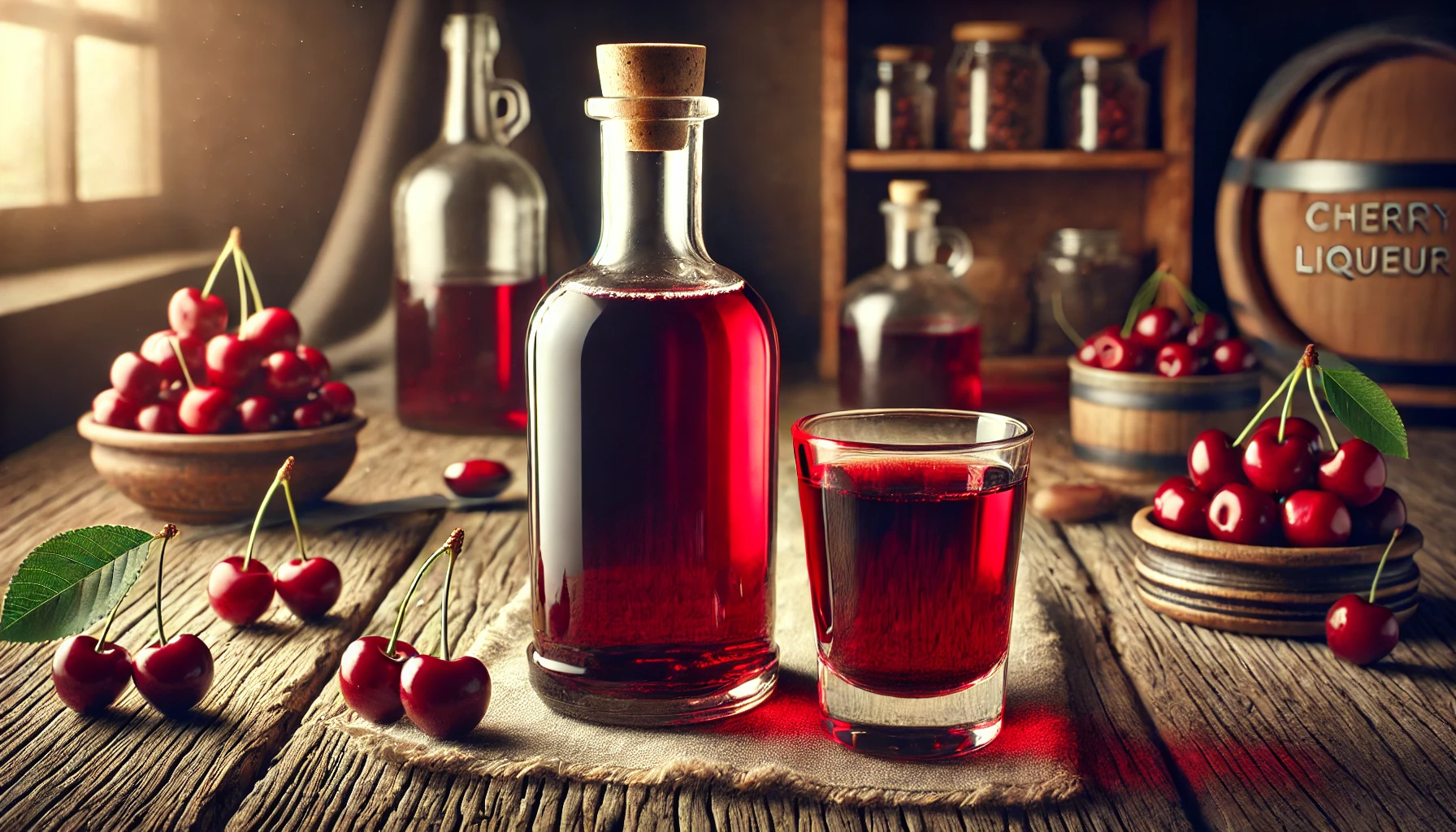
This homemade cherry vodka liqueur is a sweet, fruit-forward alcoholic drink prepared by mixing cooked, strained cherry syrup with commercially bottled vodka. The same-day method replaces the earlier multiweek raw-fruit infusion, whose preservation safety has not been established. Fresh or frozen pitted cherries supply the ruby colour and fruity flavour, with optional cinnamon or vanilla for aroma. Allow about 30 minutes for preparation, 20 minutes for cooking and an hour for cooling and chilling. The finished volume varies with the cherries and syrup reduction. Prepare only what you intend to serve that day.
Homemade cherry vodka liqueur is a sweet alcoholic drink with the colour and flavour of cherries. This version makes a cooked cherry syrup and mixes it with commercially bottled vodka after cooling. Allow about 30 minutes of preparation, 20 minutes of cooking and approximately an hour of cooling and chilling. The estimated yield is 1.5–2 litres, depending on the fruit, sugar and syrup reduction. Prepare only the amount of mixed drink needed for same-day service.
Editorial safety update, 26 November 2026: The previous recipe called for keeping raw cherries, sugar and vodka in a cool, dark place for three to four weeks. The final alcohol concentration and preservation safety of that formula have not been established. NC State University’s food-safety guidance explains why alcohol alone is not a reliable guarantee against pathogens in infusions. This adaptation retains the original ingredient proportions but replaces the long infusion with cooked syrup and refrigerated, same-day service. The syrup extraction technique is informed by Oregon State University Extension’s fruit syrup guide. Neither source validates this specific alcoholic mixture or its shelf life, and its flavour and yield still require a FeastDelights kitchen test.
Recipe card
Homemade Cherry Vodka Liqueur with Cooked Cherry Syrup
Allow approximately 60 minutes to cool and chill the syrup in shallow containers over an ice bath. Actual cooling may take longer; do not add vodka until the syrup is cold and away from heat. No multiweek infusion is required.
Equipment: Scale, cherry pitter, colander, heavy saucepan, potato masher, long spoon, fine sieve, heatproof bowl, shallow cooling containers, ice bath, measuring jug and clean covered glass pitcher
Ingredients
Cooked cherry syrup
To mix cold
Cooked cherry syrup
Instructions
Wash, sort and pit the cherries
Wash hands and clean equipment. Rinse sound fresh cherries under running water, remove stems and every pit, and discard mouldy or spoiled fruit. Thaw frozen cherries in the refrigerator and include their juice. Mash a portion of the fruit in a heavy saucepan to release liquid.
Cook cherries and sugar into syrup
Add 500 g sugar and optional cinnamon or vanilla. Heat gently, stirring until the fruit releases enough juice and the sugar dissolves. Increase heat to a gentle boil and simmer for 5–10 minutes until fruit is very soft and juice is released. Stir to prevent scorching. If a cooled sample is too tart, add more of the listed sugar up to 700 g and simmer until dissolved. Do not add vodka to a hot pan.
Strain and chill the syrup promptly
Remove from the heat and discard the whole spice. Strain through a clean fine sieve into a heatproof bowl; allow hot liquid to drain without squeezing with bare hands. Transfer syrup into shallow clean containers and cool promptly over an ice-water bath, keeping water out of the syrup. Refrigerate until cold, within two hours of cooking (one hour above 32°C/90°F). Allow approximately 60 minutes or longer if needed.
Mix cold syrup with bottled vodka
Away from the stove, measure the cooled syrup and combine it with the bottled vodka in a clean covered pitcher. Stir until evenly mixed. For a smaller serving, combine proportional amounts of syrup and vodka; freeze any extra plain syrup separately. Do not heat the alcohol. The final alcohol concentration is not measured and must not be assumed to match the bottle's original strength.
Serve fresh and keep refrigerated
Keep the pitcher refrigerated at 4°C/40°F or below and label clearly as alcoholic. Serve small chilled portions to adults of legal drinking age on the day of preparation. Discard leftover mixed drink at the end of the day as a conservative precaution. Do not store in a pantry, age for weeks or present the drink as a shelf-stable gift.
Cherry liqueur and the traditional infusion method
Cherry-based alcoholic drinks are found in several Eastern European culinary traditions, including Ukrainian nalivka. Recipes can differ in fruit, sweetness and the way the flavour is extracted. This page presents a modern cooked-syrup adaptation rather than an authentic aged preparation. The faster method avoids relying on an unverified period of raw-fruit preservation in alcohol.
Choose cherries, sugar and vodka
Sour cherries bring a pronounced tartness, while sweet cherries produce a softer fruit flavour. Both fresh and frozen pitted cherries can be used. Sort fresh fruit carefully and discard any mouldy or spoiled pieces. Rinse under running water and remove the pits before mashing or cooking. Do not crush cherry kernels into the drink. Thaw frozen cherries in the refrigerator and keep the released juice for the syrup.
Granulated sugar balances the cherries and gives the syrup body. The original formula uses 500–700 g per kilogram of pitted fruit; start at the lower end and assess a cooled sample before adding more. The fruit’s acidity influences how sweet the syrup tastes. This quantity is retained for flavour and is not being presented as a preservation control. If you prefer a less sweet drink for immediate service, use less sugar and expect a different yield and texture.
Use only commercially bottled vodka intended for drinking. Its labelled alcohol percentage applies to the original spirit, not the mixed drink. Fruit syrup changes the volume and lowers the final concentration. Do not use industrial alcohol, denatured alcohol or homemade distillate. Optional cinnamon or vanilla can be cooked with the cherries for aroma and removed before straining.
Extract cherry flavour by cooking
Use a heavy saucepan and crush a portion of the pitted cherries to release liquid. Stir in the sugar over gentle heat. As the fruit warms, more juice becomes available and the sugar dissolves. Bring to a controlled boil and then simmer until the cherries soften and release their juice. The syrup need not reach a jam-setting temperature: the aim is a pourable liquid, not a thick preserve.
Remove whole spices and strain the cooked mixture into a clean heatproof bowl. A fine sieve removes skins and pulp without needing specialised equipment. Let the liquid drain rather than pressing it with your hands. Pressing firmly with a spoon may produce a cloudier result; clarity is a matter of appearance, not a safety test. If the syrup is very sweet, use a smaller proportion when preparing an individual drink rather than assuming the entire batch needs to be mixed at once.
Cool first, then add the vodka
Divide the hot syrup into small shallow containers and cool over an ice-water bath. Avoid introducing bath water into the syrup. Refrigerate promptly and wait until the syrup is cold before mixing. Do not pour vodka into a hot saucepan, and keep alcoholic liquids away from flames or other ignition sources. Use a clean measuring jug and covered pitcher to mix the cooled components.
The original formula pairs one litre of vodka with the syrup produced by one kilogram of fruit. The syrup volume varies, so the finished volume is an estimate. Measure the actual batch if you need to portion it. The taste should be fruity and sweet, but a pleasant taste and a clear appearance do not establish preservation safety. Do not claim an exact final alcohol percentage without a suitable measurement method.
Make a smaller amount for serving
Rather than mixing the whole batch, keep plain syrup separate and combine only the proportion needed for the day’s planned service. Freeze cooled surplus syrup in small freezer-safe containers with expansion room, then thaw in the refrigerator before preparing a later drink. This preserves the original flavour combination without requiring long-term storage of the alcoholic mixture.
Serve small chilled portions only to adults of legal drinking age. Offer a separate alcohol-free option: stir a little cooled cherry syrup into pasteurised apple juice or chilled sparkling water just before serving. A juice-based drink is not a liqueur and should not be stored as one.
Troubleshooting the syrup
Sugar catches on the pan: lower the heat and crush more cherries to release juice before continuing. Syrup too thick: avoid reducing it to a jam-like consistency; take it off the heat once the fruit is soft and the sugar dissolved. Cloudy drink: strain through a fine sieve without forcing pulp through. Weak cherry flavour: choose ripe fruit and ensure it has softened during cooking. The exact balance will depend on the fruit and the measured syrup volume.
Related cherry recipes
For alcohol-free ways to use seasonal cherries, try refrigerator or freezer cherry jam, cherry kissel with lemon or strawberry and cherry smoothie. These have different ingredients, methods and storage requirements.
Refrigeration and alcohol safety
Keep syrup and mixed drink covered at 4°C (40°F) or colder. Follow the general FoodSafety.gov handling guidance for prompt cooling and refrigeration. As a conservative editorial limit, mix and serve on the same day and discard leftover mixed drink at day’s end. This is not a scientifically validated shelf-life determination. Neither a tightly closed bottle nor a normal smell or appearance establishes safety. Do not age this mixture for weeks or store it at room temperature.
Alcohol is unsuitable for children and people under the legal drinking age. Avoid alcohol during pregnancy, before driving or operating machinery, and when medically advised. Check bottled spirit and flavouring labels for any relevant allergens and cross-contact. Label the pitcher as alcoholic so it cannot be mistaken for fruit juice. Do not present this adaptation as a tested canning, fermentation or shelf-stable gifting recipe.
Frequently asked questions
Is this the same as traditional cherry nalivka?
It is a same-day adaptation with similar cherry, sugar and vodka flavours. It does not reproduce the extended raw-fruit infusion or claim to establish its storage safety.
Can I use frozen cherries?
Yes. Thaw in the refrigerator, check that all pits have been removed and cook the fruit with its released juice. The fruit variety affects colour and sweetness.
Why cook the cherries before mixing with vodka?
Cooking extracts juice and dissolves sugar without relying on weeks of contact between raw fruit and alcohol. The revised method is intended for fresh service, not long-term preservation.
Can I use less sugar?
For fresh service, adjust sweetness to preference during syrup preparation. The original 500–700 g range is retained, but no amount of sugar is being relied on to preserve this drink. Changes alter flavour and volume.
How strong is the finished liqueur?
The original vodka's alcohol percentage is shown on its label, but the cherry syrup dilutes it. The final concentration has not been measured; no precise strength or standard-drink count is claimed.
Can I replace vodka with apple juice?
For an alcohol-free drink, keep the syrup separate and dilute a small portion with chilled pasteurised apple juice or sparkling water to taste. Serve immediately and do not treat it as a preserve.
Can I store the liqueur for several months?
No validated shelf life is available for this formula. Make only enough mixed drink for same-day serving, refrigerate during service and freeze any surplus plain cherry syrup separately.
Why should I remove cherry pits?
Pits are hard and can be a choking or tooth hazard. Their kernels contain cyanogenic compounds, so avoid crushing or grinding pits into the drink.
More recipes to try






Spotted a detail that needs correcting? Contact the FeastDelights editors.