Spaghetti Carbonara with Pancetta and Pecorino
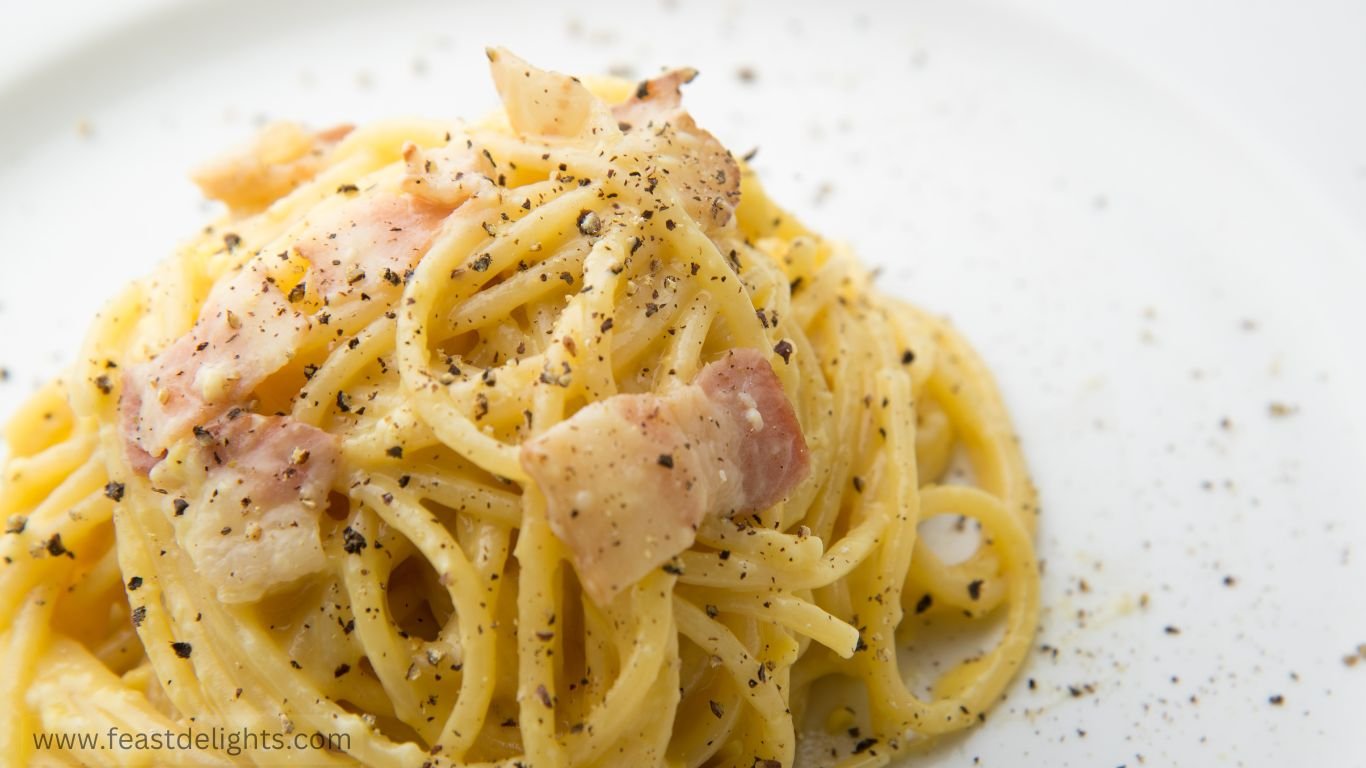
Spaghetti carbonara with pancetta and Pecorino is a quick Italian-inspired pasta dish with crisp cured pork, black pepper and a glossy sauce made from eggs, cheese and starchy pasta water. There is no added cream. The sauce is tossed with the hot spaghetti away from direct heat to reduce the risk of scrambling, and commercially pasteurised eggs are essential for this gentle method. Four servings are ready in about 25 minutes. Serve immediately while the sauce is silky and the pasta is hot.
Carbonara is associated with Rome, where the familiar combination is eggs, guanciale, Pecorino Romano and pasta. This adaptation uses pancetta, which is easier to find in some regions, and pasteurised eggs. The creamy texture comes from an emulsion of cheese, eggs, rendered fat and pasta cooking water.
Roman carbonara and this pancetta adaptation
The Italian national tourism website identifies guanciale, egg and Pecorino Romano as defining ingredients of Roman spaghetti carbonara. Guanciale is cured pork jowl; pancetta is cured pork belly. This recipe retains pancetta as its measured ingredient rather than presenting it as identical to the Roman version. Parmesan is a possible substitute for Pecorino, but its flavour is milder and less salty. Cream, onions and garlic are not needed for the sauce.
Ingredients and equipment
Choose 400 g (about 14 oz) dried spaghetti, 150 g (about 5.3 oz) diced pancetta and 100 g (about 3.5 oz) finely grated hard cheese. Grate cheese on the fine holes of a grater so it disperses readily; coarse shreds or anti-caking agents in packaged grated cheese can make the sauce less smooth. Use three commercially pasteurised large eggs and one additional pasteurised yolk. The extra yolk adds richness. Check the label: ordinary shell eggs are not necessarily pasteurised. Coarsely ground black pepper provides the characteristic bite.
Use a large pasta pot, colander, wide skillet, heatproof bowl, whisk, cheese grater, tongs, measuring jug and a food thermometer. Have the egg mixture ready by the time the spaghetti finishes cooking. Warm serving bowls with hot water and empty them before plating if desired.
Recipe card
Spaghetti Carbonara with Pancetta and Pecorino
Cook the pancetta while the pasta boils; timing depends on how quickly the water heats.
Equipment: Large pasta pot, colander, wide skillet, heatproof bowl, whisk, grater, tongs, measuring jug and thermometer
Ingredients
Pasta
Pancetta
Egg and cheese sauce
Instructions
Whisk the pasteurised egg and cheese mixture
Whisk the three commercially pasteurised eggs and extra pasteurised yolk with finely grated cheese and black pepper until evenly combined. Keep chilled until needed.
Cook spaghetti and reserve water
Bring a large pot of salted water to a boil. Cook spaghetti according to the packet until al dente. Reserve about 250 ml of the starchy cooking water before draining.
Render the pancetta
While the spaghetti cooks, cook diced pancetta in a wide skillet over medium heat for about 6–8 minutes or until browned and cooked through according to its package directions. Add optional oil only if needed. Turn off the heat.
Toss off direct heat until glossy
Toss hot spaghetti with the cooked pancetta and fat. Move the skillet completely off the hot burner. Add the pasteurised egg mixture while tossing continuously, adding reserved hot pasta water a tablespoon at a time until glossy. If needed, warm gently over a water bath while stirring; avoid hard boiling.
Season and serve immediately
Taste before adding salt. Divide among four warmed bowls and serve immediately with optional extra Pecorino and pepper.
Render the pancetta and prepare the sauce
Start the pancetta in a skillet over medium heat and let its fat render gradually. Stir occasionally until the pieces are golden and cooked through. Add the optional olive oil only if the meat is very lean and the pan is dry. Follow the pancetta packet’s cooking instructions; do not assume cured meat is ready to eat. Avoid turning the heat too high or the lean portions may harden before the fat renders. Switch off the heat once the pieces are crisp.
Whisk the eggs, extra yolk, grated cheese and pepper until evenly mixed. Cook spaghetti in salted water until al dente, meaning tender with a little resistance at the centre. Reserve about 250 ml (one generous US cup) of the cloudy cooking water before draining. Its starch helps distribute the fat and cheese in a sauce rather than leaving them as separate layers. You may not need the entire reserved quantity.
How to emulsify the eggs without scrambling
Transfer the hot drained pasta to the warm skillet and toss with the pancetta and rendered fat. Take the pan completely off the burner, particularly if using a heavy skillet that retains heat. If the fat is sizzling vigorously, allow it to calm briefly. Add the egg and cheese mixture while continuously tossing with tongs. Add hot pasta water a tablespoon at a time. The combination of stirring, starch and residual heat should produce a glossy coating. If more warmth is needed to thicken the sauce, use a heatproof bowl over gently simmering water and stir continuously rather than returning the skillet to high direct heat. Keep the bowl above, not in, the water.
For egg safety, commercially pasteurised eggs or pasteurised egg products are important in this recipe because residual heat alone does not guarantee that all of the egg reaches a safe temperature. The FDA’s egg safety guidance recommends pasteurised eggs for dishes in which eggs may remain undercooked and 71°C (160°F) for egg dishes cooked thoroughly. If serving anyone at increased risk from foodborne illness, choose a thoroughly cooked egg preparation rather than assuming this softly set sauce is suitable. Keep eggs cold before cooking, do not taste raw sauce and serve the finished pasta promptly.
Troubleshooting
Scrambled egg: remove the pan from direct heat before combining; if curds have already formed, they will not return to a smooth emulsion. Dry sauce: add reserved water gradually while tossing. Watery sauce: keep tossing over gentle residual warmth until the cheese and egg thicken; do not boil the sauce. Cheese clumps: grate finely and introduce water gradually. Too salty: use less salt in the pasta water next time, particularly with salty pancetta and Pecorino. Do not add extra salt until the sauce is finished.
Substitutions and serving
Use guanciale instead of pancetta for a more Roman-style version, adjusting rendered fat if needed. Unsweetened smoked bacon gives a smokier variation, not the same flavour. Parmesan can replace some or all of the Pecorino. Rigatoni or another sturdy pasta shape can replace spaghetti. For a completely different egg-free and dairy-free version, see vegan tofu carbonara. Serve this pasta with a crisp salad, onion focaccia or Sicilian-style caponata. The sauce is rich enough that light accompaniments work well.
Make ahead, storage and allergens
Grate the cheese and portion the pancetta ahead, storing them covered in the refrigerator. Mix the eggs and cook the pasta near serving time. Carbonara is best freshly made. Refrigerate leftovers in shallow covered containers within two hours (one hour above 32°C/90°F) at 4°C (40°F) or colder. Use within two days. Reheat gently, stirring with a little water, until the entire portion reaches 74°C (165°F); the sauce may become less silky. Freezing is not recommended for best texture. The recipe contains eggs, milk and normally wheat. Check packaged pancetta, cheese and pasta for other allergens. It contains pork and is not vegetarian.
Have the serving bowls ready before mixing the sauce. Toss until glossy, finish with freshly ground pepper and eat while hot.
Frequently asked questions
Does carbonara need cream?
No. The sauce is formed from eggs, cheese, rendered fat and starchy cooking water.
Can I use guanciale instead of pancetta?
Yes. Guanciale is characteristic of Roman carbonara and may release a different amount of fat.
Why use pasteurised eggs?
This off-heat method may leave eggs incompletely cooked. Commercially pasteurised eggs reduce the risk associated with undercooked egg; do not substitute ordinary raw eggs for this method.
Can I use only egg yolks?
That would change the sauce richness, volume and texture. The measured combination of whole eggs and an extra yolk is retained here.
Should I rinse spaghetti after draining?
No. Keep it hot and retain the surface starch, which helps the sauce cling.
Can I make the sauce ahead?
Prepare ingredients in advance, but combine the sauce and pasta just before eating.
How much pasta water should I add?
Start with a tablespoon at a time. The full reserved cup is a reserve, not a mandatory amount.
More recipes to try






Spotted a detail that needs correcting? Contact the FeastDelights editors.