Bulgarian Pepper Lecho with Tomato and Carrot
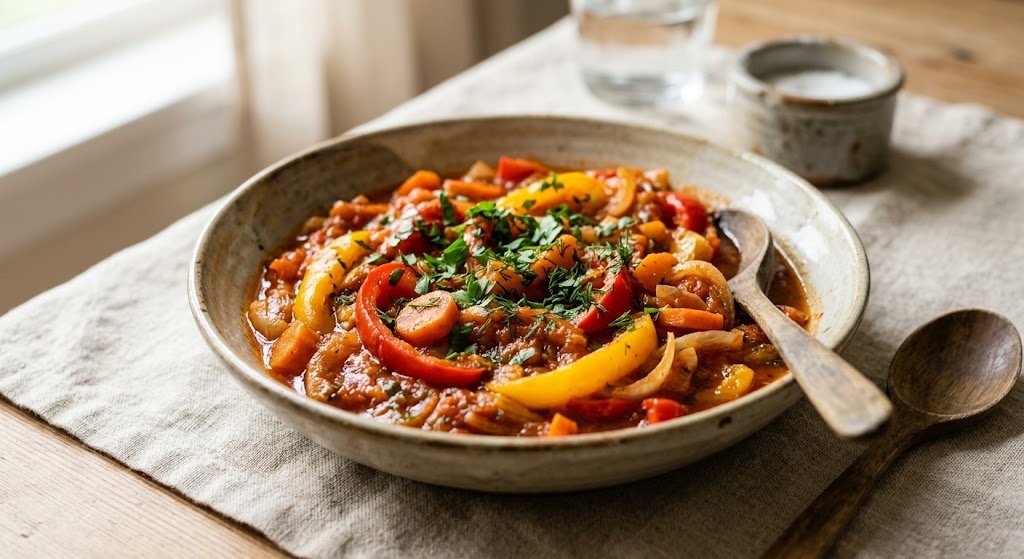
Sweet bell peppers and thinly sliced carrots simmer with onions, garlic and ripe tomatoes to create a colourful, gently tangy vegetable stew. A little vinegar balances the natural sweetness of the vegetables, and parsley and dill freshen the finished sauce. This Bulgarian-inspired lecho serves six in around 55 minutes and works equally well over potatoes or alongside grilled dishes. Cook until the carrots are tender and the peppers still hold their shape. This is a fresh dish for refrigerated storage, not a shelf-stable preserve.
Bulgarian pepper lecho is a vegetable stew of sweet bell peppers, carrots, onion and ripe tomatoes, finished with garlic, vinegar, dill and parsley. This version makes six servings in about 55 minutes. Soften the carrots and onions first, then simmer the peppers in the tomato base until tender but still holding their shape. Serve warm or chilled as a vegetable accompaniment.
Choosing peppers, carrots and tomatoes
Use five firm bell peppers and three carrots. Red or yellow peppers bring sweetness, while green peppers have a more grassy flavour. Cut carrots thinner than peppers so they soften before the pepper strips collapse. Four ripe tomatoes give the stew its liquid base. Peel them after a brief blanch if you want a smoother sauce. Onion, garlic and the measured 100 ml neutral oil form the savoury base. Vinegar and sugar balance the vegetables’ natural sweetness; they are seasonings here, not a validated preservation system.
Recipe card
Bulgarian Pepper Lecho with Tomato and Carrot
Cooking assumes thin carrot slices and a wide pot. Extra reduction may increase the cooking time.
Equipment: Knife, cutting board, saucepan and bowl for blanching, wide 4–5 litre (4–5 quart) pot with lid, wooden spoon, measuring jug
Ingredients
Vegetables
Seasoning
Fresh herbs
Instructions
Prepare vegetables and peel tomatoes
Wash the vegetables. Seed and slice the peppers into roughly 1 cm strips, slice carrots about 3 mm thick and slice the onions. Score the tomatoes, briefly blanch for 30–60 seconds, cool in cold water, peel and chop. Mince garlic and chop herbs.
Soften onions and carrots
Heat the oil in a wide 4–5 litre pot over medium heat. Cook onions and carrots for 6–8 minutes, stirring until onions soften and carrots begin to bend.
8 minAdd peppers and garlic
Add peppers and minced garlic and cook about five minutes, stirring occasionally so the garlic does not burn.
5 minSimmer in the tomato sauce
Stir in tomatoes, vinegar, sugar, salt and pepper. Bring to a gentle simmer, cover and cook about 20 minutes, stirring occasionally. Check that carrots are easily pierced with a fork and peppers are tender but intact. Uncover briefly if the sauce is watery.
20 minFinish with fresh herbs
Stir in chopped parsley and dill in the final two minutes. Taste the cooked sauce and adjust seasoning as needed. Serve warm or cool promptly for refrigerated serving.
2 min
How to simmer the vegetables evenly
Start the onion and carrot over medium heat and stir regularly. Add peppers later so they do not become mushy. Once the tomatoes and seasonings go in, reduce to a gentle simmer. The tomatoes should release enough liquid to coat the vegetables. If the mixture is dry before the carrots soften, add a small splash of water. If it remains watery after the vegetables are tender, uncover briefly and reduce while stirring.
Doneness and seasoning
A fork should pass readily through a carrot slice; the pepper should bend but remain intact. The tomato sauce should look glossy and spoonable. Avoid vigorous boiling, which may break up the peppers. Stir in the chopped herbs close to the end to retain their freshness. Taste the sauce after adding vinegar, then adjust salt or sugar only if needed.
Serving and variations
Serve warm over garlic and rosemary roasted potatoes or with crusty bread. A chilled portion can accompany grilled food. Lecho belongs to a family of Central and Eastern European pepper-and-tomato dishes; this Bulgarian-inspired version includes carrot and herbs. For another vegetable stew, try French ratatouille with passata and lemon or roasted vegetables with squash and peppers. Check packaged vinegar and seasonings for allergens if needed.
Make ahead and storage
Slice the vegetables ahead and refrigerate covered. The finished stew can be cooked a day before serving. Divide leftovers into shallow covered containers and refrigerate at 4°C (40°F) or colder within two hours, or one hour above 32°C (90°F). Use within three days. Freeze portions for up to two months for best quality; thaw in the refrigerator. Reheat to 74°C (165°F) throughout or serve properly chilled. This recipe is not validated for home canning; never store filled jars in the pantry.
Finish with chopped dill and parsley, then serve with bread or potatoes. The sauce should coat the tender vegetables without hiding their individual textures.
Frequently asked questions
Can I leave the tomato skins on?
Yes, but the sauce may have noticeable pieces of skin. Blanching and peeling gives a smoother tomato base.
Why are my carrots still hard?
Thick carrot slices need longer than peppers. Slice thinly and soften them first; extend the gentle simmer if necessary.
Can I use canned tomatoes?
Yes, as an editorial variation, use enough chopped tomatoes to replace the four fresh ones, with their juices. Reduce uncovered if the sauce is thinner.
Can I eat lecho cold?
Yes. Cool and refrigerate promptly; serve chilled within the storage period.
Can I preserve this lecho in jars?
No. It has not been validated for shelf-stable canning. Refrigerate or freeze it instead.
More recipes to try






Spotted a detail that needs correcting? Contact the FeastDelights editors.