French Ratatouille Stew with Passata and Lemon
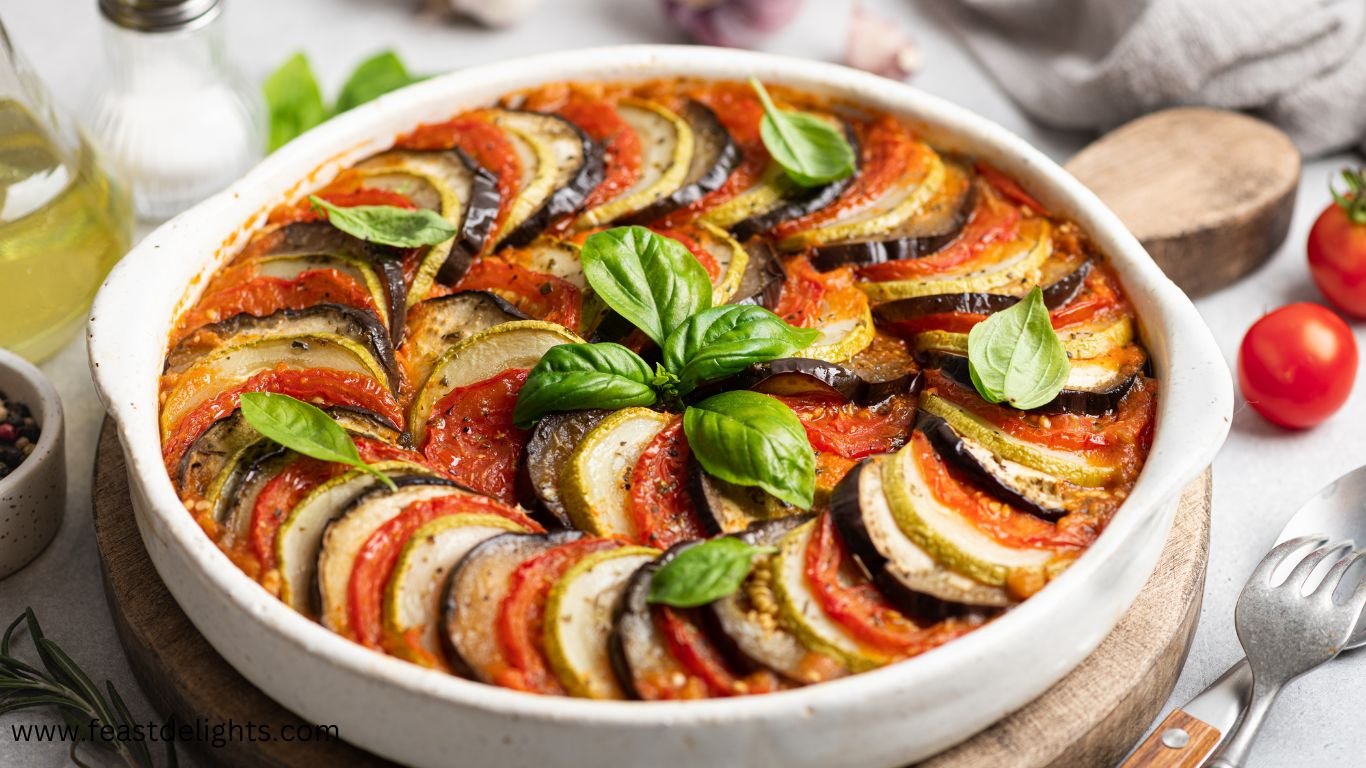
This French-style ratatouille is a rustic vegetable stew with browned eggplant, zucchini, sweet peppers and tomatoes. Tomato passata helps create a richer sauce, while garlic, thyme and rosemary give the vegetables depth. A little lemon juice and chopped parsley brighten the finished dish. Unlike a quick skillet sauté, this version browns the eggplant separately and simmers the vegetables together until tender. It makes six servings and is suitable for preparing ahead or serving over polenta.
For a saucy French ratatouille stew, brown the eggplant separately before simmering it with zucchini, bell peppers, fresh tomatoes and passata. The lemon and parsley finish distinguishes this version from a basil-led skillet ratatouille. Allow 25 minutes for chopping and about an hour for cooking.
Why use passata and brown the eggplant separately?
Passata is strained, uncooked or lightly processed tomato purée, generally smooth and pourable. Here, 120 ml (about half a US cup) adds tomato body without overwhelming the four fresh tomatoes. It is not the same as concentrated tomato paste; substituting the same quantity of paste would produce a much stronger, thicker sauce. If passata is unavailable, use smooth crushed canned tomatoes of a similar consistency.
Choose medium eggplants (aubergines) and zucchini (courgettes), red and yellow peppers, and ripe tomatoes. Cut the eggplant and zucchini into roughly 2–3 cm pieces for a rustic stew. The measured olive oil is two tablespoons (30 ml), with more only as needed. Brown the eggplant in batches to create colour without crowding the pot, then set it aside while the onions and peppers soften. A heavy-bottomed pot helps keep the heat steady.
Recipe card
French Ratatouille Stew with Passata and Lemon
Includes separate browning of eggplant and optional brief sauce reduction.
Equipment: 5–6 litre heavy-bottomed pot with lid, knife, chopping board, wooden spoon, plate
Ingredients
Instructions
Brown the eggplant separately
Wash and prepare the vegetables. Heat 1 tablespoon olive oil over medium-high heat in a heavy pot. Brown eggplant in batches for about 8–12 minutes total, adding a little oil only as needed. Transfer to a plate.
Soften onions and peppers
Add remaining measured oil, onion and peppers. Cook over medium heat about 7 minutes until softened, stirring occasionally.
Add garlic, herbs and zucchini
Stir in garlic, thyme and rosemary for 30 seconds until fragrant. Add zucchini and cook about 3 minutes.
Simmer with passata and tomatoes
Add tomatoes, passata, salt and black pepper. Return eggplant, partly cover and simmer gently 30–35 minutes until vegetables are tender. Stir occasionally.
Reduce and brighten the sauce
If watery, uncover and simmer about 5 minutes or until the sauce coats the vegetables. Stir in lemon juice and taste for seasoning.
Finish with parsley
Scatter chopped parsley over the stew. Serve warm or properly chilled, with bread or polenta.
Build the tomato sauce in stages
Softened onion and peppers form the sweet foundation of the sauce. Stir garlic and chopped herbs into them briefly; if the garlic browns too deeply it may become bitter. Add zucchini, then the tomatoes and passata. Return the browned eggplant and let the mixture simmer with the lid partly open. The tomato liquid should gradually coat the vegetables, not disappear entirely. Stir gently from the bottom to prevent sticking.
Start checking the eggplant around 30 minutes into the simmer. It should be tender all the way through and yield to a fork. If the vegetables are ready but the sauce remains watery, remove the lid and reduce briefly. If the sauce becomes too concentrated before the vegetables soften, add a splash of water and cover briefly. Add lemon juice after cooking to retain its brightness, then taste before adjusting the salt.
Serving this version and choosing other methods
Serve the saucy stew over soft polenta, with bread or alongside grilled fish. Chickpeas can make a separate vegetarian meal more substantial; add cooked, drained chickpeas near the end. Black olives give a saltier, more Mediterranean finish, so adjust seasoning. Fresh basil can replace some parsley, but the original measured finish is lemon and parsley.
For a simpler fresh-tomato version that cooks all the vegetables in stages in one pan, see skillet ratatouille with eggplant and zucchini. For an oven approach, try oven-baked ratatouille with fresh herbs. A slice of rye and wheat bread is good for the sauce. These are related dishes with different cooking methods, not separate names for an identical recipe.
Make ahead and storage
The stew is suitable for cooking ahead because its sauce holds the vegetables together. Cool in shallow containers, then refrigerate. Warm gently if serving hot, or serve properly chilled; do not leave it sitting at room temperature for extended periods. The listed ingredients contain no intentionally added animal products, but check packaged passata and any toppings for allergens. Freezing softens the zucchini and eggplant, so serve thawed portions as a sauce over grains if they lose their shape.
Frequently asked questions
Is tomato passata the same as tomato paste?
No. Passata is a pourable strained tomato purée. Concentrated paste is much stronger.
Why brown the eggplant first?
Separate browning reduces crowding and adds flavour before the tomatoes introduce moisture.
Can I skip the lemon?
Yes, if the tomatoes are already pleasantly tart. Add the measured juice gradually to taste.
Can I make it without an oven?
Yes. This recipe is a heavy-pot stovetop stew.
Can I add chickpeas?
Yes. Use cooked, drained chickpeas and warm them through near the end.
Can I freeze it?
Yes, but the vegetables soften on thawing. Use thawed portions as a sauce if the texture changes.
More recipes to try




Spotted a detail that needs correcting? Contact the FeastDelights editors.